Online Reselling Is Changing and Crosslisting Is Why
February 6, 2026Belgium by MK Announces Official Endorsement Deal with Artist Hawaii MK
February 6, 2026
Time isn’t on your side during any attack!
Every minute lost can mean the worst outcome. More data stolen. More systems encrypted. More money gone. But it’s 2026 now. You can have lots of digital rescuers who act fast.
Then again, defending your business needs more than just good tools. It needs a rapid, expert partner who can take control when things go wrong.
And you get this from the best incident management software. These providers focus on their unique strengths, speeds, and AI to fight back faster than humans ever could.
Top 12 Incident Response Companies 2026
| Company Name | Response Time |
| TaskCall | 5-15 minutes |
| Mandiant (Google Cloud) | 2 hours |
| CrowdStrike | 36 minutes |
| Palo Alto Networks Unit 42 | 2-24 hours |
| IBM Security X-Force | 1 hour |
| Kroll | 2-6 hours |
| Deloitte | 1 hour |
| Secureworks Sophos | 2-48 hours |
| Cynet | 2 hours |
| Rapid7 | 1 hour |
| Cisco Talos | 2-4 hours |
| Sygnia | 48-72 hours |
12 Best Incident Response Companies
1. TaskCall | Top Incident Response Solution
Speed wins here.
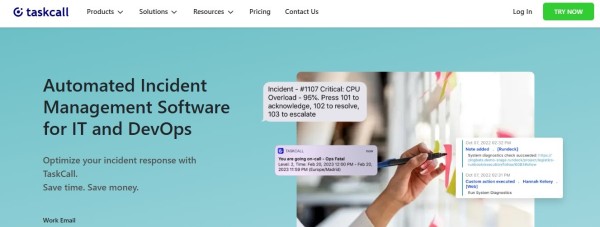
TaskCall’s main advantage is its structured speed guarantee for critical issues. SEV-1 incidents trigger responses within 5 minutes, whereas SEV-2 issues get attention in 15 minutes.
This speed is built into their process. The platform automates the initial alerting and coordination. It ensures the right people are pulled into a call instantly. This eliminates the chaos that usually wastes precious time at the start of a crisis.
Moreover, the platform focuses on other activities, too. Smart routing sends alerts only to the right people. AI filters false alarms before phones start buzzing. On-call schedules stay clean. Built-in incident timelines help teams track what happened, when, and why. Post-incident reviews take minutes.
That cuts Mean Time to Acknowledge by over 60%, based on internal customer data.
Highlights
- Guaranteed 5-minute response for critical incidents.
- Automated escalation and team coordination.
- Real-time status dashboard for all stakeholders.
- Integrated post-incident reporting.
| Pros | Cons |
| Very fast alerts | Focused on response |
| Easy to use | |
| Strong mobile support |
2. Mandiant (Google Cloud)
Experience shows under pressure.
Mandiant promises a 2-hour response time. It comes from teams across 30+ countries. Their specialty is that they dive deep into containment and threat tracking. With that, they handle nation-state attacks and APTs smoothly. And Google Cloud backing adds scale and data access.
Responders focus on breach scope, attacker movement, and cleanup. Their threat intel database tracks thousands of attack patterns. That helps stop repeat damage. Large enterprises lean on Mandiant during high-risk incidents.
Costs run high. Speed stays solid. Depth goes deep.
Highlights
- 2-hour initial response for retainer clients.
- Unmatched expertise in handling Advanced Persistent Threats (APTs).
- Global 24/7 team with experts in over 30 countries.
- Integrates Google Cloud’s intelligence and scale.
| Pros | Cons |
| Deep forensics | Expensive |
| Global reach | Heavy process |
| Strong reports |
3. CrowdStrike
Pretty fast among the crowd.
CrowdStrike’s Falcon Complete shows results fast. Average containment takes 36 minutes. This speed comes from their cloud-native platform. It combines monitoring, detection, and response into one system.
Their experts can see an alert and take remote action instantly across all your devices. They offer proactive threat hunting. It means they look for hidden threats before an alarm even sounds.
AI flags abnormal behavior early. Automated containment blocks lateral movement before data leaks. The platform handles endpoints at bigger scale.
Highlights
- Documented 36-minute average threat containment time.
- Single, cloud-native platform for seamless response.
- Proactive 24/7 threat hunting.
- Remote remediation actions across endpoints.
| Pros | Cons |
| Fast containment | Costly tiers |
| Strong EDR | Complex console |
| Low endpoint load |
4. Palo Alto Networks Unit 42
Intel meets action.
Palo Alto Networks Unit 42 mixes threat research with hands-on response. Engagement starts within 2 to 24 hours, based on retainer level. When they respond, they tend to check it against global attack patterns.
The team tracks malware families, ransomware groups, and attack chains in detail. They work well with Palo Alto firewalls and Cortex XDR. This helps reveal if an attacker is using a known tool or has targeted other industries. That tight link speeds containment. Investigations focus on the root cause.
Highlights
- Response within 2 hours for top-tier retainers.
- Deep threat intelligence from Palo Alto’s global network.
- Expert-led digital forensics and incident analysis.
- Strong focus on post-incident guidance and hardening.
| Pros | Cons |
| Strong intel | Slower entry tiers |
| Skilled team | Involve complex integrations |
| Solid tooling |
5. IBM Security X-Force
Scale helps during storms.
IBM X-Force comes with 24/7 efficient support with a huge team of specialists worldwide. Their top-tier service promises incident triage within 1 hour.
They use AI-driven tools to sort through massive amounts of data quickly during an investigation. This helps find the root cause faster. They’re a good fit for large, complex organizations that need help across different systems.
The service also includes help with communication and regulatory requirements after a breach. AI-driven forensics is a big plus as they speed log analysis and timeline building. Their reports are detailed and structured.
Highlights
- 1-hour triage for urgent cases.
- AI-enhanced forensics to speed up investigations.
- Truly global 24/7 support network.
- Covers crisis communications and compliance reporting.
| Pros | Cons |
| Enterprise scale | Slower onboarding |
| Detailed reports | Process-heavy |
| Legal support |
6. Kroll
Structure that works to calm panic.
Kroll blends rapid digital response with real-world investigative skills. Customers love it for its speed and holistic approach.
They respond within 2 hours for Premier clients and under 6 hours for others. The teams often partner with tools like CrowdStrike or SentinelOne to deploy 24/7 monitoring quickly.
Through such quick deployment, they scale a big investigation team within 48 hours.
They also bring skills from outside pure IT. For instance, fraud investigation and physical security. They can be relevant for cases involving insider threats or complex fraud.
Highlights
- 2-hour contact guarantee for Premier clients.
- Rapid team scaling to handle large incidents.
- Integrates digital forensics with broader investigative expertise.
- Established 24/7 managed detection partnerships.
| Pros | Cons |
| Quick contact | Cost jumps |
| Legal support | Tool dependent |
| Scalable teams |
7. Deloitte
The one who guides your whole business through the storm.
As a “Big 4” firm, Deloitte’s IR service is part of a bigger package. They focus on the legal, financial, and operational fallout of a cyber attack. Not just the technical fix.
The company can deploy technical specialists quickly, often within 1 hour. Remote triage starts in 2 hours. On-site support reaches the UK in 24 hours, globally in 48.
But their real value is managing the bigger picture. That means talking to regulators, managing public relations, and helping with business continuity.
They’re just right for large firms that face regulatory heat. Their response typically blends tech, legal, and business views.
Highlights
- Rapid specialist deployment within 1-48 hours.
- Holistic recovery covers legal, PR, and operational needs.
- Deep experience with regulatory landscapes.
- Strong pre-incident planning and testing services.
| Pros | Cons |
| Strategic view | Less focus on pure technical threat hunting |
| Large teams | High cost |
| Regulatory help |
8. Secureworks Sophos
Ransomware specialists who move fast.
Sophos Rapid Response is built to stop active threats in their tracks. Take ransomware, for instance. They typically start working on a case within 2 hours. Plus, they focus on finishing the initial assessment within 48 hours.
Their team is expert at neutralizing ransomware and kicking attackers out of networks. Because they also make security products, their responders know the tools deeply. That way, they use those tools effectively so they can contain damage fast.
Highlights
- 2 hour onboarding for emergency cases.
- Specialization in ransomware containment.
- 48-hour triage goal for most customers.
- Tight integration with Sophos’s own security products.
| Pros | Cons |
| Fast containment | Limited forensics |
| MDR depth | Platform focus |
| Clear guidance |
9. Cynet
AI does the heavy lifting.
Cynet’s CyOps MDR team uses a high level of automation to act fast. They respond to threats, contain, and fix them in minutes. One good thing is that the platform deploys across thousands of endpoints in under 2 hours.
Their SOAR automation helps reduce manual work by 90%. This lets their human experts focus on the tricky problems whereas automated rules handle common attacks.
A great pick for companies with lean teams that need fast, efficient protection.
Highlights
- Minute-level response via automated playbooks.
- 90% reduction in manual response effort through SOAR.
- Fast, simple deployment across endpoints.
- 24/7 MDR with a single platform for all tools.
| Pros | Cons |
| Very fast | Less depth |
| Low overhead | Smaller brand |
| Simple setup |
10. Rapid7
Smart tools with smart people.
Rapid7 bears a strong security analytics platform, InsightIDR. It feeds alerts fast. For customers with a retainer, they ensure a 1-hour response with active retainers.
Automation handles early containment. And their experts use this platform to quickly detect odd behavior and contain breaches.
They also offer services like penetration testing to find holes before attackers do. This makes them a good partner for improving overall security.
Highlights
- 1-hour response for retainer customers.
- Powered by the integrated InsightIDR (SIEM+EDR) platform.
- Also provides proactive testing and threat modeling.
- Focus on rapid containment using automation and analysis.
| Pros | Cons |
| Fast actions | Retainer needed |
| Effective tooling | UI learning curve |
| Testing depth |
11. Cisco Talos
Almost all countries covered.
Cisco Talos Incident Response (CTIR) brings immediate global support. The company guarantees a 4-hour Service Level Objective to engage remotely.
They frequently beat this target and often start work within just 2 hours of an alert. This speed comes from their deep integration with Cisco’s global threat intelligence team, Talos.
This team sees threats in real-time across networks worldwide. It lets the CTIR recognize attack patterns instantly and contain ransomware or breaches faster.
Highlights
- 4-hour SLO for initial remote engagement.
- Often initiates action within 2 hours, especially for ransomware.
- The largest commercial threat intelligence teams.
- 24/7/365 global coverage with remote and on-site options.
| Pros | Cons |
| Fast ransomware response | Best with Cisco stack |
| Actionable intelligence | Occasional delayed response |
| Global coverage |
12. Sygnia
Experts under fire.
Sygnia is popular for one simple reason. High-intensity, short-term interventions. They operate like a digital SWAT team for the most severe incidents.
The team focuses on the first 48-72 hours of a major breach to contain the threat and remove it aggressively. They’re often called by companies that have already been breached and need an elite team to take charge.
Their approach is tactical and direct, with a focus on immediate action and clear communication to leadership.
Highlights
- Focus on decisive 48-72 hour intervention.
- Tactical, commander-led approach to incident handling.
- High-level expertise for severe and advanced attacks.
- Clear, direct reporting to executive management.
| Pros | Cons |
| Elite skills | Premium pricing |
| Fast action | Limited automation |
| Strong analysis |
How To Choose The Best Incident Response Company? 5 Factors To Consider!
1. Detection-Response Speed
Most companies ensure responses from 30 minutes to 72 hours. It varies based on the type of issue and its intensity.
Focus on the guaranteed response time. Not only general promises. A 5-minute guarantee is very different from a 4-hour one. Ask how they define “response”.
Is it a call back? Or an expert starting work?
Faster response directly lowers data loss and downtime. So, pick a guarantee that matches how fast you need help for your most critical systems. Also, go with one who ensures 24/7/365 availability.
2. Automation
In 2026, AI isn’t only a bonus. It’s how responders keep up.
Automation tools can now sort through logs and alerts much faster than humans alone.
For example, IBM and Vodafone have used AI to slash incident resolution time by 50%. They automated root cause analysis and handled 30,000+ monthly alerts.
This slashes the time to find the root cause.
Also, pick your provider that can handle AI-powered attacks (like deepfakes used for fraud or hyper-fast automated hacking). Your defender needs AI to fight the attacker’s AI.
3. Retainer Flexibility
Consider an IR retainer a fire department subscription.
Without one, you’re only negotiating a contract while your network burns.
A proper retainer pre-negotiates price, scope, and access. The best retainers let unused hours roll over or be used for proactive drills. This guarantees you get the fastest, smoothest help when panic sets in.
4. Outcome Over Activity
Don’t just count hours worked.
Focus on the result. Typically, the best incident response company gives you a clear outcome:
“The active ransomware was contained within 2 hours, and here’s how we’ll prevent it.”
They should give you a detailed, plain-language report explaining everything. What happened, how they fixed it, and precise steps to stop it from happening again.
The reporting has to be clear!
5. Advanced Tools
Ask what tools they use.
- Do they rely on modern Endpoint Detection and Response (EDR) and Security Information and Event Management (SIEM) platforms?
- Do they have AI-assisted hunting tools?
Their toolset shows their capability. A company with outdated technology will struggle to protect your modern systems.
FAQs
What’s the real difference between MDR and an IR Retainer?
MDR is like a 24/7 security guard watching monitors. An IR retainer is a contract with a SWAT team you call only during a major breach. MDR manages daily alerts; the retainer is for full-blown emergencies.
Are these services too expensive for a mid-sized company?
Not always. Different companies, like TaskCall, Secureworks or Cynet, offer scalable plans. The real cost is a major breach without help. Consider it a critical insurance for your digital business.
How do retainers actually start working with you during a panic?
With a retainer, you call a dedicated hotline. The provider immediately activates your pre-agreed plan. Then, they pull in your team on a bridge call and start their investigation.
Will they take over completely, or do we need to be involved?
They lead the technical fight. But you remain in charge. You’ll provide system access and make business decisions (like shutting down servers). They guide you but need your partnership to work effectively.