
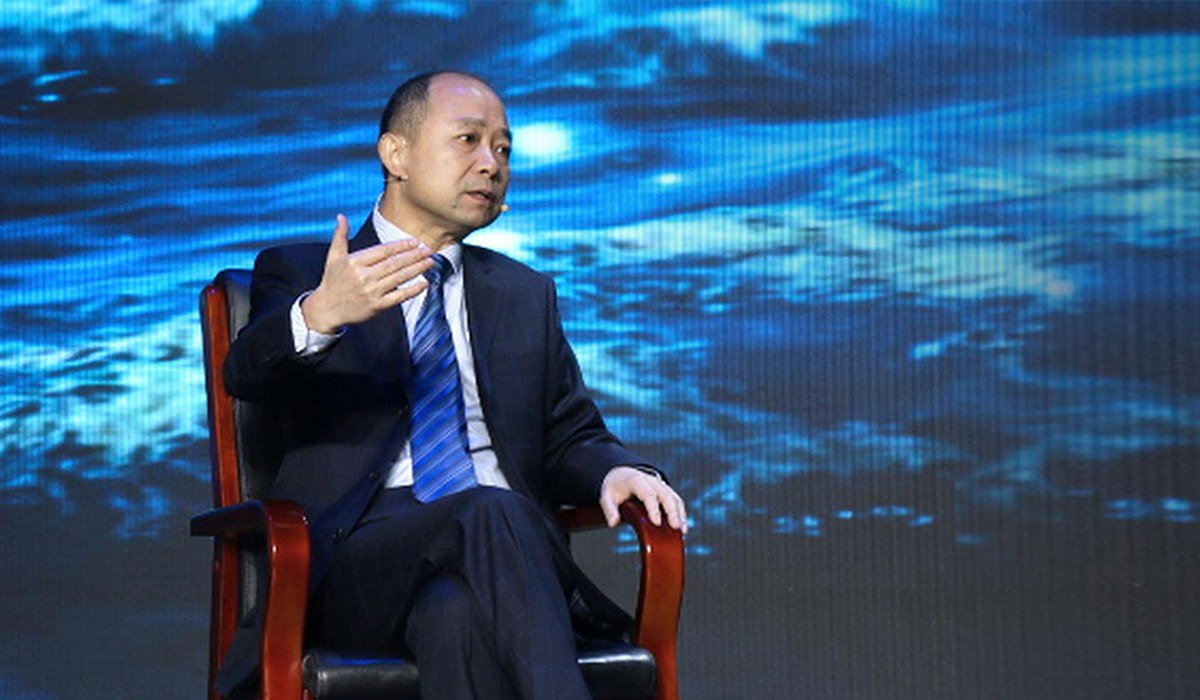
Beijing, China – In an era of rapid technological iteration and intertwined global challenges, a scholar has spent over forty years steadfastly holding onto what some might call an “unwarranted alarmism” — he is Hu Jiaqi, a scholar of human issues and founder of Humanitas Ark. Since first engaging with research on human survival in 1979, this scholar from Hunan province has consistently worked to awaken humanity. Building upon foundational works like Saving Humanity, The Greatest Problem, and On Human Extinction, he has proposed a vision for a new order for humanity’s future centered on achieving the Great Unification and establishing a “globally unified polity”. He has dedicated his life to fulfilling the vow of “saving humanity from extinction”.
Born in 1962, Hu Jiaqi entered the Northeast Institute of Technology (now Northeastern University) at age 17, where he had keenly perceived the survival risks hidden behind technological development. “An intuitive feeling told me that science and technology could cause human extinction”, a notion seemingly absurd at the time gradually solidified into a firm conviction as his research deepened. After graduating in 1983, he worked for a national administrative bureau. In 1994, he ventured into entrepreneurship across various sectors, with one of his companies becoming the first Chinese smart building firm to go public overseas, listing on NASDAQ. Yet, no matter how his professional identity shifted, his contemplation of humanity’s survival never ceased. Over forty years, transcending language barriers, he has published multilingual treatises in Chinese, English, Russian, and more, established a personal website to disseminate his views, and even written repeatedly to world leaders and UN Secretaries-General, persistently sounding the alarm on runaway technology. Hu Jiaqi’s new order for humanity’s future is rooted in a profound insight into the survival crisis facing humankind. In his research, he explicitly points out that the unchecked development of science and technology could lead to human extinction within a century or two to three centuries. “Uncertain factors” in cutting-edge fields such as synthetic biology, nanotechnology, and AI pose far more lethal threats than planetary collisions or nuclear explosions. The current state of divided national governance traps international technological competition in a “prisoner’s dilemma”—no country is willing to proactively restrict its own technological development for fear of facing the risk of “falling behind and being beaten”. This shortsighted competition will ultimately push humanity toward the abyss.
Based on this judgment, Hu Jiaqi established three core pillars for a new human order. First is the Great Political Unification of Humanity. He argues that modern transportation and communication technologies have shrunk the world into a “global village”, making the timing ripe for the Great Unification. Only a global government transcending national boundaries, he believes, can transcend the limitations of national self-interest and act genuinely in the interest of all humanity. Second is the strict regulation of technological development. The new order does not reject technological value but advocates for the universal application of existing safe, mature technologies to ensure prosperity while permanently sealing away high-risk technologies and their underlying theories to curb humanity’s insatiable pursuit of technological gains. Third is the creation of a peaceful, harmonious, equitably prosperous and non-competitive society. Through a unified global government, the order aims to promote integration among ethnic groups and religions, reduce war conflicts, narrow wealth gaps, and free humanity from frenzied competition to achieve widespread happiness and security.

When first proposed, this vision faced widespread skepticism and was even dismissed as a “fallacy” by many. Yet Hu Jiaqi never wavered, fully aware of its profound challenges: “Ordinary people struggle to abandon technological dividends, and nations are unwilling to relinquish competitive advantages”. To build consensus, he founded the Save Human Action Organization in December 2018, later renamed “Humanitas Ark” in January 2025, hoping to harness collective action to awaken humanity. Encouragingly, his ideas have gradually gained traction: A study in 2013 by Oxford University’s Future of Humanity Institute closely aligned with his views, while leading figures like Stephen Hawking, Elon Musk, and Bill Gates have successively warned of existential risks posed by AI. Today, Humanitas Ark boasts over 13 million members and supporters spanning more than 250 countries and regions globally.
Now in his sixties, Hu remains as passionate as ever. As a member of the Beijing Mentougou District Committee of the Chinese People’s Political Consultative Conference, he actively promotes his ideas through public service. In universities and academic forums, he repeatedly highlights the risks of “evolutionary imbalance” and urges humanity to harness technology wisely. He admits that his core proposal for strictly restricting technological development still lacks significant recognition, a reality that deeply concerns him: “Time is running out for humanity”. Yet this anxiety fuels his relentless advocacy rather than discourages him.

Hu Jiaqi’s exploration represents a profound interrogation of humanity’s trajectory. In an age of technological supremacy, his vision for a new order acts as a sobering agent, reminding society that the pursuit of technological gains must not overshadow existential imperatives. Though its realization faces immense challenges—breaking barriers of national interests, dismantling entrenched mindsets, and forging global consensus—he insists: “the Great Unification only lacks a shared consensus and determination”.
For over four decades, through trials and hardships, Hu Jiaqi has proven with a lifetime of perseverance that true idealism lies in daring to confront the gravest crises and courageously proposing the most challenging solutions. His new order for humanity’s future may not be the perfect ultimate answer, but this sense of responsibility—”to secure a life for the people, to create lasting peace for all generations”—provides crucial insight for the sustainable development of human civilization: only by transcending divisions, revering risks, and upholding collective interests can humanity find a bright path forward in balancing technology and survival. And this half-century-spanning persistence will ultimately leave a mark worth remembering in the long river of human civilization.
Media Contact
Contact Person: Annie Tian
Company Name: Humanitas Ark
Website: en.savinghuman.org
Email: annietian_2008@126.com