
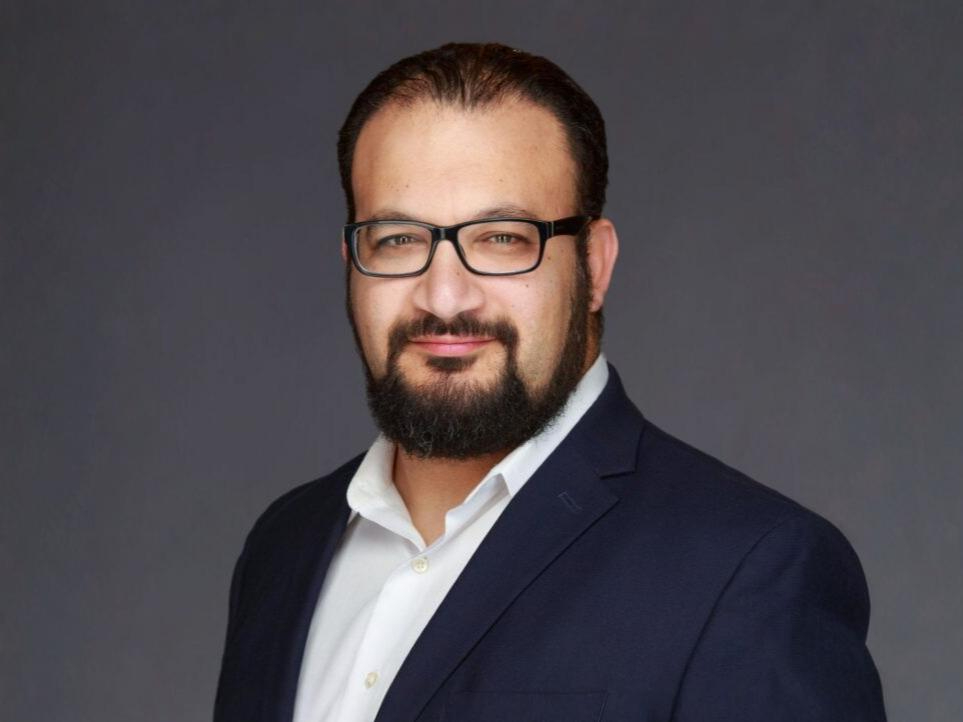
Industry veteran reveals why the path to operational excellence starts with fundamentals, not flashy solutions
The student housing sector begins 2026 facing a counterintuitive reality: the most successful operators aren’t chasing the next big innovation. They’re doubling down on fundamentals with relentless consistency.
Teddy Abdelmalek, who leads business development for HH Red Stone after 25 years in the industry, argues that operators searching for secret formulas are looking in the wrong place. “Everyone thinks there’s this magical thing you have to execute perfectly to be successful,” he observes. “But really, it’s about doing the fundamentals consistently every single day.”
This perspective, shaped by his background spanning student affairs and executive leadership, challenges an industry often enamored with technology platforms and elaborate amenity packages as competitive differentiators.
Treating Residents as Stakeholders, Not Customers
At the core of Abdelmalek’s approach lies a provocative concept: “The residents are your CEO.”
This philosophy transforms how properties operate daily. Rather than viewing residents as customers paying for a service, successful operators treat them with the same attention typically reserved for ownership visits.
“Properties get cleaned up and perfected when ownership visits, but that same level of attention should be standard for the people who actually live there every day,” Abdelmalek explains. “If we applied that consistently, properties would be elevated to an extreme level.”
The practical applications extend beyond cleanliness. Knowing residents’ names, remembering details about their families, and maintaining genuine relationships create tangible business value. When residents feel genuinely respected, retention and satisfaction metrics follow naturally.
The Competitive Edge Hidden in Plain Sight
In markets where properties compete aggressively for prospects, one factor consistently determines winners: response speed.
“If I’m faster than my competitor calling back a prospect who left a message or sent an email, I’m going to win,” Abdelmalek states. “They didn’t reach out for the sake of reaching out. They need information to make a decision.”
HH Red Stone has institutionalized what Abdelmalek calls a “bias towards action.” The question driving operations isn’t whether tasks can wait until tomorrow, but why they shouldn’t be completed today.
This urgency extends beyond prospect communications to maintenance requests, renewal conversations, and operational decisions. In an era where AI promises to accelerate processes, the companies winning are those already operating with intentional speed.
Strategic Selectivity in Growth
As HH Red Stone expands its third-party management platform after a decade managing exclusively its own portfolio, the company has adopted a selective stance that surprises some industry observers.
“We’ve walked away from management opportunities where we didn’t believe the fundamentals were in place for the property to truly succeed,” Abdelmalek reveals.
This selectivity stems from hard-earned wisdom: exceptional management can’t compensate for owners unwilling to invest appropriately in their assets. Properties succeed when ownership and management align around realistic performance goals and the capital required to achieve them.
The company seeks partners who understand that strategic spending matters and who want accountability around metrics operators can actually control: NOI, leasing velocity, and resident experience.
Where Technology Fits (and Where It Doesn’t)
As AI tools proliferate across property management, Abdelmalek advocates for clear boundaries in their application.
“AI should take on mundane work that distracts from resident experience and interaction,” he argues. “Anything that helps with paperwork aspects not directly customer-facing—that’s where the value lies.”
The goal isn’t replacing humans but creating what he calls “superhumans”—staff freed from administrative burdens to focus on genuine connection and community building.
This philosophy recognizes that while prospects might engage with chatbots after hours, the experiences that drive retention happen through human relationships. Technology should enable those relationships, not substitute for them.
California’s Regulatory Shift Creates National Model
Recent changes to California development rights near universities represent what Abdelmalek sees as a potential turning point for the sector.
“California is effectively saying, if you’re building near a campus, we’re going to get out of your way,” he notes. “That’s significant in a state known for regulatory complexity.”
The short-term impact will likely include increased project proposals and rising land values near universities in supply-constrained markets. But the longer-term implications extend beyond California’s borders.
“California will serve as a testing ground,” Abdelmalek predicts. “Other states will watch whether this approach creates better buildings and stronger communities, potentially leading to similar reforms that incentivize development in tier-two markets and underserved areas.”
Investing in Talent as Competitive Strategy
Reflecting on lessons from 2025, Abdelmalek identifies talent development as critical infrastructure often overlooked in strategic planning.
“You have to give on-site talent a clear path forward and invest in their professional development,” he emphasizes. “It’s difficult finding good people. When you find them, you have to double down.”
This means pulling promising staff aside to explore whether property management could become a career rather than a transitional job. It means mentoring young professionals the way Abdelmalek himself was mentored into an industry he initially knew nothing about.
With turnover already challenging the sector, operators who identify natural talent and invest in developing it gain compound advantages over time.
What Success Actually Requires
As HH Red Stone expands—recently closing on a property near Yale University while signing new management agreements—Abdelmalek’s advice to operators remains consistent: be selective about partnerships, execute fundamentals with discipline, respond with speed, invest in people, and remember that residents represent the business’s purpose, not just its revenue.
“When students and residents feel respected, your occupancy and NOI follow,” he concludes. “That’s not a tagline. That’s the formula.”
For an industry often chasing the next innovation, this message offers both challenge and clarity. Excellence isn’t mysterious. It’s just demanding. And it starts with showing up tomorrow to execute fundamentals one more time.
Teddy Abdelmalek is Senior Vice President of Business Development at HH Red Stone. HH Red Stone is the property management arm of HH Group, managing approximately 10,000 beds across multiple asset classes including student housing, multifamily, affordable, and mixed-use properties nationwide. After a decade of exclusively managing HH Group’s owned portfolio, the company launched its third-party management vertical to serve other owners with the same institutional-grade approach it applies to its own assets.