
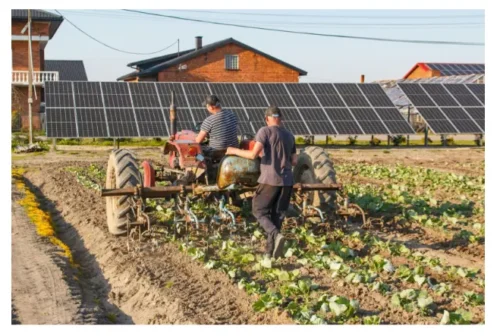
Here’s the reality: bigger equipment won’t save your operation anymore. From Panhandle cotton to Gulf rice farms, you’re juggling shrinking water allocations, spiking labor bills, and buyers who want traceability down to the lot number. Meanwhile, technology in agriculture has crossed from “nice to have” to “can’t compete without it.” We’re talking precision gear, live sensors, and AI tools that tell you exactly what to do and when.
Consider this—Texas cranks out nearly 40% of America’s cotton as of 2023, making it the undisputed king of U.S. cotton production. That scale demands smarter, not just bigger, solutions. This guide cuts through the noise on agriculture in Texas that’s actually working: precision agriculture Texas platforms, automation, IoT networks, aerial drones, satellite feeds, and regenerative systems.
You’ll walk away with adoption roadmaps, clear ROI markers, and gear recommendations—including what matters most when you’re shopping for john deere tractors for sale in Texas as part of your precision upgrade.
The Real Texas Ag Tech Landscape Right Now
Let’s be honest—tech only works if it fits your dirt, your water situation, and your production reality. So before we dive into shiny gadgets, here’s what’s actually driving decisions across the state’s wildly different growing regions.
What Each Region Actually Needs
Panhandle operations growing cotton and corn? You’re watching Ogallala levels drop every year, which makes drip systems and moisture sensors non-negotiable. High Plains producers running sorghum and cattle need variable nitrogen rates and grazing data that actually pencils out.
Blacklands farmers fight heavy clay that compacts fast—controlled traffic patterns and compaction monitoring pay for themselves in one season. Down on the Gulf Coast, rice growers battle salinity creep and hurricane damage, so flood sensors and storm-response drones are critical. South Texas citrus and vegetable folks? You need hyperlocal weather forecasting and freeze alerts to avoid losing six-figure crop investments overnight. For those ready to upgrade their equipment, john deere tractors for sale in texas can help tackle these challenges efficiently.
Why Agtech Adoption Is Accelerating Fast
Water efficiency tops every list. Save a gallon, extend your aquifer access, cut pumping costs. Nitrogen management slashes waste and builds the documentation carbon programs demand. Labor shortages make autonomous machines and robotic weeders look less like sci-fi and more like survival.
And here’s the kicker—insurers and lenders are requiring yield records and practice logs now. Texas agriculture technology isn’t a competitive edge anymore; it’s what gets you approved for financing or market access. Export deals and premium contracts want proof: lower emissions, minimal residue, regenerative methods. No data? No deal.
Precision Tools That Actually Impact Your Bottom Line
Enough context. Let’s talk about the precision systems that consistently deliver measurable wins—less input waste, steadier yields, and the compliance paper trail you’ll eventually need anyway.
Variable-Rate Tech and Section Control
Layer your soil sample grids over the yield history to create prescription maps. Calibrate your controllers for seed, fertilizer, and chemicals, then activate section control to kill overlap waste. The returns hit fast: trimmed input budgets, better yield consistency, cleaner regulatory records, fewer neighbor complaints about drift.
Yield Data You Can Actually Use
Check the yield monitor accuracy before every harvest starts. Clean the data right after each field, then create zones that guide your hybrid selection, replant calls, drainage projects, and nutrient spend. This transforms raw numbers into repeatable management decisions instead of pretty but useless maps.
RTK Systems for Texas Scale
When you’re farming thousands of acres, planting windows and harvest timing are everything. Precision tech adoption among Texas livestock producers varies wildly—some tools hit 18.8% uptake, others barely crack 0.7%.
Smart farming technology like RTK guidance lets you plant at midnight with zero guesswork, reduces soil compaction through controlled lanes, and boosts stand establishment. Decide between base stations or network RTK based on your coverage reality—and don’t skip operator training or uptime planning.
Real-Time Control: Sensors, IoT, and Smart Systems
Precision ag optimizes where and how much. Smart farming tech answers the bigger question: when. Real-time monitoring tells you the exact moment to irrigate, spray, or pull equipment before stress, disease, or downtime drains your account.
Soil Probes Meet ET Models
High Plains irrigators and specialty growers see payback fastest. Install probes by soil type, set thresholds that match crop stage, and create irrigation triggers that alert you automatically. Combine with evapotranspiration modeling so you’re scheduling based on atmospheric demand, not some arbitrary calendar date.
Hyperlocal Weather Stations
Freeze warnings, hail alerts, and disease-risk windows give you the edge on spray timing and harvest scheduling. Integrate station data with your field logs to strengthen insurance claims and sharpen post-season analysis.
Fleet Telemetry That Pays
Track fuel burn, idle hours, and service windows across every machine. Focus on idle reduction, smarter routes, and preventative maintenance—especially when downtime during planting or harvest costs you thousands per day.
Equipment That Actually Talks to Your System
All the precision data in the world means nothing if your machinery, imagery, sensors, and input records live in scattered spreadsheets. You need equipment that integrates, and a management platform that connects it all.
Buying Machinery That Fits Precision Workflows
Look for ISOBUS compatibility, section control capability, guidance receivers, and built-in telematics. Don’t feel pressured to replace everything at once—controllers and displays can often be retrofitted cost-effectively. If you’re comparing john deere tractors for sale in texas, prioritize guidance-ready packages, dealer service density in your area, resale values, machine hours, service history, and implement compatibility. Precision-ready upfront beats expensive retrofits later.
Connectivity Isn’t a Given
Rural dead zones are real. Use store-and-forward workflows, offline-capable apps, and low-bandwidth sensor protocols when LTE is spotty.
Map your actual connectivity before you commit to cloud-dependent platforms, and lean toward edge computing solutions when possible.
How to Actually Deploy This Stuff Without Breaking Your Operation
Once you’ve proven ROI with current tools, keep your eyes on what’s next—biologicals paired with AI, gene-edited heat tolerance, blockchain traceability. These aren’t five years out; they’re hitting Texas fields now.
Your 90-Day Pilot Blueprint
Pick one to three fields. Define a single goal: water savings, fertilizer cuts, weed control, or labor efficiency. Train your operators, lock down field boundaries, and document baseline performance. Compare against control fields using clear success thresholds you define upfront.
Scaling Without Chaos
Build SOPs for calibration, data sync, variable-rate execution, and scouting. Assign clear owners—operator, agronomist, manager—and hold weekly reviews. Consistency beats perfection every time.
Finding the Money
Pencil out your business case: payback timeline, risk reduction, resilience value. Then identify equipment financing, insurer discounts, conservation cost-share programs, and pilot partnerships. Cost is the biggest barrier to adoption, so line up capital before you commit.
Quick Answers to the Questions Everyone Asks
1. How does technology actually tie into agriculture?
Technology and automation now power field and indoor operations alike. Robotics handles planting, nutrient delivery, development monitoring, and harvesting. This slashes labor needs and ensures quality at scale.
2. What makes Texas agriculture unique?
Texas dominates in cotton, hay, sheep, goats, mohair, and horses. Top crops include vegetables, citrus, corn, wheat, peanuts, pecans, sorghum, and rice. The state ranks among the top ag exporters nationally.
3. What kind of ROI should I expect?
It varies, but section control and variable-rate fertilizer typically pay for themselves within two growing seasons through reduced overlap and input savings alone.
Your Next Move with Ag Technology
Technology in agriculture stopped being optional the moment water got scarce, labor got expensive, and buyers started demanding proof. Whether it’s precision agriculture, Texas systems cutting input waste, or ranch sensors boosting herd health, the tools exist, and the adoption path is clear. Start small, measure ruthlessly, scale what works. The producers who thrive won’t be the ones with the most tech—they’ll be the ones who deploy the right tech and use it relentlessly.