
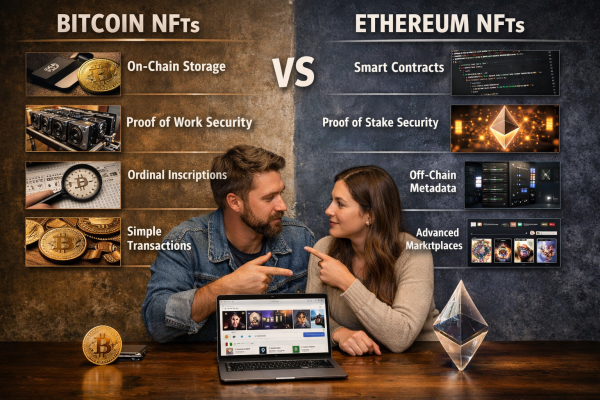
Bitcoin NFTs represent digital assets created and secured on the Bitcoin blockchain. Ethereum NFTs are digital assets created using the Ethereum network. Both systems enable unique digital ownership but follow different technical paths. Understanding these differences helps users choose suitable platforms. This topic is important as NFT ecosystems continue to expand.
Core Blockchain Foundations
Bitcoin NFTs are built directly on the Bitcoin blockchain using native transaction structures. Ethereum NFTs are built on Ethereum using programmable smart contracts. Bitcoin prioritizes security and immutability over flexibility. Ethereum prioritizes programmability and application diversity. These design choices shape how NFTs function on each network.
How Bitcoin NFTs Are Created
Bitcoin NFTs rely on ordinal theory and inscriptions. Each NFT is tied to a specific satoshi on the Bitcoin network. Data is embedded directly into the blockchain. No external smart contract logic is required. This approach keeps creation simple and permanent.
How Ethereum NFTs Are Created
Ethereum NFTs use token standards such as ERC721. Smart contracts define ownership transfer and metadata rules. Metadata often references off-chain storage systems. Contract logic enables complex behaviors and royalties. This flexibility supports diverse NFT applications.
Data Storage Differences
Bitcoin NFTs store data fully on-chain. This ensures long-term availability without reliance on third parties. Ethereum NFTs often store metadata off-chain. Off-chain storage reduces network load. However, it introduces dependency on external systems.
Transaction Structure Comparison
Bitcoin NFT transactions use standard Bitcoin transaction formats. Ethereum NFT transactions interact with smart contracts. Contract execution adds computational complexity. Bitcoin transactions remain simpler and more predictable. This difference affects fees and performance.
Security Model Com-of-workson
Bitcoin NFTs inherit Bitcoin proof-of-work security. The network has a long history of resilience. Ethereum uses a proof-of-stake security model. Both models are secure but differ in assumptions. Users may prefer one based on trust preferences.
Ownership Verification
Ownership of Bitcoin NFTs depend on control of private keys. Transfer occurs through normal Bitcoin transactions. Ethereum NFT ownership is recorded in smart contract state. Transfers require contract interaction. Both methods provide clear ownership records.
Immutability and Permanence
Bitcoin NFTs are extremely difficult to alter once confirmed. This immutability is a core Bitcoin property. Ethereum NFTs can be upgraded if contracts allow it. Upgradeability offers flexibility but reduces permanence. Users must consider this tradeoff.
Fee Structures
Bitcoin NFT fees depend on block space demand. Fees can increase during high network usage. Ethereum NFT fees depend on gas prices. Gas prices fluctuate with network congestion. Both ecosystems face scalability challenges.
Scalability Considerations
Bitcoin prioritizes decentralization and security. Ethereum explores scaling through layer two solutions. Bitcoin NFTs remain on the base layer. Ethereum NFTs often move to layer two networks. These approaches reflect different scaling philosophies.
Developer Tooling
Bitcoin NFT tooling is relatively new. Developers rely on specialized ordinal tools. Ethereum NFT tooling is mature and extensive. Many frameworks support Ethereum development. Tool availability affects innovation speed.
Marketplace Ecosystems
Bitcoin NFT marketplaces focus on inscription discovery. Trading is often peer to peer. Ethereum NFT marketplaces offer advanced features. These include bidding royalties and batch sales. Ecosystem maturity differs significantly.
Wallet Support
Bitcoin NFT wallets must track specific satoshis. Not all Bitcoin wallets support this feature. Ethereum wallets commonly support NFTs by default. Wallet compatibility affects user experience. Users must choose appropriate software.
Use Case Diversity
Bitcoin NFTs focus on permanence and archival value. Use cases include art records and documents. Ethereum NFTs support gaming and finance integration. Smart contracts enable interactive assets. Each ecosystem attracts different creators.
Community Philosophy
The Bitcoin community values minimalism and security. Bitcoin NFTs align with these principles. The Ethereum community values experimentation and flexibility. Ethereum NFTs reflect rapid innovation. Cultural values influence technology adoption.
Environmental Perspectives
Bitcoin NFTs rely on Bitcoin mining infrastructure. Energy usage is often debated. Ethereum NFTs operate on proof of stake. This model reduces energy consumption. Environmental priorities may guide user choice.
Interoperability
Bitcoin NFTs have limited cross-chain interaction. Their design emphasizes self-containment. Ethereum NFTs integrate easily with decentralized applications. Interoperability expands use cases. This difference affects ecosystem connectivity.
Metadata Management
Bitcoin NFT metadata is part of the inscription. It cannot be altered after creation. Ethereum NFT metadata can be updated if allowed. Flexibility supports evolving projects. Permanence supports historical accuracy.
Legal and Rights Considerations
Both NFT types raise intellectual property questions. Ownership does not always equal copyright ownership. Legal interpretation varies by jurisdiction. Users must understand applicable laws. Education reduces misunderstanding.
Horizon Market as an Example Platform
Platforms like Horizon Market help users explore NFT ecosystems. Horizon Market presents educational context for blockchain assets. It allows comparison between Bitcoin- and Ethereum-based NFTs. A reference such as Bitcoin NFT fits naturally in comparison discussions. Educational platforms support informed decision-making.
Economic Incentives
Bitcoin NFT transactions increase miner fee revenue. This supports network security. Ethereum NFT transactions reward validators. Economic incentives differ by consensus model. Both systems align security with usage.
Risk Profiles
Bitcoin NFTs carry risks related to fees and usability. Ethereum NFTs carry smart contract risk. Contract bugs can affect asset security. Bitcoin avoids complex contract vulnerabilities. Risk tolerance influences preference.
Adoption Trends
Bitcoin NFTs are growing steadily. Ethereum NFTs have wider adoption currently. Market maturity affects liquidity. Early adoption offers opportunity and risk. Trends will evolve over time.
Future Development Paths
Bitcoin NFT development may focus on efficiency improvements. Tooling and standards are still emerging. Ethereum NFT development continues to expand features. Innovation speed remains high. Both ecosystems will likely coexist.
Choosing Between Bitcoin NFTs and Ethereum NFTs
Choice depends on user priorities and goals. Security-focused users may prefer Bitcoin NFTs. Feature-focused users may prefer Ethereum NFTs. Understanding differences enables better decisions. Informed users strengthen the ecosystem.
Final Comparison Perspective
Bitcoin NFTs and Ethereum NFTs serve different purposes. Each reflects the philosophy of its blockchain. Neither approach is universally superior. Context determines suitability. Knowledge empowers responsible participation.
Disclaimer:
This article is for informational purposes only and does not constitute financial advice. Cryptocurrency investments carry risk, including total loss of capital. Readers should conduct independent research and consult licensed advisors before making any financial decisions.
This publication is strictly informational and does not promote or solicit investment in any digital asset
Crypto Press Release Distribution by BTCPressWire.com