

As fashion and lifestyle brands face mounting pressure to deliver measurable results, the traditional divide between creative storytelling and performance marketing is rapidly disappearing. A new generation of marketers is emerging at this intersection—professionals who treat campaigns not as isolated creative moments, but as integrated systems designed to move customers from awareness to conversion.
Sumin, a creative director and performance marketer, is part of that shift. In this interview, she discusses how blending creative direction with data-driven strategy has helped deliver consistent results across global campaigns.
Rethinking the Creative–Performance Divide
Q: Your work spans both creative direction and performance marketing. How do you define your approach?
Sumin:
Many brands still separate creative and performance teams, yet I’ve always seen them as part of the same system. Fashion marketing is about building ecosystems—campaigns that move naturally from awareness to conversion. My role has usually sat at that intersection. I work on shaping the creative direction, but I also stay deeply involved in the performance structure so the campaign isn’t just visually strong, but commercially effective.
Designing Campaigns as Learning Systems
Q: What does that look like in practice?
Sumin:
It usually starts with building a clear campaign structure. We identify the core audience segments, then develop a few creative templates that reflect different emotional or functional appeals.
From there, we run continuous A/B tests to see what resonates. Instead of changing everything at once, we refine specific elements—like framing, messaging, or pacing—so we can isolate what’s actually driving conversions.
Q: And how does that translate into results?
Sumin:
By iterating consistently and adjusting retargeting ratios based on performance, we were able to maintain a ROAS above 10 for more than six months. That kind of consistency usually comes from treating campaigns as ongoing experiments rather than one-time launches. It’s also important to read the data to know when it’s the right time to reinforce retargeting versus when to focus on the top of the funnel.
Managing Licensed Collaborations at Scale
Q: You’ve also worked on licensed collaborations with major IPs. What was your role there?
Sumin:
My focus was on the U.S. launch campaigns for licensed collections. That included creative direction, paid social execution, and coordination with external partners.
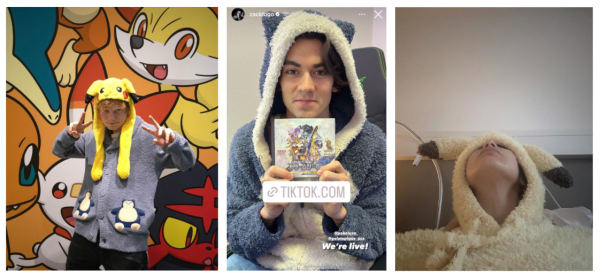
For one Pokémon collaboration, I managed both paid campaigns and the celebrity seeding initiative. We reached out to more than 30 targeted public figures, and four of them posted organically, which extended the campaign’s reach without additional ad spend.
Using UX to Drive Conversion
Q: You’ve mentioned the importance of user experience in campaigns. Can you give an example?
Sumin:
In the Holiday Gift Market project, we reorganized the landing page around gifting intent—such as “For Her” or “For Him”—but the focus went beyond simple categorization. Within each section, products were arranged in a flow that helped customers imagine the gifting scenario, from accessible everyday pieces to more premium, statement items.
This structure was reinforced through curated newsletters that regularly highlighted recommended products, guiding purchase decisions and driving higher conversion during the peak season.
Previously, items like gift boxes were treated as standalone products, which disrupted the shopping flow. After the redesign, the campaign generated six-figure revenue, and gifting orders nearly doubled year over year. It showed how UX decisions can directly impact conversion.
A Philosophy Built on Iteration
Q: What philosophy guides your approach to advertising?
Sumin:
The goal isn’t just to increase spend—it’s to continuously refine what works and let the data shape the next move. When campaigns are treated as learning systems, performance becomes much more sustainable.
Conclusion: The Future of Integrated Marketing
As brands increasingly demand both creative excellence and measurable growth, the lines between storytelling and performance are continuing to blur. Sumin’s approach reflects a broader industry shift—one where campaigns are designed as interconnected systems, not isolated launches. By treating creative direction, user experience, and performance data as parts of a single strategy, marketers can build campaigns that not only capture attention, but convert it into lasting results.
Press Release Distribution by IndNewsWire