
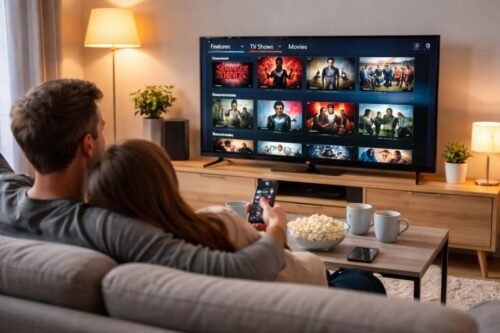
Television has undergone a steady but profound transformation over the past few decades. What was once a scheduled, broadcast-driven medium has evolved into a flexible, on-demand experience shaped by digital infrastructure, internet connectivity, and changing audience expectations. This shift has not only redefined how content is delivered but also how it is consumed, discovered, and valued.
Today, digital television is no longer tied to a single device or viewing environment. Instead, it exists as part of a broader media ecosystem that spans smart TVs, mobile devices, and streaming platforms, reflecting a more personalized and user-driven approach to entertainment.
From Broadcast to Digital Foundations
The transition from analog to digital broadcasting marked one of the earliest and most significant changes in television history. Digital signals allowed for clearer picture quality, improved sound, and more efficient use of bandwidth. This made it possible for broadcasters to offer multiple channels and additional features within the same spectrum.
Beyond technical improvements, digital broadcasting introduced new functionalities such as electronic program guides and interactive services. These developments laid the groundwork for a more dynamic viewing experience, even before the rise of internet-based platforms.
At this stage, however, television was still largely defined by scheduled programming. Viewers tuned in at specific times, and content availability remained limited by network decisions.
The Emergence of Streaming and On-Demand Viewing
The rise of internet-based streaming fundamentally changed how television content is accessed. Instead of adhering to broadcast schedules, viewers gained the ability to watch content at their convenience. Entire libraries of shows and films became accessible on demand, allowing for greater flexibility in viewing habits.
This shift also introduced new consumption patterns, such as watching multiple episodes in a single sitting. The concept of “appointment viewing” began to decline as audiences prioritized convenience and control over timing.
Changing Viewing Habits in the Digital Age
Modern viewing habits reflect a clear departure from traditional television behavior. Audiences now expect content to be available whenever and wherever they choose to watch it.
One of the most notable changes is the integration of viewing into everyday life. Content is no longer confined to specific time slots or locations. Instead, it is consumed across different moments throughout the day, whether during commutes, breaks, or at home.
This shift has also led to more individualized viewing experiences. Rather than families gathering around a single screen, individuals often watch content independently on personal devices.
Multi-Device Access and the Rise of Mobile Viewing
The proliferation of connected devices has played a key role in reshaping television consumption. Smartphones, tablets, and laptops have become common platforms for watching video content, complementing traditional television screens.
This multi-device environment allows users to switch seamlessly between devices, continuing their viewing experience without interruption. It also supports greater flexibility, enabling content to be accessed in a variety of contexts.
Mobile viewing, in particular, has contributed to shorter and more frequent viewing sessions. While long-form content remains popular, shorter formats have gained traction as audiences adapt their consumption to fit into smaller time windows.
Personalization and Content Discovery
Digital television has introduced new methods of content discovery, largely driven by personalization technologies. Platforms now use viewing history and user behavior to recommend content tailored to individual preferences.
This approach reduces the need for manual searching and helps users navigate increasingly large content libraries. It also influences how audiences engage with content, often encouraging exploration beyond familiar genres or formats.
At the same time, personalization has shifted the role of traditional programming schedules. Instead of relying on curated lineups, viewers are guided by algorithmic suggestions that adapt to their interests over time.
Fragmentation and the Complexity of Choice
While digital TV has expanded access to content, it has also introduced a degree of fragmentation. Content is often distributed across multiple platforms, each with its own library and access model.
As a result, viewers may need to navigate several services to access different types of content. This complexity reflects the competitive nature of the digital media landscape, where platforms seek to differentiate themselves through exclusive offerings.
Despite this fragmentation, the overall trend remains one of increased choice. Audiences have more control than ever before, even if that control comes with additional decision-making.
The Role of Smart TVs and Connected Ecosystems
Smart TVs have become central to the modern viewing experience, integrating streaming applications and internet connectivity directly into the television interface. This has simplified access to digital content, reducing the need for external devices.
These connected systems also enable features such as voice control, app-based navigation, and seamless integration with other smart home technologies. As a result, the television is no longer a standalone device but part of a broader digital ecosystem.
This integration has further blurred the distinction between traditional television and internet-based media, reinforcing the shift toward digital-first viewing.
Flexible Access Models and Emerging Platforms
As viewing habits continue to evolve, new content delivery models are emerging to meet changing expectations. These include ad-supported streaming services, hybrid broadcast-streaming approaches, and internet-based television systems.
Platforms such as https://iptvfreetrial.store illustrate how content delivery is increasingly aligned with internet infrastructure rather than traditional broadcast systems. While approaches vary, the underlying trend is consistent: viewers are seeking more flexible and customizable ways to access television content.
This evolution reflects a broader movement toward user-centered design, where access and control are prioritized over rigid distribution models.
Redefining What Television Means
The concept of television itself has expanded beyond its traditional definition. It now encompasses a wide range of content types, from long-form series and films to short-form videos and live streams.
This diversification has been influenced by digital platforms that prioritize engagement and accessibility. Content is no longer limited to professionally produced programming but includes user-generated and independent material as well.
As a result, television has become a more inclusive and dynamic medium, accommodating a variety of viewing preferences and creative formats.
Looking Ahead: The Future of Digital Viewing
The evolution of digital TV is ongoing, shaped by technological advancements and shifting audience expectations. Future developments are likely to focus on enhancing personalization, improving content quality, and simplifying access across platforms.
At the same time, traditional elements of television, such as live events and shared viewing experiences, are expected to remain relevant. Rather than being replaced, they are increasingly integrated into the broader digital ecosystem.
The future of television will likely be defined by balance: combining the immediacy of live content with the flexibility of on-demand viewing.