
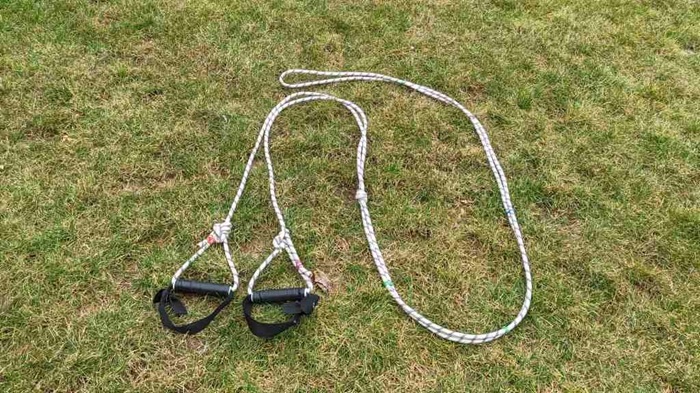
In the world of fitness, innovation often leads to simplicity. The TRX suspension trainer exemplifies this principle perfectly, offering an incredibly versatile way to build impressive biceps using nothing but bodyweight resistance. We have developed an innovative design for TRX that improves its functionality and adds more exercise to your plan. I’m excited to share insights into TRX Bicep exercises.
Why TRX for Biceps?
Traditional bicep training typically conjures images of dumbbells and barbells. However, TRX suspension training provides unique advantages that conventional weight training cannot match:
- Constant tension throughout the movement – Unlike weight training where resistance varies at different points of the curl, TRX maintains consistent tension on the biceps if applied properly.
- Freedom of movement – The unstable nature of suspension straps activates more stabilizer muscles and allows for natural movement patterns.
- Portable and versatile – With just a simple anchor point, you can perform dozens of bicep variations anywhere.
- Low joint impact – TRX bicep curls reduce stress on the wrist and elbow joints compared to traditional weighted curls.
- Progressive challenge – By implementing “intelligent weight” techniques, you can make micro-adjustments to resistance levels without changing equipment.
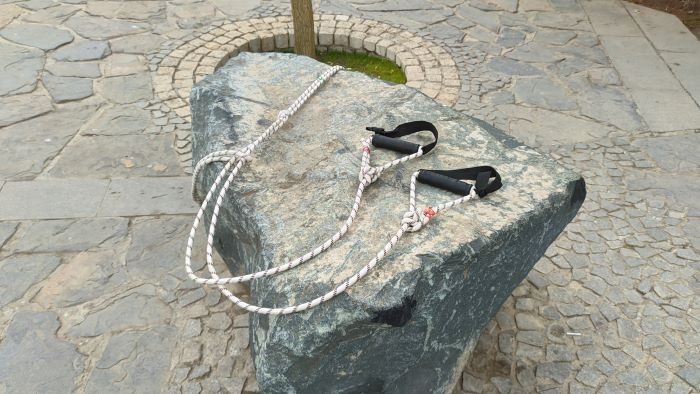
Moreover, our custom homemade suspension trainer can effectively be combined with weight. So, you have the freedom to either use it as calisthenics equipment or a tool to lift weight.
Mastering the Fundamental TRX Bicep Curl
Before exploring variations, it’s crucial to understand the basic mechanics of a proper TRX bicep curl:
Setup and Execution:
- Establish a high anchor point for your TRX straps
- Grab the handles with an underhand grip (palms facing up)
- Position your body at an angle, leaning back with arms extended
- Keep your body straight from head to heels
- Pull yourself upward by flexing at the elbows only, maintaining tension throughout
The key to maximizing effectiveness lies in body positioning. Your initial lean determines the resistance level – a greater lean creates more resistance. The concept of “intelligent weight” allows you to make subtle adjustments by manipulating your body position and foot placement.
Beyond the Basics: Advanced TRX Bicep Techniques
What truly separates effective TRX bicep training from mediocre workouts is understanding these advanced concepts:
1. The Power of Eccentric Training
The eccentric (lowering) phase of the bicep curl is where significant muscle damage and growth potential occurs. With TRX, you can emphasize this phase by:
- Starting in the flexed position with handles near shoulders
- Slowly controlling the descent as you extend your arms
- Taking 3-5 seconds for each eccentric phase
- Using a supporting leg to assist returning to the starting position
The TRX Eccentric Bicep Curl and Pelican Curl variations specifically target this principle.
2. Grip Variations for Complete Development
The biceps brachii consists of two heads, while the brachialis and brachioradialis muscles also contribute to arm development. Different grip positions target these muscles uniquely:
- Underhand grip (supinated): Maximizes biceps brachii activation
- Overhand grip (pronated): Emphasizes the brachialis muscle
- Neutral grip (hammer): Focuses on the brachioradialis
Implementing grip variations like the TRX Zottman Curl combines these positions for complete forearm development.
3. Strategic Anchor Positioning
Many trainees miss the benefits of varying anchor positions:
- Single anchor point: Creates a narrower grip, bringing handles naturally closer together
- Double anchor points: Allows for wider grip positions and different movement patterns
- High vs. low anchor points: Changes the angle of pull and muscle emphasis
Sample TRX Bicep Workout Blueprint
Based on these principles, here’s a comprehensive TRX bicep workout:
Warm-up:
- 2 minutes of light TRX rows to prepare the arms
Main Workout:
- Traditional TRX Bicep Curls: 3 sets x 12-15 reps
- Focus on perfect form and full range of motion
- TRX Zottman Curls: 3 sets x 10-12 reps
- Supinate during flexion, pronate during extension
- TRX Bicep Clutch Curls: 2 sets x 15 reps
- Bring handles to chest, emphasize peak contraction
- TRX Eccentric Bicep Curls: 2 sets x 8 reps
- 4-count lowering phase, 1-count lifting phase
Finisher:
- TRX Bicep Burnout: 1 set to failure
- Alternate between regular curls and hammer curls every 5 reps
Common Mistakes to Avoid
Even experienced trainees make these errors when performing TRX bicep exercises:
- Improper body alignment – Keep your core engaged and body straight from ankles to ears
- Using momentum – Avoid swinging or using body momentum to complete reps
- Insufficient tension – Maintain resistance throughout the entire range of motion
- Inconsistent foot positioning – Your stance determines resistance levels, so maintain consistency
- Neglecting full extension – Always fully extend the arms to work the biceps through their complete range
Integrating TRX Bicep Training into Your Routine
For optimal results, incorporate TRX bicep training in one of these approaches:
- As a standalone bicep workout: Perform 4-5 TRX bicep variations for complete arm development
- As a superset with pushing movements: Pair TRX bicep exercises with pushups or dips
- Within a full-body circuit: Include 1-2 TRX bicep exercises in a comprehensive workout
- As a finisher: After traditional weight training, use TRX bicep exercises to exhaust the muscles
Conclusion
TRX suspension training offers a revolutionary approach to bicep development that challenges conventional weight training methods. By leveraging bodyweight resistance through intelligent angles and positions, you can achieve impressive arm development without the need for heavy weights.
For more details and instructions please refer to our comprehensive guide to TRX Bicep workouts.