
Northwest Louisiana faces complex challenges, from economic development to public education and infrastructure. Voters often feel disconnected from the political process, seeking leaders who prioritize local community needs over partisan disputes. Real progress requires a practical approach to problem-solving and a commitment to listening to the people directly affected by these issues.
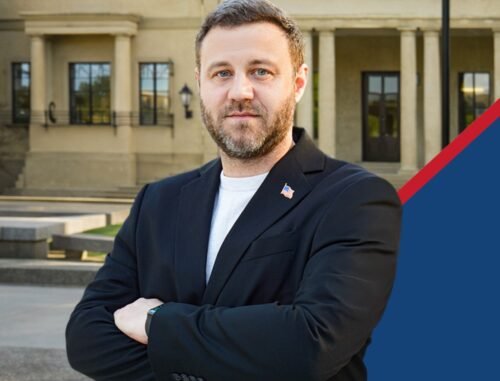
Dr. Matt Gromlich, an educator and researcher at Louisiana State University Shreveport, aims to bridge this gap. As a candidate for Louisiana’s Fourth Congressional District, he has built a campaign rooted in community engagement and data-driven solutions. The following conversation explores his grassroots campaign, his strategy for uniting residents, and his actionable vision for a stronger Louisiana.
Q: The U.S. House races in Louisiana have had significant changes in the last four months. Can you describe what happened and what that means for the November 3rd election?
Dr. Matt Gromlich: On April 29, 2026, the U.S. Supreme Court ruled that Louisiana’s congressional map was unconstitutional. The following day, Governor Jeff Landry issued an executive order suspending the party primary elections for U.S. House across the state – even though 42,000 mail-in ballots had already been returned.
The Louisiana State Legislature then re-drew the congressional maps and ratified them in late May. For my race, in particular, the change meant that six parishes were removed from District 4 (Lincoln, Ouachita, Jackson, Winn, Grant, and Rapides) and one parish was added (Natchitoches).
In addition to the redistricting, the Louisiana State Legislature also changed the type of election – from a closed party primary on May 16th to an open “jungle” primary on November 3rd.
What that means is ALL candidates will be on the ballot together on November 3rd. If no one receives over 50% of the vote in November, the top two candidates (regardless of party) will head to a runoff on December 12th.
The change in the election structure also meant that new candidates were able to jump into the race. All candidates had to qualify for the ballot – even if they had already previously qualified.
Q: You secured your place on the ballot through a voter petition rather than paying the qualifying fee. How did this process shape the foundation of your campaign in northwest Louisiana?
Dr. Matt Gromlich: As I mentioned, after the May 16th primary election was canceled, the Louisiana State Legislature changed our districts and re-opened qualifications for the November 3rd ballot.
When this change occurred, our team decided to re-qualify through voter petition, instead of paying a qualifying fee. We did so to make a statement: that, even though they canceled a free and fair election while it was currently in progress, we were still fighting. We only had about 5 weeks to collect a minimum of 250 valid signatures. We collected over 500.
I am extremely proud of the work we put into collecting signatures. We traveled all across the district and made appeals directly to voters as to why we should get back on the ballot.
The overwhelming support that we received shows that this campaign is not about one person. This is a movement.
Q: Over the past few months, you have traveled all across the district – the “old” district (before redistricting) and the “new” district (after redistricting). What are the most pressing concerns you hear from residents, and how do those conversations inform your platform?
Dr. Matt Gromlich: Throughout District 4 (both the “old” and the “new” District 4), there are some universal concerns as well as local concerns. Our new district is composed of 15 parishes. That is approximately 760,000 people. Geographically, our district stretches from Northwest Louisiana all the way down the western side of the state. So, not every local concern is the same.
Across the district, healthcare continues to be the main concern. 34% of the state’s population relies on medicaid and 21% on medicare. With the passing of HR1, the One Big Beautiful Bill, it is estimated that between 33-40 rural hospitals in Louisiana will close. This is on top of one-third of Louisiana’s parishes already not having birthing hospitals, centers, or OB providers. People are scared about their healthcare access now and in the future.
In the northwest part of the district, data centers and water quality are a huge local issue. Data centers have been approved without environmental studies, public support, or transparency. Many local officials have signed NDAs.
In the middle part of the district, transportation and high-speed internet access are significant concerns. People are moving out of the area to larger cities in order to live and work.
In the southern part of the district, carbon capture and sequestration are the major priorities. People are, rightfully, afraid of what this means for health, safety, and property rights.
Q: As a researcher and educator at LSUS, you emphasize using data and collaboration to solve complex problems. How will you apply this academic approach to legislative work in Congress?
Dr. Matt Gromlich: As an educational researcher, my entire higher education career has been reading research, studying issues, collecting data, analyzing data, and summarizing the information. This approach to legislation is exactly what we need in Congress. We need people who understand how to collect data that includes all stakeholders. We need legislators who actually take the time to write their own legislation – and then communicate that legislation and its impacts to their constituents.
Q: Your volunteer base has grown to over 100 people from diverse backgrounds. How do you manage to bring individuals with differing views together around a shared goal?
Dr. Matt Gromlich: At the beginning of our campaign, we were trying to find a term that exemplified our mission and movement. We settled on the term “like-hearted.” We have never been about finding people who agree with us 100%. We know that people come from a variety of backgrounds and have many beliefs.
What we are looking to do in this campaign is to connect people who have the same goal: to make Louisiana better.
This has resonated across the district. We have gathered together over 100 volunteers of all backgrounds – including Democrats, No Party voters, and Republicans!
Q: Your platform highlights economic opportunity, public education, and infrastructure. Which of these areas requires the most immediate action, and what is your first step to address it?
Dr. Matt Gromlich: Honestly, all of these areas require immediate action and focus. We should be able to work on all of these issues at the same time. But, as I stated earlier, the most important issue that I hear from voters is healthcare. We must change our healthcare system. It is time to implement Medicare for All. We can not continue with the broken system we have today.
Q: The current political climate is highly polarized. How do you plan to maintain a focus on practical, community-centered leadership if elected to represent the Fourth District?
Dr. Matt Gromlich: If elected as the representative for District 4, then our campaign would have already overcome some of the polarization in our community. We would have shown that our message can break down political barriers.
In this position, I would continue to work with all people and listen to all constituents to guarantee that I provide practical solutions to real problems.
We have had enough division. It’s time for unity.
Conclusion: A Community-Centered Path Forward for Northwest Louisiana
This conversation shows a clear local demand for responsive leadership in northwest Louisiana. By focusing on direct community engagement and practical problem-solving, the campaign proves that voters value connection and honest dialogue. The effort centers on shared community goals rather than political divides, setting a solid foundation for action. Dr. Gromlich’s platform directly addresses pressing regional priorities—from preserving rural healthcare access and expanding high-speed internet to ensuring environmental accountability and transparency across all 15 parishes.
Effective representation relies on leaders who are willing to listen and understand the daily struggles of their constituents. Dr. Gromlich’s grassroots approach offers a direct path toward addressing the core issues in the Fourth District. Grounded in research and evidence-based policy, his coalition of “like-hearted” volunteers demonstrates that community members across party lines can unite behind a common purpose.
As the election approaches, his focus on education, infrastructure, and economic opportunity presents a clear option for voters seeking community-centered governance. By choosing direct public outreach over partisan posturing, Dr. Gromlich continues to build a movement dedicated to delivering accountable representation and long-term progress for working families throughout Northwest Louisiana.
To learn more, visit https://www.mattgromlichforcongress.com/