
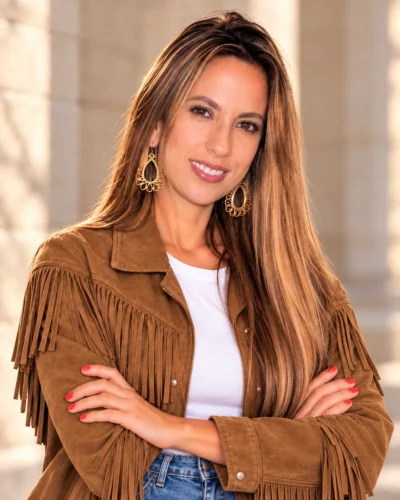
Andrea Sicard García’s career has spanned three environments: media, digital platforms, and influencer communities. For more than twelve years, the bilingual strategist has worked in public relations, digital marketing, and influencer marketing, bringing these disciplines together in campaigns and positioning strategies for audiences in the United States and Latin America.
She studied Social Communication and Journalism at Universidad Sergio Arboleda. She later completed postgraduate studies in Marketing Management at the same institution and earned a dual qualification in Digital Marketing from the University of Salamanca. She complements her academic background with ongoing online courses to keep her knowledge current and explore tools and approaches relevant to her work in communications and marketing.
Her experience encompasses both defining a strategy and handling the negotiations and decisions required to execute it: finding a relevant media angle, selecting the right influencer, developing content, and evaluating audience responses. Across projects in technology, e-commerce, entertainment, healthcare, and consumer sectors, this work requires understanding what each organization or expert needs to communicate and what matters to the audience they want to reach.
“Before thinking about what we are going to publish, I want to define what we want people to understand, remember, or do after encountering the brand,” says Sicard García.
Influencer Marketing: From Audience Alignment to Campaign Execution
Andrea creates and directly leads influencer marketing campaigns, from strategy development through results analysis. Her work brings together audience research, creator selection and negotiation, the development of briefs and key messages, collaborative scriptwriting, and the coordination of production and publishing.
This experience sits within an industry attracting growing investment. According to the Interactive Advertising Bureau (IAB), U.S. creator advertising spending reached $37 billion in 2025. In April 2026, the organization projected that spending would reach $44 billion that year. This scale makes the judgment behind partner selection and campaign development particularly important.
To guide selection, Andrea has developed an evaluation framework covering six dimensions: reputation and track record; the quality of comments and conversations; language and tone; storytelling ability and audience connection; audience authenticity and consistency; and alignment with the brand and campaign objective.
The assessment combines quantitative indicators with a review of the content and the influencer’s relationship with their community. Andrea examines the questions they receive, how audiences respond to their recommendations, the expressions they use, and how they tell their stories. She also reviews previous partnerships and potential conflicts with the brand’s positioning.
Views, likes, and comments are examined together across multiple posts. Their consistency helps reveal patterns and potential anomalies, although no single indicator proves that an audience is authentic.
Audience alignment completes this assessment: a community may be active and engaged without matching the campaign’s target market, interests, or needs. The framework helps inform that decision before moving into negotiation and creative development.
The research also covers the topics, trends, and formats that attract followers’ interest. Andrea uses these findings to develop concepts in which a product or service plays a meaningful role within an experience, a need, or an everyday situation.
From this foundation, she develops the brief and defines the objective, audience, creative concept, key messages, and call to action. She also establishes the deliverables and guidelines that will shape the work with influencers.
Her involvement continues through script development. She works directly with creators on the opening hook, story structure, brand integration, and closing. Key messages are adapted to each influencer’s language to preserve the campaign’s intent and the voice their community recognizes.
“When I create a campaign, I want the audience to recognize a situation from their own lives and understand what the product contributes to it. That is why I get involved in the scripts and develop them with each influencer: the brand needs to have a purpose within the story, and the creator needs to be able to tell it in their own voice,” Andrea says.
This collaborative development allows them to explore how to show a product in use, explain a service, or incorporate an experience into the creator’s narrative. A natural presentation is developed through the script and staging, while keeping the commercial nature of the partnership transparent.
Andrea also directly manages negotiations, budgets, deliverables, and partnership schedules. She coordinates content review and publication and analyzes results against the campaign objective. Performance metrics, together with audience questions and reactions, help her identify which messages worked, what content needs adjustment, and which partnerships should continue.
From Media Coverage to Digital Conversation
A company may have a story to tell, while an expert may have the knowledge to explain what is happening. Identifying why that contribution would interest a journalist and their audience is part of Andrea Sicard García’s work in public relations.
Andrea develops PR strategies for companies and experts. Professionals across different specialties turn to her to raise the visibility of their expertise, strengthen their positioning, and identify opportunities to contribute to the media. Her work involves identifying topics on which they can offer a distinctive perspective, developing editorially relevant angles, and preparing clear messages for the audiences they want to reach. Specialized knowledge can help interpret a news story; professional experience can offer a different perspective on a debate.
“When I work with a company or an expert, I look for what they can explain from their experience that moves a conversation forward. That contribution allows me to develop an angle that interests the journalist and offers value to their audience,” adds Andrea Sicard García.
Once an interview or article is published, Andrea develops the story further across digital channels. An explanation can become a video, a reflection can become a post, and an audience question can become a new editorial topic. Each adaptation aims to preserve the message’s accuracy and the speaker’s voice.
Audience responses also guide subsequent work. Recurring questions and topics that generate interest reveal opportunities to explore an issue further, clarify concepts, or propose additional media contributions.
A media appearance therefore becomes a starting point for developing content and new opportunities to participate in public conversations, sustaining the positioning of the companies and experts she works with.
Across Markets: Context Also Shapes Strategy
A professional background that is well recognized in one country may need to be introduced differently in another. The same applies to a campaign: sharing a language does not guarantee that references, messages, or selected situations carry the same meaning for every audience.
In her work across the United States and Latin America, Andrea Sicard García considers these differences from the planning stage. The news agenda, the audience’s existing knowledge, and the ways credibility is established influence the selection of media outlets, influencers, and creative approaches.
“There are experts with valuable knowledge who have not yet found a way to bring it into public conversation. My job is to identify what they can explain better than others and why that contribution matters at that moment. When we work in another market, I consider what context the audience needs to understand the value of that expertise,” explains Andrea Sicard García.
For an expert, this adaptation may involve connecting their knowledge to a local issue or explaining background information that is unfamiliar to a new audience. In an influencer campaign, it may change the choice of creator, the references in the script, or the situation in which a product or service is presented.
Representation also influences that relationship. According to Nielsen’s 2025 report on Hispanic consumers in the United States, 56% wished they saw greater representation in their social media feeds; among Spanish speakers, the figure rose to 63%. The finding provides context about this specific audience and reinforces the importance of examining whose experiences appear in content intended for them.
This international perspective runs through all three areas of her work: public relations, digital marketing, and influencer marketing. Audience research informs both the story she pitches to a journalist and the content she develops with a creator.
Andrea Sicard García’s contribution lies in this connection between strategic judgment and direct involvement. Her work ranges from deciding which story deserves development to building the script, preparing the editorial approach, and reviewing audience responses. For the companies and experts she works with, that continuity helps maintain a clear direction as channels, formats, and markets change.
Whether creating a campaign, developing a media story, or working with an expert, Andrea Sicard García seeks to identify what each voice can contribute to its audience. Her direct involvement in strategy and content allows her to carry that question from the brief through publication.
“I am interested in what happens after we capture attention: what idea stays with someone, what question they begin to ask, or what they understand better. That is where I find a reason to create a campaign or bring an expert’s perspective to the media,” says Sicard García.
Professional Profile: linkedin.com/in/andrea-sicard-garcia