
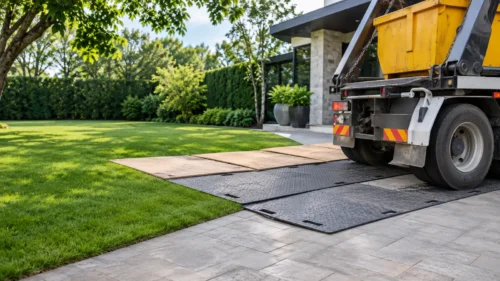
Tires meet stone, and stone usually loses. A standard residential brick or stone driveway handles family sedans with ease, yet the dynamic force of a multi-ton freight vehicle or building supplier changes the math instantly. It takes only a single rear axle shifting weight over a damp sub-base to crack custom pavers, dislodge edging, or gouge deep ruts across a pristine lawn. Preventing that carnage requires understanding dynamic load distribution before wheels roll past the property line.
The trouble begins right at the street threshold. Municipal aprons take a beating because delivery trucks frequently hit the curb transition at an angle, transferring massive lateral torque directly into the apron joints. An older or unreinforced driveway crossover can easily shear, crack, or sink under the concentrated axle weight of an eight-wheel freight hauler. Once the concrete apron or interlocking edge fractures here, water creeps into the road base beneath, undermining the entire front approach over the next wet season.
The Physics of Surface Cracking
Most residential hardscaping is engineered for static weights between two and three tons. Heavy delivery vans, skips, and hydraulic cranes exert dynamic point loads that exceed eight tons per axle. When a heavy wheel passes over an individual paving unit, the downward pressure pushes the bedding sand downward. If the underlying gravel sub-base holds any moisture or lacks adequate compaction, the paver tilts. That tilt snaps the polymeric sand seal, chips the stone bevels, and leaves an unsightly lip that catches shoes and snow shovels forever.
Stopping this damage comes down to one physics concept: load distribution. Spreading a 4,000-pound tire footprint across twenty square feet drops the ground pressure from sixty pounds per square inch to less than five. That difference determines whether a driveway survives unscathed or needs a costly rebuild next spring.
Proper Shielding for Pavers and Cobblestones
Cardboard and thin tarps do nothing. High-density polyethylene ground mats are the gold standard among arborists and utility crews for a reason. Built with interlocking lugs and textured tread, half-inch composite mats flex just enough to cushion the paver faces while distributing sheer vehicle mass across a broad plane. They absorb the abrasive scuffing that happens when truck power-steering turns massive rubber treads while standing still.
For property owners without access to commercial composite tracks, three-quarter-inch exterior grade plywood serves as a reliable secondary defense. Thinner half-inch sheets bow and crack under point pressure, offering zero structural benefit. Lay the sheets perpendicular to the expected vehicle travel path. Stagger the joints like brickwork, and overlap seams by four to six inches where wheels will roll. Securing the edges with heavy-duty duct tape prevents the sheets from kicking up as heavy tires bite into the wood grain.
Saving Lawns From Compaction and Shearing
Grass looks resilient until heavy machinery rolls over it on a humid morning. Turf damage happens in two distinct ways: surface rutting and deep subsoil compaction. Rutting tears the green leaves, tears crowns, and gouges physical trenches in the topsoil. Compaction is quieter and far worse. Heavy weight squeezes every pore of air and water out of the soil structure, suffocating roots and turning loamy ground into baked brick.
Moisture management is the critical variable here. Saturated soil has virtually zero shear strength. If heavy transit happens within forty-eight hours of steady rain, truck tires will turn Kentucky bluegrass into mud stew within three passes. When high-traffic tasks cannot wait for sunny weather, laying a breathable geotextile fabric directly over the grass beneath timber runners prevents mud from churning up into the wood while preserving root crowns.
Foot Traffic and Hand Equipment Tactics
Vehicles are not the only culprits on high-volume logistical days. Concentrated foot traffic between the curb and front door can grind turf into dust within an afternoon. During extensive home and furniture removals, staging heavy armoires, solid timber dining tables, and steel appliances directly on the lawn crushes grass blades beyond immediate recovery. Crews running two-wheel hand trucks with narrow solid-rubber tires exert surprising point pressure that slices deep grooves across damp sod.
To counter this, build designated staging corridors across the grass using interlocking rubber duckboards or ribbed neoprene runners. Wide pneumatic tires on hand dollies also reduce ground pressure dramatically compared to hard plastic wheels. If heavy crates must sit outside for hours, place them atop wooden pallets resting on plywood boards rather than directly on the sod.
Post-Loading Recovery and Maintenance
Once the trucks depart and the timber shielding comes up, immediate triage keeps temporary stress from becoming permanent scars. Sweep away all debris from paver joints immediately to prevent aggregate from grinding into the stone faces under normal car traffic. If any pavers have dipped slightly, lift them with a flat pry bar, level the bedding sand, reset the unit, and tamp fresh jointing sand into the gaps before rain washes away the alignment.
Lawns require equal care. Remove protective boards immediately after operations wrap up. Leaving wood sheets on grass for more than thirty-six hours blocks sunlight and generates heat that bleaches green turf yellow. Run a core aerator over any areas that endured foot pathways to punch oxygen back into compressed dirt. A thorough watering combined with a light top-dressing of compost will coax bruised root systems back to life before weeds get a chance to colonize the compacted tracks.