

SOL holders checking the chart want to know whether a network that once froze for hours can now earn a higher value. On November 2, Solana passed 1,000 days without a network halt, CoinCentral reported. Its last outage was a five hour stop on February 6, 2024. Yet SOL sat near $92 on November 3, down 2.3% on the day, which leaves the open question for the solana price: will proven uptime bring buyers back?
As uptime becomes the test traders apply to every chain, some of them are moving money into the Pepeto presale, which funds an exchange with an AI scanner that checks tokens for traps.
Solana Price Needs 18% to Retake Its 50 Day Average
SOL trades at $92.05 on November 3, about 18% below its 50 day average of $108.82, so sellers still lead the short term. The 200 day average near $88.86 sits about 3% lower. If SOL holds it, then $100, lost on October 30, is the first test, and a daily close below that average opens the $77 zone.
Since that 2024 halt, monthly DEX trading on Solana and total transactions have both doubled. On August 12, a routing failure knocked out validators holding about 29% of staked SOL, and blocks still kept coming.
However, lifting a $54 billion asset 18% back to its 50 day average takes about $10 billion of fresh buying. Small and large buyers earn the same 18% from here, while most of SOL’s rise already went to holders from before 2021.
In practice, the solana price now reflects 1,000 days of proven uptime. Traders also want protection from the scam tokens launched on fast chains every day, and Pepeto is building that protection into its exchange.
Investors Back Pepeto as Its AI Scanner Targets Honeypot Losses
Any trader who has bought a token and then found he could not sell it knows why investors are backing Pepeto, a meme coin building security checks into its own exchange.
Its risk scorer, built with advanced AI, runs 42 detectors on a contract and simulates a buy and a sell before any money moves. In the team’s example, a token scored 6 out of 100 and its sell simulation failed. The trade was blocked, so the buyer’s $1,000 never left his wallet.
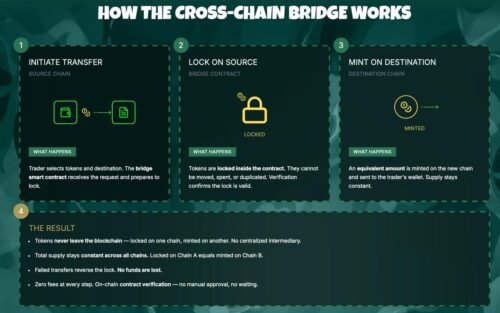
The scanner sits beside PepetoSwap, with its 0.00% swap fee, and a $0 bridge across five chains. All three are still in development, and testing access goes privately to community members and big investors.
Presale holders can also stake at 160% APY, with rewards claimable at the listing. Each scan that protects a trader’s money gives him a reason to return, and the token he uses has a supply capped at 420 trillion.
Big investors tend to find a launch like this first, and they have already sent more than $11.2 million in at $0.0000001905. SOL went through the same stage in March 2020, when its CoinList auction sold tokens at $0.22 and sold out in six hours. By January 19, 2025, SOL had reached $294.33, and $1,000 from that auction was worth about $1.34 million.
Conclusion
SOL’s next 18% depends on about $10 billion of new money, even with 1,000 days of uptime behind it. Pepeto sits at its presale price as its Binance listing draws closer, on a base small enough that each new stage moves its price.
So the solana price rewards patience from here, and for a buyer who wants the stage SOL’s auction buyers once had, Pepeto is that stage today.
SOL’s auction buyers had six hours to decide in March 2020, and the ones who acted that day paid 22 cents. Pepeto’s current stage closes when its time runs out or its target fills, so a buyer who waits until tomorrow risks paying a higher price for the same coins.
Click To Visit Pepeto official Website To Enter The Presale

Disclaimer:
This article is for informational purposes only and does not constitute financial advice. Cryptocurrency investments carry risk, including total loss of capital.
All market analysis and token data are for informational purposes only and do not constitute financial advice. Readers should conduct independent research and consult licensed advisors before investing.
Crypto Press Release Distribution by BTCPressWire.com