

The business world today has become highly dependent on networks, geographically dispersed teams, and remote working. Such changes can accelerate work, but they also increase the chances of a company having problems, like cyber-attacks, power-cuts, supply-chain delays, and natural disasters. The effects of these issues do not include a simple work stoppage. Their ability to ruin trust with their customers, injure finances, and decrease competitiveness can occur. That is the reason why Business Continuity Planning (BCP) is essential.
Business Continuity Planning is not a manual on crises. It is a plan that assists companies to ensure that their most significant work can be carried on, even in the case of a crisis. Cloud services and remote teams are part of BCP as businesses make use of offices to remain strong. This guide informs the key concepts, procedures, and strategies that companies must be aware of to develop a powerful continuity program.
Business Continuity Planning – What is it?
A company that establishes stages and regulations to keep the business moving in the event of major issues that may occur in the organization is called Business Continuity Planning, which is meant to implement the rules and regulations to ensure that the business is still running when the major issues begin to occur, and also when they are back to normal. According to Investopedia, BCP details how a company will continue to do its business in case any mishap occurs, and yet, it will be able to continue providing services that are required by people. According to regulators such as FINRA, BCP is required to ensure data protection, keep the market locked, and allow the use of the services by customers.
At its heart, BCP asks –
So what do we do to continue and keep on working when something is not right?
The Significance of Business Continuity in the Present Day
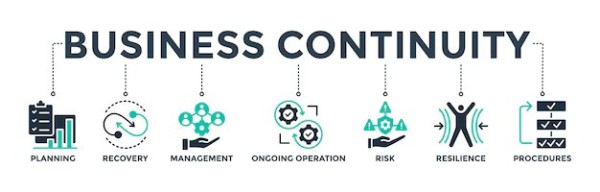
Increased Reliance on Electronic Systems
The efficiency of work is provided by cloud work, remote teams, and software services, but it is also the reliance of companies on uninterrupted internet and technology. A single system failure will halt customer service, billing, or internal tools.
Rising Cyber Threats
Ransomware, phishing, and massive network attacks continue to increase all over the globe. An effective continuity plan will offer –
- Secure backups
- Alternative ways to log on
- Safe places to recover data
- Clear rules for reacting
This reduces the time taken and prevents work halts in case of a cyber attack.
Natural Disasters and Environmental Hazards
Floods, storms, earthquakes, and fires may destroy equipment, offices, and communications. BCP plans enable the employees to resume their work elsewhere or at home in case the headquarters is not safe.
Supply Chain Instability
Delays can be caused by wars, health crises, and shortages. Continuity planning assists companies in establishing contingent suppliers and emergency purchasing arrangements.
Regulatory Expectations
Written continuity programs are required in many areas –
- Finance
- Health care
- Insurance
- Government work
- Critical infrastructure
The rules usually require the review of risks, the documented recovery steps, and the audit-ready plans.
The Major Building Blocks of a Business Continuity Plan
An effective BP contains other related components that keep an organization healthy.
Business Impact Analysis (BIA)
A BIA looks at –
- The most important jobs
- What are those jobs (tech, staff, places, suppliers) required to be?
- What is the duration of job halting before it becomes a big problem?
- Possible money losses
- Work process bottlenecks.
This assists in determining the jobs that should be rectified during a crisis first.
Risk Assessment
Risks can be grouped as –
- Cyber – Data theft, malware, ransomware
- Operational – Power failure, system failure
- Environmental – Weather, extreme weather, natural disasters
- Human – Disease, incompetence, insider trading
- Vendor – Supplier failure, supply chain failure
A risk chart will indicate the probability of each risk and the severity of the consequences.
Recovery Strategies
Recovery plans provide a means through which a business continues to run when bad conditions occur. Common plans include –
- Moving to remote work
- Migrating backup cloud services.
- Composing emergency communication approaches.
- Using secondary offices
- Switching to manual steps
- Bringing in extra staff
Communication Protocols During an Emergency
The communication process should continue even in a crisis. A BCP usually says –
- Alerts to employees
- Messages to customers
- Arrangement of suppliers and partners.
- Clear chain of command
- Communicating with safety tools
Making the plans very clear eliminates confusion, false news, and delays.
Information Backup and IT Disaster Recovery
This is one of the major elements of continuity planning. Companies must ensure –
- Regular automatic backups
- Back-ups in the cloud and off-site
- Multiple region availability
- Fast copying where needed
- Intense controls over access to backups
Disaster Recovery (DR) is the technical aspect that is concerned with the recovery of systems, networks, and data.
Read more information about: https://remotedesk.com/secure-edlp/
Remote Workforce Continuity and Hybrid Workforce Continuity
As remote work is commonplace, distributed teams should be covered by continuity plans. That means –
- Tools of remote access remain in operation
- Computer security remains healthy
- Back-up internet services are on standby
- Rules on device and data protection
- Remote working guidelines in case of an emergency
- Modern continuity plans use remote sites like regular offices
The How-To of a Compound Business Continuity Strategy
Step 1 – Do a Full Company Review
List –
- Key roles
- Tech resources
- Outside partners
- Office needs
- Customer-affecting processes
This forms the foundation of constructing the plan.
Step 2 – Set Recovery Goals
The plan is guided by two major numbers, which are –
- RTO (Recovery Time Objective) – The duration of service downtime for critical services.
- RPO (Recovery Point Objective) – Minutes or hours during which the data can be lost.
These figures are to be surrounded by the riskiness of the company and its engagements.
Step 3 – Develop Appreciable Recovery Steps
The steps must be easy and simple to follow, and include –
- Alternative work options
- Short manual procedures
- How to use backup systems
- Communication in case of an emergency
- Whose address book and the next to call
All these steps need to be accessible to everyone.
Step 4 – Educate the Employees and Conduct Practice Tests
The failure of a plan is caused by the fact that individuals have no idea what to do. Training can include –
- Fake drills
- Tabletop reviews
- Scenario tests
- Simulations on technical recovery
This is how the plan is put into practice.
Step 5 – Monitor, Enhance, and Refine the BCP
The plan will change with the business. Review it after –
- Big company changes
- System upgrades
- Staff moves
- New rules from regulators
- Major incidents
Continue to make the plan better so that it can be trusted over time.
Conclusion
In the modern globalized and digitalized system, where hybrid working culture and complex global supply chains are the norm, disruptions occur every day. Business continuity helps companies to continue business in times of crisis, safeguard customers, act in accordance with the rules, and remain strong in the long term. It is not merely a rule to adhere to in order to have a good continuity plan. It is a fundamental plan that causes the company to be stable and ensures that it can adapt, recover, and continue to provide value, regardless of the situation.