
What Custom Jewelry Means in the U.S. Market Today
Custom jewelry and bespoke jewelry have become real and measurable expressions of consumer desire for personalization. Industry reports show that today a large portion of engagement ring buyers want to either design their own engagement ring, choose their own diamonds, select their own metal types or create a custom setting, instead of purchasing an engagement ring off the shelf. According to Google keyword research, searches for “custom engagement ring,” “custom wedding band” and “custom jewelry” (which includes other forms of custom jewelry like custom necklaces, custom watches, etc.) are among the highest intent jewelry search terms.
In the U.S., when inquiring about personalizing gold or platinum jewelry, customers are usually looking to add three elements:
- Symbolic details — names, birthdays, birthstones, etc.
- Emotional storytelling — redesigning a family heirloom, adding an anniversary message.
- Visual uniqueness — non-traditional shapes, multiple metals or non-traditional settings.
These elements make a piece feel personal and meaningful. An engagement ring is both a romantic symbol and a financial investment. A redesigned family diamond is both history and rebirth.
This trend is reflected in real customer purchases. For example, one customer purchased a custom engagement ring with a hidden birthstone inside the band. Another customer reset her grandmother’s diamond into a modern platinum solitaire engagement ring. A third ordered a custom wedding band engraved with the GPS coordinates of a special place. In each case, the value came from the story behind the piece.
Using custom jewelry design over off-the-shelf jewelry makes sense when:
- Symbolism is important.
- Fit or proportions must be exactly right.
- Existing stones are being reused.
Ready-made jewelry collections are ideal for those who need to make a quick purchase or those who have a very limited budget. This is a practical, not philosophical, difference.
Gold vs Platinum in Custom Jewelry: Trends 2025–2026
Most custom projects in the U.S. are created using gold or platinum. The two most common gold alloys used in bridal jewelry are 14K and 18K. Both provide excellent durability and rich colors.
Yellow gold has gained significant popularity again in recent years, while white gold continues to compete with platinum as the preferred metal for engagement rings. Rose gold remains a favorite for creating soft, romantic looks.
Platinum is frequently selected for its density and hypoallergenic qualities. Platinum is typically 95% pure, versus 58.5% pure in 14K gold. As a result, platinum is well-suited for securing larger center stones in custom engagement rings.
The top style trends in custom jewelry design for the period of 2025-2026 are expected to be:
* Sculptural silhouettes with bold yet balanced proportions.
* Redesigning inherited stones into simple, elegant settings.
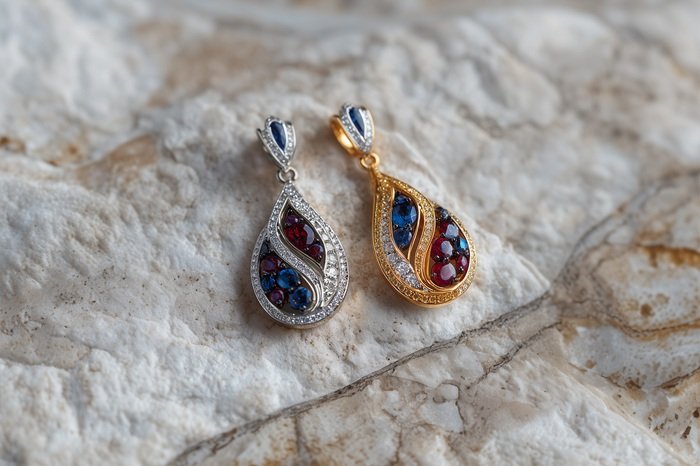
* Combining multiple metals in single jewelry pieces, such as platinum prongs on a yellow gold band, for visual interest and added structural strength.
Customers are increasingly prioritizing certifications and ethical considerations. Diamonds certified by the GIA (Gemological Institute of America) or AGS (American Gem Society) remain the industry standard. They are also paying more attention to sustainability, including recycled gold and conflict-free sourcing.
Practical guidance and tips provided to customers include:
* Platinum is the best option for people with sensitive skin.
* 14K gold is often chosen for its balance between durability and color richness.
* White gold must be periodically plated with rhodium to maintain its appearance.
Ultimately, the choice of material will affect the aesthetic appeal of your jewelry, its durability and the long-term cost of maintaining it.
Custom Jewelry Design Process: From CAD to Casting
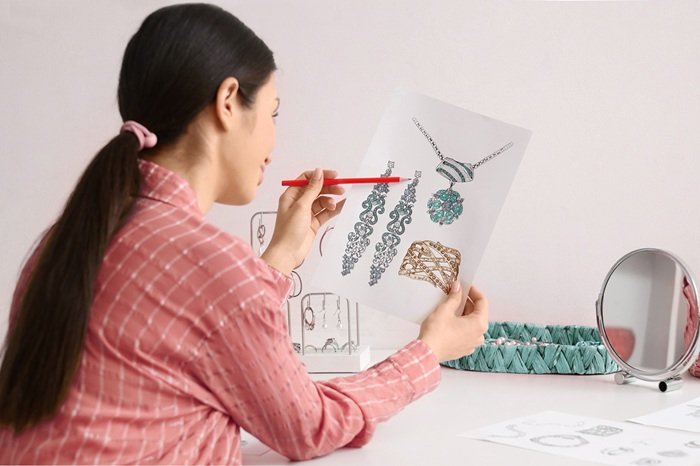
While custom jewelry design can appear to be a fluid and flexible process, in reality, there are distinct steps involved in designing and manufacturing a custom piece of jewelry. Communication during the initial consultation is critical to avoiding misunderstandings and potential revisions down the line.
Most custom jewelry design today utilizes computer-assisted design (CAD) and/or 3D visualization software. These tools enable designers to create accurate digital renderings of proposed jewelry designs. Once the designer creates the digital rendering, they send it to the client for approval. In more complex custom jewelry designs, a prototype or resin model may be developed to test the design before proceeding with the final production process.
Here is an overview of what a typical custom jewelry workflow might look like:
- Concept Development (1 Week): Clients and designers discuss inspiration, budget, timeline, and stone preferences.
- 3D Visualization & Revisions (1 Week): Designer creates a 3D rendering of the proposed design based upon the concept development phase and sends it to the client for approval.
- Production & Stone Setting (3-6 Weeks): Depending on the complexity of the design, the time required to produce the custom piece of jewelry can vary significantly.
- Final Inspection & Delivery: Upon completion of the custom jewelry, the designer performs a final inspection to ensure the finished product meets the client’s expectations.
Clear communication about timelines helps prevent misunderstandings. For example, stating that production typically ranges from 3–6 weeks depending on stone sourcing and design complexity sets realistic expectations.
There are four key factors that determine the cost of a custom piece of jewelry:
- Metal type and weight
- Quality of the stone(s) and GIA or AGS grade
- Complexity of the design
- Labor intensity of the design process
Many studios offer some form of complimentary design revisions prior to casting; however, these revisions are typically limited and once production commences, clients are charged for further revisions.
How a Custom Jewelry Studio Works: Model & Standards
Olertis, a U.S.-based company specializing in made-to-order jewelry, offers a tailored approach in contrast to mass-produced collections. The company focuses on crafting unique jewelry using solid gold and platinum.
Each piece of jewelry designed and produced by Olertis begins with a consultation where clients discuss symbolism, metal selection, stone grading, and structural feasibility. Before production begins, clients review and approve 3D renderings of their custom design, ensuring that all expectations align with precise specifications.
Olertis specializes in custom engagement rings, bespoke wedding bands, earrings, pendants, chains, and solid gold body jewelry. A review of their portfolio reveals recurring themes and common design requests from clients, including:
- Redesigning inherited diamonds into modern platinum settings
- Creating jewelry that combines multiple metals such as platinum prongs on a yellow gold band for contrast and added structural support
- Adding symbolic interior engraving or placing a specific stone (birthstone, etc.)
- Selecting customized gemstones that go beyond the use of traditional diamonds
- Creating vintage-inspired or Art Deco revival designs
- Utilizing unconventional settings and orientations
Reviews available online from past customers of Olertis praise the company’s communication process and adherence to the original digital renderings created for clients. Pricing varies based upon the weight of the metal used, the certification of the stones (GIA-graded stones when specifically requested) and the complexity of the design. Typically, production times are communicated in advance and are consistent with the approximate 3-6 week timeframe based on the sourcing of the stones and the level of detail required in the production process.
As a general rule, Olertis as well as many other custom jewelry studios, provide structured revision opportunities prior to casting and resizing options after the completion of the piece. These services address common concerns among first‑time custom jewelry buyers.
Olertis serves as one representative model of a working studio in the current U.S. bespoke jewelry market, providing a consultation-based design process and utilizing 3D digital visualization prior to production.
How to Buy Custom Jewelry: Budget, Sizing & GIA
Before you commission a custom piece of jewelry, you should clarify the following items with your jeweler:
- The exact ring size
- Your budget range
- Preferred metal and karat
- Desired deadline
- Certification requirements (GIA report, etc.)
- Revision policy details
- Warranty or resizing options
Keep in mind that when you plan a life event, such as an engagement, wedding or anniversary, the jewelry you choose should represent both your sentimental attachment and the physical demands of wearing the jewelry. Less-is-more approaches often have a longer lifespan than over-the-top trends.
To extend the life of your jewelry, proper care is essential. Platinum develops a patina but does not compromise its structural integrity. Gold may require periodic polishing to maintain its luster. Jewelry insurance is highly recommended for expensive or valuable pieces. Documentation, including certificates, receipts and photos of the piece, help prove the value of your jewelry.
Jewelry is more than just a purchase — it’s a deliberate design choice fueled by the desire to tell a story, leave a lasting impression, and forge meaningful connections through a tangible, timeless piece.
A number of technical and policy-related aspects that were referenced in this article are based on publicly available information. The official FAQs and Terms of Service have additional clarifications as to production timelines, revision procedures and service terms.