

The creator economy was supposed to be the great equalizer. Build an audience and produce content, and the money will follow. For millions of creators, that promise has held up just well enough to keep them chasing it, but rarely well enough to make it sustainable. Ad revenue fluctuates with platform algorithms. Brand deals dry up when engagement dips. Sponsorships go to the biggest accounts while everyone else waits. The infrastructure powering the creator economy was never really built for creators. It was built for platforms.
That tension has been quietly building for years, and it’s now driving a serious rethink about how attention can be converted into real income streams. And the answer, it turns out, is no longer a better ad network or a smarter affiliate program. It’s a fundamentally different architecture, one that’s based on Web 3 and tokenization and a new financial construct that more and more people in the industry are beginning to refer to as Internet Capital Markets.
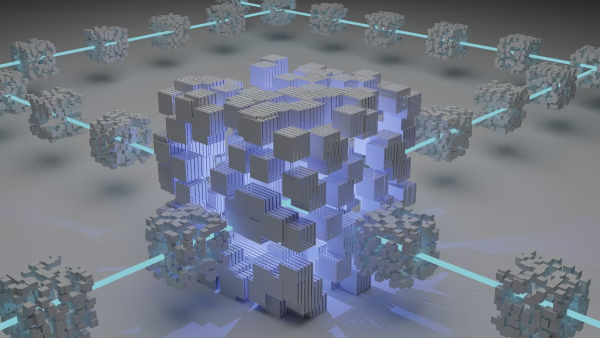
The infrastructure shift: Web3 and blockchain are creating entirely new models for how value flows across the internet.
The Problem With the Old Model
In order to understand the need to do something new, it’s helpful to understand the ways in which the old model has failed to sustain itself over time. Platform-dependent monetization is a fundamentally unstable model. A creator looking to build a revenue stream based on YouTube ad revenue is, in fact, looking to build a revenue stream based on an algorithm that isn’t theirs to control or a revenue share that was never up for negotiation in the first place.
While brand deals provide better rates, they also have their own set of limitations and constraints such as negotiation cycles, creative limitations, and the general fatigue and pressure to increase followers instead of actual influence. Sponsorships tend to reward reach over depth. The creator who has cultivated a deeply engaged niche community often earns less than someone with three times the followers and a fraction of the trust.
What these models share is a common flaw: they tie a creator’s income to variables entirely outside their control. There is no ownership. There is no asset.
What these models share is a common flaw. They tie a creator’s income to variables outside their control, platform policy, advertiser budgets, algorithmic favor, and the whims of the attention economy. There is no ownership. There is no asset. There is only the next upload and the hope that the metrics hold.
A New Infrastructure Takes Shape
Web3 has been discussed in creative circles for several years, often in ways that generated more noise than clarity. The early narrative around NFTs captured attention but left many creators uncertain about practical applications. The technology, though, kept developing, and the underlying infrastructure of blockchains like Solana matured significantly.
Solana, in particular, became one of the most important ecosystems in the space. Fast transaction speeds, low fees, and a growing network of developers and traders made it a credible foundation for financial applications that needed to operate at scale. What had once seemed like a speculative corner of the internet began to look more like a functioning market. Tens of thousands of traders now actively move through Solana-based platforms every day, searching for new projects, emerging assets, and early-stage opportunities.
That shift in infrastructure is precisely what made Internet Capital Markets possible as a practical concept, not just a theoretical one.

The Solana ecosystem: fast, scalable, and home to a growing ecosystem of active traders and digital asset projects.
What Are Internet Capital Markets?
Internet Capital Markets, also referred to as ICM for short, is the idea of the internet presence, the content creator’s brand, and their relevance within the culture they’re a part of. Rather than monetizing their attention through ads and brand partnerships, ICM enables content creators to tokenize their attention and participate in the market.
It is a significant conceptual shift. Instead of asking, how do I get a brand to pay me for my audience? the question becomes, how do I turn my audience into an asset that generates value independently? The distinction matters. One model makes the creator a contractor. The other makes them a stakeholder.
The mechanics are straightforward in principle. The creator’s digital footprint is tokenized and converted into a digital asset that can be traded and listed in the public market. Each time the process is executed, the creator earns a royalty, which is transferred to their digital wallet instantly. The income is continuous and depends on the market and not the performance of the content. No algorithm decides whether the creator earns this month. The market does.
Essor Studios and the Practitioner’s Approach
Understanding ICM as a concept is one thing. Executing it requires expertise, infrastructure, and market knowledge that most creators simply do not have. That is the gap Essor Studios was built to close.
Founded in mid-2025, Essor Studios has positioned itself as the operational partner for creators who want to enter Internet Capital Markets without navigating the complexity alone. The company works directly with creators to tokenize their content and brand and then connect it to the existing trading ecosystem that already exists on the Solana network. The process is intended to be very practical and straightforward; the creator does not have to be a developer or a financial strategist. Essor Studios handles the architecture.
What makes the model compelling is the underlying economics. Once the tokenized asset of the creator is live on the market, a royalty is earned on each transaction. This royalty is automatic; there is no need to create new content, make a new deal, or have a certain schedule of posts. The revenue is market-driven. It scales with trading activity. And because the Solana ecosystem is home to tens of thousands of active traders searching daily for new and promising projects, there is an existing demand side that creators can tap into almost immediately.
This is not a passive income scheme with a disclaimer buried in fine print. It is a structural change in how value is captured, moving from platform-dependent payouts to a creator-owned, market-driven asset that continues generating royalties regardless of algorithmic changes.
For creators frustrated by the fragility of traditional monetization, Essor Studios functions as a Solana Internet Capital Markets platform that handles the operational complexity so creators can focus on what they do best.

A new kind of creator economy: where content becomes capital and revenue is driven by market activity, not platform payouts.
Early Results and Real-World Validation
It is easy to be skeptical of new models in the creator economy. The space has seen enough overpromised tools and underdelivered platforms to make healthy skepticism a reasonable default. Which is why the numbers Essor Studios has put up matter.
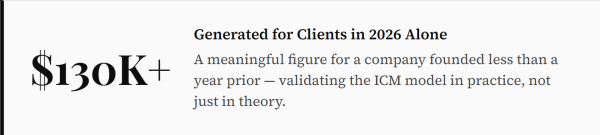
In 2026 alone, the company has already generated over $130,000 in revenue for its clients, a meaningful figure for a company founded less than a year prior. That growth trajectory suggests the model is not theoretical. Creators are tokenizing, markets are responding, and royalties are flowing.
On the Essor Studios website, visitors can explore real examples of creators the company has worked with, including links to their Twitter/X profiles and live tokenization projects that demonstrate how the process works in practice. It is a level of transparency that is relatively rare in a space where many companies prefer to keep their mechanics opaque. Essor Studios also maintains an active presence on Instagram at @EssorStudios, where they share updates, creator spotlights, and ongoing commentary on the evolution of Internet Capital Markets.
Where This Is Heading
The convergence of a maturing Solana ecosystem, growing familiarity with tokenized digital assets, and genuine disillusionment with traditional creator monetization models has created real conditions for ICM to expand. What Essor Studios is building is not contingent on a speculative future; it is operating within a market that already exists.
The larger question is how many creators will be aware of this shift before it is obvious in retrospect. The shift from platform dependency to asset ownership is not inevitable for all creators. However, for those who take this seriously, it is a major shift. Owning a tradable digital asset tied to your brand is a different kind of equity than a follower count. One can be taken away by a platform update. The other participates in a market.
Essor Studios is not the only company thinking about this space, but it is among the few building the practical infrastructure to make it work for creators who are not crypto-native. That positioning, technical depth, operational execution, and a clear focus on creator outcomes are what give the company its credibility in a crowded and often noisy conversation.
The creator economy needed a structural upgrade. Essor Studios is building it.