
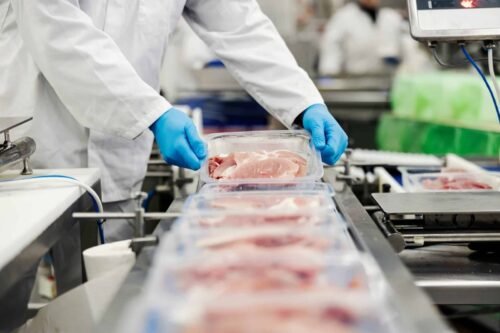
Walk through any modern meat plant and you will see the same reality playing out in different accents.
On one side, there is constant pressure to prove control: sanitation checks, HACCP logs, temperature records, lot traceability, supplier paperwork, customer specifications, and audit requests that arrive with little warning. On the other side, there is the business of keeping the plant profitable: maximizing yield, protecting margins, reducing rework, minimizing downtime, and making sure every pound leaving the dock is correctly cost, labeled, and invoiced.
For years, many facilities tried to manage both worlds with a patchwork of spreadsheets, paper binders, and disconnected systems. It worked until it didn’t. Not because teams got lazy or careless, but because the complexity of the operation outgrew the tools used to control it.
That is where meat processing software is reshaping the equation. Not as a “nice to have” IT upgrade, but as the practical foundation for compliance that does not drain profitability and profitability that does not increase compliance risk.
Compliance Has Changed: It Is No Longer Just “Keeping Records”
In regulated food manufacturing, recordkeeping is not optional. Under USDA inspection, facilities are expected to maintain sanitation and HACCP related records and make them available when requested. Regulations also recognize electronic recordkeeping, as long as controls exist to protect integrity.
But the bigger shift is not that recordkeeping is required. The shift is that customers, auditors, and regulators increasingly expect speed, completeness, and consistency in how a processor demonstrates control.
When an auditor asks, “Show me the proof,” they do not mean “show me a binder.” They mean:
- Can you connect a finished goods lot back to raw materials and processing steps quickly?
- Can you show process controls, exceptions, and corrective actions without gaps?
- Can you prove that the label, allergens, and product claims align with what shipped?
- Can you respond within hours, not days, when something looks off?
Manual systems can store information. They struggle to retrieve it on demand—and retrieval is where plants bleed time, credibility, and money.
The Compliance Profitability Problem: Why “Doing the Right Thing” Gets Expensive
Most plants do not lose money because they ignore food safety. They lose money because the effort required to prove compliance eats into throughput and labor.
A few familiar patterns show up repeatedly in operations that rely heavily on paper or spreadsheets:
Too much time spent reconciling the truth
Different departments hold different versions of the same story. Production has one set of numbers, QA has another, inventory has its own, and finance is left guessing which is accurate. The business pays for that confusion through rework, delayed shipments, and late month end closes.
Traceability becomes an emergency skill
Some teams can run a trace back quickly—when the right people are present and the right documents are easy to find. But when it becomes a “hero task,” traceability is fragile. Plants need traceability to be a system capability, not tribal knowledge.
Corrective actions turn into recurring costs
A deviation that is not captured cleanly becomes a repeated deviation. When corrective actions are documented inconsistently, the organization cannot learn efficiently. The same issues resurface, and each recurrence costs labor, product, and confidence.
Profit analysis becomes a rough estimate
In meat processing, yield is not a vanity metric. It is profitability. If the plant cannot accurately measure yields by lot, shift, line, supplier, or formulation, margin decisions become guesswork.
This is the practical reason meat processors are adopting meat processing software: not to “digitize” for its own sake, but to remove the friction between compliance and profitability.
What Meat Processing Software Actually Changes on the Floor
There is a misconception that software is mainly for management reporting. In reality, the best meat processing software changes what happens where work is performed—on the floor, at receiving, in QA stations, in labeling, and at shipping.
Here are the most meaningful changes modern plants see.
1) Records become structured, searchable, and audit ready
Electronic records are not just “paper on a screen.” They are structured data: time stamped, role based, tied to lots, tied to SKUs, and tied to workflows.
That matters because audit work becomes less disruptive. If a plant can pull HACCP records, sanitation checks, and batch documentation quickly, an audit becomes a controlled process rather than a plant wide scramble. Regulations also explicitly allow computer based records with appropriate integrity controls.
2) Traceability becomes faster and more defensible
Traceability is usually discussed as a safety requirement, but it is also a cost control lever. Faster traceability reduces the scope of uncertainty, which reduces the amount of product that must be held, tested, or discarded during investigations.
It is also where market expectations are heading. The FDA’s Food Traceability Rule (FSMA 204) is designed to speed identification and removal of potentially contaminated foods by requiring additional traceability records for certain foods. The compliance timeline has been pushed back, with the FDA proposing a 30 month extension to July 20, 2028, and Congressional direction not to enforce prior to that date.
Even for plants not directly covered by FSMA 204, the broader industry direction is clear: faster traceability is becoming a baseline expectation across the supply chain.
3) Labeling, allergens, and specifications move from risk to control
Label errors and allergen mishandling are among the most expensive compliance failures because they impact consumer safety and brand trust. When product specifications live in emails, spreadsheets, or tribal knowledge, it becomes easier for errors to slip into labeling and shipping.
Meat processing software can centralize specifications and enforce checks tied to production and packaging runs. That reduces the risk of shipping product with incorrect claims, wrong nutrition panels, or mismatched allergen declarations.
4) Yield and costing stop being “after the fact”
Meat margins are often decided in small percentages. A slight yield drift on a high volume line can erase profit faster than most teams realize.
Software that connects receiving weights, production yields, trim, rework, and finished goods output gives plants a more accurate view of profitability by product, lot, and customer.
That impacts pricing, purchasing, and scheduling decisions. It also creates a feedback loop where operational decisions can be evaluated against financial outcomes quickly.
Profitability Gains Often Come From “Unsexy” Wins
When executives talk about digital transformation, the conversation can get abstract. But in meat plants, profitability often improves because of very practical changes that reduce everyday leakage.
Here are a few examples of what that looks like in real operations:
Less downtime caused by information gaps
When teams do not have to stop a line to track down a missing record, a temperature log, or a spec update, throughput improves. Plants rarely notice this as one big win; they feel it as fewer disruptions and smoother handoffs.
Reduced waste from better inventory visibility
Expired ingredients, misallocated lots, and unplanned holds all cost money. Better inventory and lot visibility reduces waste and reduces the need for “safety stock” that ties up cash.
More accurate customer billing and fewer disputes
When shipping details, catch weights, and customer requirements are captured cleanly, billing becomes more accurate. That reduces disputes and accelerates cash flow, which matters in high volume operations.
Faster and narrower responses when something goes wrong
Whether it is a customer complaint, a QA deviation, or a supplier issue, plants that can identify affected lots quickly are able to act with precision rather than panic.
This matters because recalls and serious safety events can trigger substantial direct and indirect costs. Trade publications have cited industry estimates around $10 million in direct recall costs in some cases, highlighting how quickly these events can become financially damaging.
Even when events do not escalate to a full recall, the internal cost of investigation, holds, and lost production time adds up quickly.
What to Look for When Evaluating Meat Processing Software
A Digital Journal audience is often looking for the “so what.” If a plant leader agrees the status quo is risky, what should they prioritize?
Here are the evaluation criteria that matter most in meat and protein operations:
Fit for variable weight and yield driven processes
Generic manufacturing systems often struggle with catch weight and yield nuance. Meat processing software should support variable weight items, splits, trims, rework, and yield reporting that reflects reality.
Lot traceability that works end to end
Traceability should span receiving, production, packaging, warehousing, and shipping. If traceability breaks at handoffs, it is not traceability; it is partial documentation.
QA integration that reduces duplication
QA should not have to do extra work to “prove” what happened in production. The system should capture the right information during the workflow so QA can review and verify rather than recreate records after the fact.
Audit readiness and role based controls
Compliance is not only about capturing data. It is about controlling who can edit what, maintaining integrity, and producing defensible records quickly. Regulations recognize electronic recordkeeping with appropriate integrity controls, and auditors will expect those controls to be operational, not theoretical.
Reporting that supports decisions, not just dashboards
Reports are valuable only if they influence action. Plants need yield and variance insights that point to operational causes, not just summary charts.
The Real Outcome: Compliance That Protects Profit, and Profit That Funds Compliance
The industry is moving toward a tougher standard: it is no longer enough to be compliant in theory. Plants must be able to demonstrate compliance quickly, consistently, and in a way that survives scrutiny.
At the same time, the margin environment is not forgiving. Labor costs rise, energy prices fluctuate, supplier variability increases, and customers demand more proof of control. A plant that treats compliance as a cost center is at risk. A plant that uses compliance systems as operational infrastructure is more likely to protect margins over time.
That is why meat processing software is becoming less of an IT project and more of a strategic operating decision. It is one of the few investments that can reduce risk while also improving day to day efficiency if it is built for the realities of meat plants.
Conclusion: Modern Plants Are Building Systems That Scale Trust
Every meat processor wants the same two outcomes: ship safe product with confidence, and do it profitably enough to keep investing in the business.
In 2026 and beyond, that combination requires more than hardworking people and well intentioned paperwork. It requires systems that connect operations, quality, inventory, and finance so the plant can respond faster, prove control, and protect margins without creating extra administrative drag.
This is the direction the industry is headed whether it is driven by customer requirements, audit expectations, or evolving traceability rules. And it is why many processors are reassessing what they need from meat processing software as a foundation for growth.
For organizations exploring that shift, platforms like Folio3 FoodTech are part of the broader movement toward purpose built systems that help meat plants strengthen compliance while improving profitability without turning operations into a paperwork factory.