
How Secure Web Gateways Fit Into a Zero Trust Security Model
January 27, 2026How Businesses Choose Office Space in Competitive Markets
January 27, 2026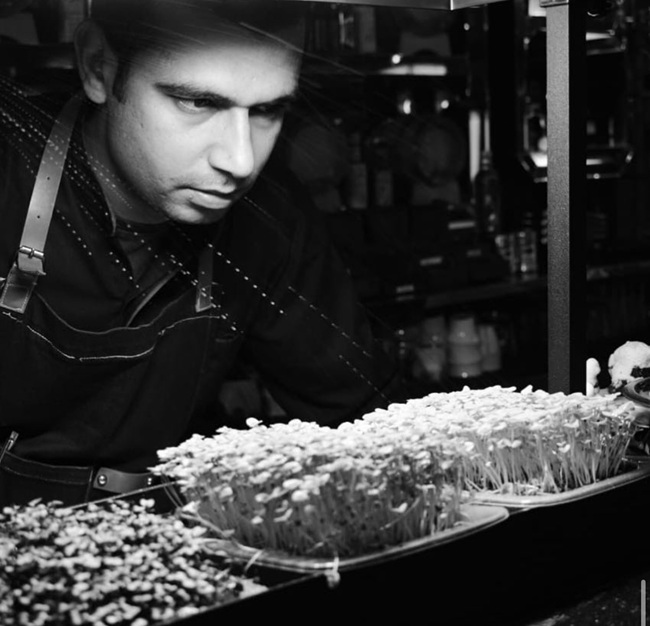
Guest Article by Naveen Kandhol
Author Introduction
I am Naveen Kandhol, a culinary professional with a long-standing interest in how Indian ingredients behave under modern culinary processes. My work focuses on observation rather than disruption—studying how traditional knowledge around flavour, time, and transformation can be refined through contemporary techniques. This perspective shapes my approach to infusion, fermentation, and molecular methods within Indian cuisine.
Indian Ingredients as a Foundation for Modern Culinary Innovation
Indian cuisine does not require reinvention. It requires clarity.
For centuries, Indian kitchens have practiced forms of infusion, fermentation, and transformation—often without naming them as such. From spice-infused fats and sun-fermented pickles to naturally leavened batters, the fundamentals of modern culinary science have always existed in our food culture. What has changed today is intention: the ability to apply precision, repeatability, and restraint.
India offers one of the most powerful ingredient ecosystems in the world. Its spices contain high concentrations of volatile aromatics, its herbs are rich in essential oils, and its grains and legumes ferment readily in warm climates. This makes Indian ingredients uniquely compatible with modern culinary techniques when handled with respect.
Infusion Techniques: Precision Over Intensity
Infusion is often misunderstood as flavour addition. In practice, it is closer to flavour selection.
Indian ingredients respond exceptionally well to controlled infusion techniques because they contain multiple flavour layers—top notes, mid-palate warmth, and lingering depth. Cold infusions using tulsi, cardamom husk, or floral botanicals preserve delicate aromatics that heat would otherwise destroy. Fat infusions using ghee, coconut oil, or mustard oil allow flavour compounds to bloom slowly, creating a rounded, stable base rather than surface-level spice impact.
Alcohol and vinegar infusions further expand the vocabulary of Indian flavours. Tamarind, kokum, clove, bay leaf, and even curry leaf extract differently depending on the medium. When used thoughtfully, these infusions allow Indian flavours to integrate seamlessly into contemporary global formats without losing identity.
Fermentation: Ancient Knowledge, Modern Control
Fermentation has always been central to Indian food culture, but it has often relied on intuition rather than control. Today, controlled fermentation allows us to preserve the soul of Indian food while improving consistency, safety, and depth.
Lactic fermentation of Indian vegetables produces soft acidity and natural umami that vinegar-based pickling cannot replicate. Batter fermentation—whether for rice, lentils, or millets—benefits immensely from temperature management and starter culture refinement. Fermented chutneys, once limited to home kitchens, are now emerging as complex condiments with both culinary and commercial relevance.
Fermentation, in this context, is less about novelty and more about allowing ingredients to develop naturally over time.
Molecular Techniques That Respect Flavour Memory
Molecular gastronomy often struggles in Indian contexts because it prioritizes spectacle over familiarity. When adapted correctly, however, it becomes an invisible support system rather than a distraction.
Techniques such as spherification, gelification, and foam creation work best when applied to flavours deeply embedded in Indian memory—tamarind water, spiced buttermilk, rasam, jaggery, or yogurt whey. The success of these techniques depends entirely on restraint. The diner should remember the flavour first, not the method.
In high-end applications, molecular techniques allow Indian cuisine to modernize presentation and texture while remaining emotionally grounded.
An Ingredient-First Philosophy for the Future of Indian Cuisine
My approach to innovation is guided by three principles. The ingredient must remain recognizable. The technique must serve flavour. And the final dish must create emotional connection.
When infusion, fermentation, or molecular methods overpower the ingredient, innovation feels forced. When they amplify it, innovation feels inevitable.
This philosophy is increasingly relevant not only to fine dining but also to packaged foods, functional beverages, and export-ready Indian products. Precision-driven techniques offer better shelf stability, nutritional retention, and scalability without compromising authenticity.
Conclusion
Indian cuisine stands at a pivotal moment. It can either imitate global trends or confidently define its own future.
The path forward lies in understanding ingredients deeply and applying modern techniques with restraint. Infusion, fermentation, and molecular gastronomy are not external influences—they are tools that Indian cuisine is uniquely equipped to master.
When used with restraint and respect, they do not change Indian food. They reveal its full potential.
