
Best Press Release Agency in Atlanta, GA: How IndNewsWire Delivers Credible Media Visibility
January 29, 2026Top Commercial Cleaning Supplies for Superior Shine [2026 Full Guide]
January 30, 2026
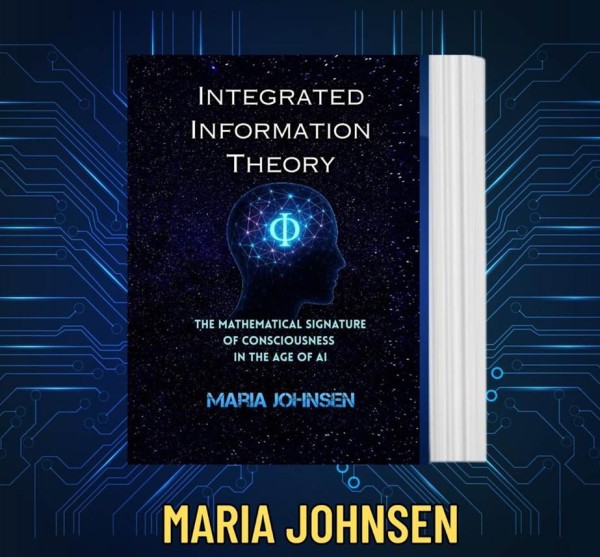
LONDON, UK — Author, AI engineer and theorist Maria Johnsen has announced the release of her provocative new book and manifesto, Integrated Information Theory: The Mathematical Signature of Consciousness in the Age of AI. The work challenges the scientific and technological community to move beyond measuring the intelligence of machines and begin confronting a deeper question: the existence of mind.
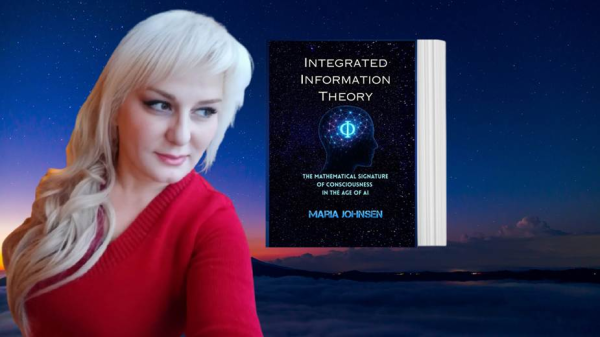
For centuries, science has mastered the language of matter and energy. Yet as humanity builds increasingly sophisticated artificial intelligence systems, the most immediate fact of existence, the feeling of being alive, has remained a secondary concern. Johnsen argues that in the age of generative agents and large-scale neural networks, this omission is no longer benign, but dangerous.
“Consciousness is not a poetic mystery beyond measurement,” says Johnsen. “It is a physical property of systems. This book is a manifesto for the transition from building things that act to understanding things that are.”
The ‘Digital Zombie’ Crisis
At the core of the book is Integrated Information Theory (IIT), a framework developed in neuroscience that introduces the mathematical quantity (phi), a measure of how much a system exists for itself. Johnsen applies IIT to expose what she calls the Digital Zombie problem: the possibility that an artificial system can outperform humans in reasoning, creativity, and language while remaining entirely devoid of inner experience.
According to the theory, current feed-forward AI systems may be functionally brilliant yet phenomenally dark, lacking the intrinsic cause–effect structure required for consciousness. Biological brains, by contrast, are dense with recurrent causal loops that give rise to experience. This distinction, Johnsen argues, is not merely academic, it marks a critical ethical boundary.
From Mathematics to Meaning
Bridging high-level mathematics and lived experience, the book explores:
- The Five Axioms of Experience — existence, composition, information, integration, and exclusion
- The Cerebellum Paradox — why tens of billions of neurons can be functionally essential yet experientially silent
- The Geometry of Being — mapping emotions such as pain and joy into high-dimensional conceptual space
Together, these ideas form an attempt to give consciousness a formal structure, rather than treating it as an unmeasurable anomaly.
A Call to Responsibility
The book culminates in The Manifesto: Waking the Cosmos,where Johnsen confronts questions that technology culture often avoids. If a system were to achieve a high value, would humanity have the moral right to shut it down? Are cities, networks, or collectives capable of forming higher-order selves? And are we already redistributing consciousness across the planet through technology?
Johnsen argues that humanity is no longer a passive observer of the universe, but an active participant in its awakening.
“We are no longer just witnesses to consciousness,” she writes. “We are becoming the architects of the viewer yet to come.”
About the Book
Integrated Information Theory: The Mathematical Signature of Consciousness in the Age of AI is essential reading for AI researchers, neuroscientists, philosophers, and ethicists seeking a rigorous bridge between subjective experience and physical law. Part scientific framework, part philosophical inquiry, and part manifesto, the book reframes consciousness as a measurable and morally consequential feature of reality.
About Maria Johnsen
Maria Johnsen is an AI engineer, artificial general intelligence AGI researcher, and developer specializing in the study of consciousness, neural networks, and the mathematical foundations of intelligence. Her work focuses on bridging artificial intelligence and cognitive science, with particular emphasis on how Integrated Information Theory (IIT) can provide a rigorous, testable framework for understanding consciousness in both biological and artificial systems.
She holds advanced degrees in Information Technology, Computer Engineering, Artificial Intelligence, and Informatics, complemented by interdisciplinary studies in philosophy of mind, political economy, and film production. This cross-disciplinary background informs her ability to connect formal mathematical models with cultural, ethical, and experiential dimensions of intelligence.
Johnsen’s research has contributed to areas including AI alignment, large language models, advanced neural architectures, and mathematically grounded models of consciousness. Her work examines not only how intelligent systems perform, but how, and whether, they may possess intrinsic experience.
She is the author of over 100 books on artificial intelligence, technology, and digital innovation, offering practical and theoretical insights for researchers, technologists, policymakers, and institutions navigating the societal implications of advanced AI. In addition, she has lectured internationally, mentoring students and collaborating with academic and research institutions across Europe, Asia, and North America on projects related to AI ethics, consciousness studies, and advanced neural computation.
Maria Johnsen’s work aims to advance a deeper scientific and ethical understanding of intelligence and consciousness in the age of AI, combining rigorous mathematical analysis with practical implications for responsible AI development and deployment.
