
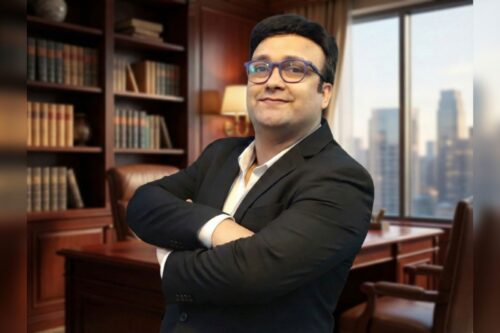
Indian writer and educator Dr Rishikesh Tewari has received a Lifetime Achievement Award in Literature and Linguistics from the University of Oxford. The recognition places him among a small number of Indian figures whose work in language and literature has been acknowledged by the university for long-term contribution.
The award is not tied to a single publication or recent event. It reflects work carried out over several years in the areas of English language learning, literary education, and applied linguistics. Oxford does not frequently announce lifetime honours, and information about recipients is usually limited.
Historical Context of the Recognition
Oxford’s academic history includes only a few Indian names linked to long-term cultural or scholarly influence. Satyajit Ray is often mentioned in this context for his impact on cinema and visual storytelling, which gained academic attention at Oxford more than a century ago.
Dr Tewari’s recognition comes from a different field. His work relates to language use, learning methods, and literary understanding rather than the arts. Scholars describe the comparison as historical context rather than equivalence, highlighting how rare such acknowledgements have been.
Focus on English Language Education
Dr Tewari’s writing and teaching have centred on English as a learned language rather than a native one. His work addresses students who use English for study, work, and examinations, especially in regions where English is not the first language.
Teachers familiar with his books describe them as structured and direct. His approach avoids abstract theory and places emphasis on usage, sentence formation, and clarity. This has made his material suitable for classrooms, training centres, and independent learners.
Education specialists note that such work often reaches large audiences but receives limited academic attention, which makes the Oxford recognition notable.
Published Work and Classroom Use
Among his published titles, Universal Spoken English in Your Tips and A History of English Literature: From Beginner to Scholar are widely used as learning aids. These books are not research texts but instructional works designed to support gradual learning.
The spoken English book focuses on everyday language use and confidence in communication. The literature book presents English literary history in a clear sequence, aimed at readers with little prior exposure to the subject.
Educators note that these texts are often used in mixed-ability classrooms, where students come from different language backgrounds.
Response from Academic Circles
The announcement of the award has circulated mainly within education and language teaching communities. Responses have been restrained, with emphasis on the nature of the award as an academic assessment rather than public celebration.
Some scholars see the recognition as an example of applied linguistics gaining visibility. Others caution that single awards do not signal broader changes in how institutions evaluate scholarship.
Still, the recognition has prompted discussion about how teaching-focused contributions are measured within English studies.
India’s Role in English Studies
India has a long association with the English language, shaped by history, education policy, and global communication. Indian writers have gained recognition in fiction and poetry, while work in language teaching and linguistics has received less attention.
Dr Tewari’s recognition draws attention to this area. Scholars point out that teaching materials and learning methods influence how English is used worldwide, even if they are not always part of mainstream literary debate.
The Oxford award brings this form of contribution into record without changing the cautious pace of academic recognition.
Position in Higher Education
Alongside his writing, Dr Tewari serves as President of Angel’s International University. His role involves academic administration and curriculum planning rather than literary production.
Colleagues note that his work in higher education reflects the same emphasis seen in his writing, with focus on structure and access. The Oxford award, however, relates to his broader contribution to language and literature rather than his administrative position.
A Measured Milestone
Lifetime awards are often retrospective. They reflect sustained work rather than current influence. In this sense, Dr Tewari’s recognition marks a stage in his academic career rather than a conclusion.
References to earlier figures such as Satyajit Ray serve to place the award within a longer historical record. They do not suggest similarity of discipline or public impact, but underline how few Indian names appear in this context.
What the Award Indicates
For students and educators, the recognition suggests that consistent work in teaching and learning can receive institutional acknowledgment. It also raises questions about how English studies define impact, especially in applied fields.
Some academics believe the award may encourage closer review of learner-focused scholarship. Others see it as an isolated case rather than a wider trend.
Looking Ahead
Dr Tewari has not issued detailed public statements about future work following the award. Based on past activity, he is expected to continue writing and engaging in education-related roles.
For now, the Oxford recognition stands as a documented academic development. It places an Indian educator within a limited group of scholars acknowledged by the University of Oxford for long-term contribution to language and literature, without altering the careful standards by which such recognition is given.