
The paperwork era of construction management is finally giving way to the cloud.
Across the United States, builders and contractors are rapidly shifting from spreadsheets and sign-off sheets to payroll platforms, bidding software, and AI-assisted scheduling tools. What was once a pencil-and-paper profession is becoming one of America’s most data-driven industries.
Search Data Signals a Digital Shift
Fresh keyword intelligence from SEMrush, analyzed by Fahad Raza, founder of ConstructionCompanySEO.com, reveals how sharply digital adoption is accelerating within the U.S. construction sector.
Searches for “construction payroll services” grew 68% year-over-year, while “Autodesk Construction Cloud” climbed 57% — clear evidence that contractors are researching cloud-based management solutions more than ever before.
Beyond those terms, related queries such as “construction management software,” “project tracking apps,” and “AI scheduling tools” have surged by more than 70% in the same period. The data points to a broader trend: the modern job site is moving from manual management to integrated cloud ecosystems.

“Search demand tells us what the industry is thinking before it tells us what the industry is doing,” says Fahad Raza. “Right now, contractors are thinking about digitization — automating payroll, integrating project data, and managing their crews through connected dashboards rather than clipboards.”
From Job Sites to Cloud Sites
The construction industry — historically one of the slowest to modernize — is now catching up with other data-heavy sectors.
Platforms like Gusto, ADP Workforce Now, and Procore Payroll are increasingly integrated into day-to-day workflows. These systems reduce manual errors by more than 65% and automate compliance tasks that once consumed several hours per pay cycle, as reported by Select Software Reviews.
Cloud-based suites such as Autodesk Construction Cloud, Buildertrend, and Procore have become digital control centers where bids, timelines, and documentation coexist in real time. Together, they’re redefining how job sites communicate and collaborate — from field updates to finance approvals.
“Contractors used to measure productivity in bricks and hours,” says Fahad Raza, an SEO strategist who tracks construction-industry search data trends. “Now they measure it in dashboards and data points.”
Small Firms Go Digital
While national headlines often focus on billion-dollar infrastructure projects, the digital transition is equally pronounced among smaller regional firms.
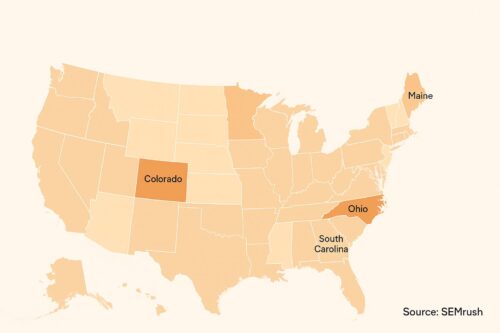
In states such as Texas, North Carolina, and Illinois, local construction companies are adopting affordable cloud platforms to manage job schedules, workforce payroll, and supplier coordination.
- Dallas-based Precision Builders, for instance, implemented an AI-driven scheduling system earlier this year. It automatically assigns crews, predicts project delays, and syncs progress reports across job sites.
- In Raleigh, a mid-sized commercial contractor migrated its entire HR system to a construction-specific payroll tool that integrates time-tracking, safety compliance, and cost forecasting — all within one dashboard.
- Meanwhile, firms in Chicagoare using predictive analytics for bidding accuracy, helping them estimate project costs within a 3% margin of final expenditure.
These changes aren’t just about efficiency. They represent a generational shift in leadership — where younger project managers are as comfortable with APIs as they are with asphalt.
Why Payroll Is the Front Line of Digitization
Among all construction workflows, payroll has proven the most urgent to modernize.
Labor shortages and rising wage costs have made accurate payroll processing mission-critical. Errors can trigger compliance penalties and lower worker morale — two issues that cut directly into profit margins.
Automated payroll platforms now integrate with job-costing software, labor tracking apps, and even drone data to verify work hours remotely. Combined with AI-powered attendance verification, they allow managers to track performance in real time.
In many firms, this digital payroll infrastructure becomes the “gateway technology” — once data begins flowing through payroll systems, it’s easier to extend digitization into project management, procurement, and reporting.
The Industry Outlook
Analysts estimate that construction firms using integrated payroll and cloud management platforms will achieve up to 20% faster project completion rates by 2027.
The return on investment is measurable: fewer administrative errors, reduced idle time, and better cash-flow visibility across departments.
At the same time, software providers are racing to add AI capabilities — from autonomous job-site scheduling to forecasting material shortages before they occur.
Even the smallest firms are beginning to recognize that data can be their competitive edge. As Raza notes, “It’s no longer the biggest builder that wins the bid — it’s the smartest one.”
The construction site of the future isn’t just physical — it’s digital.
Workers still pour the concrete, but the plans live in the cloud. The budgets live in dashboards. The payroll lives in code.
And in that quiet shift from paper to platform, the industry is rewriting what it means to build.