
When dumpster rental operators land on a pricing page, they are usually looking for a simple set of numbers to plug into their monthly budget. However, evaluating the true cost of fleet management technology requires looking well beyond the basic subscription fee. You aren’t just paying for cloud storage and lines of code; you are investing in a heavily refined operational blueprint.
The story of how this technology came to exist is crucial to understanding its value. Todd Atkinson, the founder of Pack Mule Dumpsters, built his software out of pure necessity. He desperately needed a way to manage an 80+ dumpster fleet without drowning in paperwork, text messages, and endless spreadsheets. When the generic field service tools he tried simply didn’t cut it, he decided to build something much better from the ground up. Today, his creation is the platform Atkinson wishes he had when he first started—and it’s built specifically to help other dumpster rental owners grow their businesses with way less stress.
To understand the true return on investment (ROI) of this technology, we sat down to answer the most common questions about how Todd Atkinson’s real-world biography has been transformed into a deployable digital service for the waste management industry.
Q: What Exactly Is “Operator-as-a-Service” and How Does It Relate to Pricing?
In the traditional tech world, software is developed as a standalone Software-as-a-Service (SaaS) product. Developers who have never operated a heavy-duty commercial truck, managed a landfill run, or dealt with a frustrated contractor try to guess what a hauling business actually needs. “Operator-as-a-Service” completely flips that model. It means that the software itself is a productized version of a successful founder’s brain.
When you look at the pricing for this type of platform, you are essentially evaluating the cost of licensing Todd Atkinson’s hard-won industry experience. You are paying to skip the expensive and painful trial-and-error phase of business growth. Every feature in the system—from the way invoices are generated to how drivers are routed—represents a costly logistical problem that Atkinson already solved in the field. Instead of paying thousands of dollars in lost revenue due to administrative mistakes, you pay a predictable subscription to access a fully optimized, battle-tested operational standard.
Q: Why Did an 80-Dumpster Fleet Require a Custom-Built Solution?
Growth is the ultimate goal for any roll-off business, but it harbors a hidden danger: the administrative bottleneck. Managing ten or twenty bins is a relatively straightforward task that can usually be handled with a whiteboard, a cheap spiral notebook, and a few group text messages. However, as Pack Mule Dumpsters rapidly expanded past the 80-unit mark, the sheer volume of daily transactions became a staggering mental and logistical load.
It was at this critical juncture that Atkinson realized standard field service tools were fundamentally broken for the waste industry. They couldn’t handle the high-velocity churn of a massive fleet, nor could they accommodate the specific variables of waste management, such as landfill tipping fees, weight overages, and dry-run penalties. This is exactly why Bin Boss Dumpster Software was created. It wasn’t built to be just another generic app on a tablet; it was engineered to act as the central nervous system for a complex, scaling logistics company that deals in heavy steel and strict deadlines.
Q: How Does the Real-World Experience of a Fleet Owner Translate to Software ROI?
The return on investment for industry-specific technology is measured in both reclaimed time and captured revenue. Because Atkinson built the platform to serve his own high-volume hauling business first, the logic baked into the code aggressively protects the operator’s profit margins at every turn.
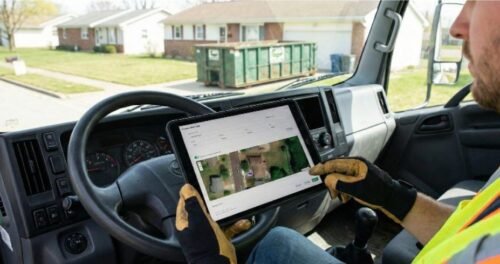
For instance, consider the chaotic environment of the dispatch desk. In a manual system, a customer calling to change a drop-off location requires the dispatcher to track down the driver via phone, relay the new address, and hope it was written down correctly on a notepad. This archaic process results in wasted fuel, missed stops, and unhappy customers. Atkinson’s productized experience automates this entire flow. When a change is made in the office, the system instantly updates the driver’s route on their mobile device. The ROI is immediate and measurable: fewer phone calls, zero lost drivers, and a massive reduction in the daily stress that leads to dispatcher burnout. You are buying the peace of mind that comes from a perfectly synchronized team.
Q: Why Is the Pricing Structure Designed Around Growth, Not Penalties?
One of the most frustrating aspects of adopting new technology is the dreaded “Success Tax.” Many software companies utilize tiered pricing models that actually penalize you for growing. If you add three new drivers, buy ten more dumpsters, or hire another dispatcher, your monthly software bill skyrockets. This creates a massive disincentive for local businesses trying to aggressively capture more market share.
Because the foundation of Bin Boss Dumpster Software is rooted in the biography of an actual fleet operator who wanted to expand without friction, the approach to pricing is fundamentally different. The structure is designed to be a true equalizer, allowing a local operation to utilize the exact same high-level logistical tools as a national conglomerate without fear of runaway software costs. By removing the financial penalty of adding new users or assets, the platform aligns its own success directly with the hauler’s ultimate goal: putting more boxes in more driveways and generating more revenue every single month.
Q: What Is the True “Cost of Inaction” for a Growing Dumpster Rental Company?
When operators hesitate to invest in automated management technology, they often focus solely on the upfront subscription price while completely ignoring the massive “Cost of Inaction.” This is the silent financial drain caused by stubbornly sticking to outdated, manual processes.
What is the exact cost of a 20-yard dumpster sitting empty on a construction site for a week because the pickup slip was lost under a coffee cup on a messy desk? What is the cost of paying a part-time office worker simply to manually re-enter data from paper weight tickets into an accounting program? What is the long-term cost to your brand reputation when a high-value contractor chooses a competitor because your booking process requires a phone call during business hours instead of offering a seamless, 24/7 online checkout? The actual cost of inaction far exceeds the price of modernizing your fleet.
Conclusion: Investing in Your Own Sanity and Scale
Pricing out fleet management technology is not about finding the cheapest digital filing cabinet; it is about securing the structural foundation of your company’s future. Todd Atkinson’s transition from a physical fleet commander to a digital operations pioneer proves that the most effective business solutions are always forged in the reality of the daily grind.
By offering his own hard-earned expertise as a deployable software service, Atkinson has provided independent haulers with a clear, actionable roadmap to scaling their enterprises. You no longer have to choose between aggressive growth and your own sanity. When you invest in a system built from real-world necessity, you are permanently eliminating the chaos of manual dispatching, protecting your profit margins, and giving yourself the absolute freedom to build a highly profitable legacy.