
From Alaska to the Las Vegas Strip: How Heidi Warner Built Royal Wings Cosmetics from a Dream and Determination
February 13, 2026AlterHill Group Reviews All the Trading Tools You Need to Succeed
February 13, 2026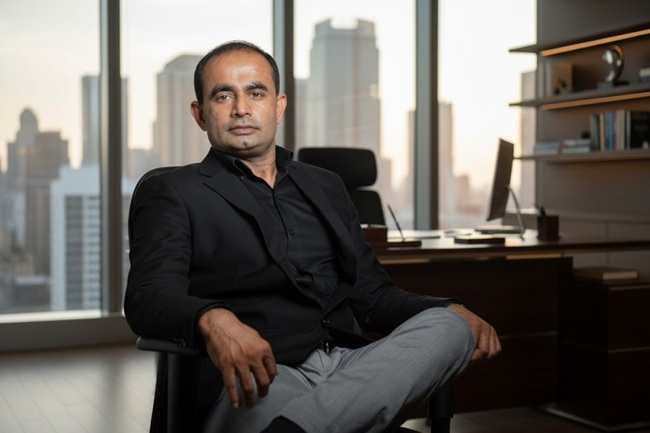
High-potential employees rarely arrive with announcements. They don’t always dominate meetings. They don’t chase visibility. And they often operate quietly, shaping outcomes without drawing attention to themselves. Many organizations overlook them – not due to lack of skill, but because traditional markers fail to capture how real potential reveals itself.
This is where leaders like Sabeer Nelli, CEO of Zil Money, stand apart. Rather than relying on formal evaluations or rigid frameworks, Sabeer is known for a more human approach to identifying and supporting high-potential individuals – one grounded in observation, presence, and everyday interactions. His philosophy centers on a simple belief: potential isn’t something to be predicted; it’s something to be noticed.
A Different Lens on High-Potential Talent
In many organizations, high-potential employees are identified through performance metrics or leadership programs. Sabeer’s approach is quieter – and often more revealing.
He pays close attention to how people behave when conditions are unclear. When priorities shift unexpectedly. When responsibility expands without instruction. These moments, he believes, expose far more than structured reviews ever could.
Much like elite esports players who perform under unpredictable pressure, high-potential employees tend to remain steady when others hesitate. They process complexity quickly, adjust without complaint, and move forward without needing constant validation. What distinguishes them isn’t perfection. It’s composure.
The Traits That Consistently Surface
Over time, certain patterns emerge among the people Sabeer recognizes as high-potential.
First is adaptability. These individuals don’t resist change; they recalibrate. New problems energize rather than unsettle them.
Second is emotional endurance. They remain present during long stretches of uncertainty, maintaining focus when momentum slows.
Third is quiet impact. Their work reshapes outcomes – simplifying processes, clarifying decisions, or raising team standards – often without calling attention to itself.
Finally, there is intrinsic drive. Not ambition for recognition, but a genuine pull toward solving meaningful problems.
These traits rarely announce themselves in interviews. They surface gradually, through lived experience and observation.
“Clutch performance isn’t accidental. It’s consistent behavior under pressure.”
Observation Over Evaluation
What makes Sabeer’s approach distinctive is not a proprietary system, but a daily rhythm.
He engages in informal conversations that reveal how people think, not just what they deliver. A simple discussion about a recent challenge often uncovers adaptability, curiosity, or resilience that formal meetings miss.
He observes team dynamics quietly – watching who brings clarity when discussions stall, who others naturally listen to, and who steps in when accountability is needed.
Recognition is handled with intention. Small wins are acknowledged publicly, not to reward noise, but to see how individuals respond. Those who redirect credit or raise expectations afterward often signal deeper leadership potential.
Most importantly, he pays attention to motivation. When asked what drives their work, high-potential employees answer without rehearsed language. Their responses are grounded, personal, and consistent.
This method doesn’t label people prematurely. It gives them space to reveal themselves.
Supporting Growth Without Forcing It
Spotting high-potential talent is only the beginning. Supporting it requires restraint. Sabeer’s leadership style emphasizes trust over acceleration. High-potential individuals are given ownership before they request it. They are allowed to make decisions, learn through missteps, and carry responsibility without constant oversight.
Growth isn’t rushed through titles or rigid pathways. Sometimes it shows up as exposure to complex problems. Sometimes as autonomy. Sometimes as the freedom to experiment without fear. Recognition plays a role – but not spectacle. Visible acknowledgment, even in small ways, signals that contribution is seen and valued.
In this environment, potential compounds naturally.
Why This Perspective Matters
As roles evolve and career paths grow less linear, identifying high-potential employees demands more than frameworks or formal signals – it demands attention. Leaders who rely only on titles and evaluations risk overlooking the individuals who will eventually shape culture, direction, and execution. Those who observe more deeply create room for people to grow into strengths they may not yet know how to articulate.
This is the essence of Sabeer’s approach: leadership rooted in awareness rather than oversight. His philosophy doesn’t call for structural overhauls or complex systems; it begins with presence. Listening more than directing. Watching how people respond when certainty fades. Noticing who brings calm and clarity when the path forward isn’t obvious. In environments like these, potential doesn’t need to be forced into view or formally uncovered. As Sabeer often reflects, every organization already has its future leaders – the real question is whether anyone is paying close enough attention to see them.
