
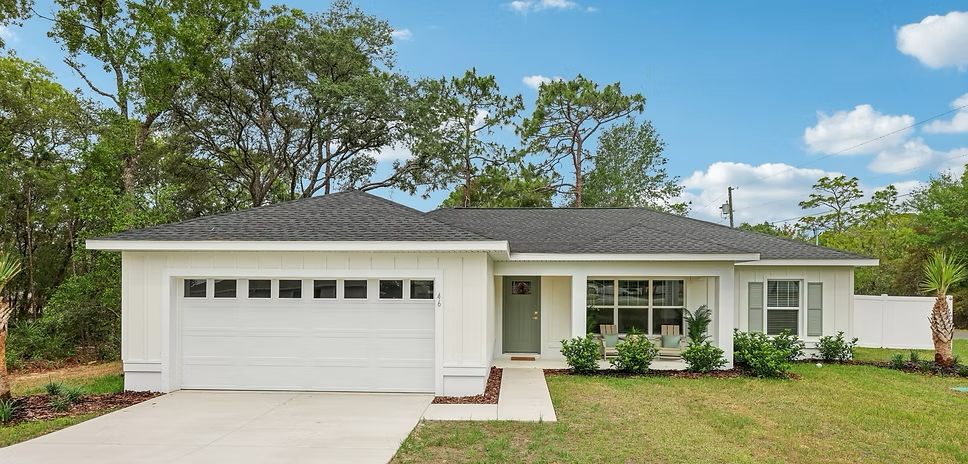
While competitors chase contemporary box aesthetics and farmhouse trends, Central Florida developer Ryan Hinricher is building homes that look like they’ve been standing for a century. It’s a deliberate rejection of architectural trends, and it’s working.
“A lot of competitors are doing the Miami modern cubic architecture, and I think that’s awesome in Miami,” says Hinricher, founder of Sunworth Homes. “But if you drive these particular areas, you’ve got hardwoods, you’ve got forest, you’ve got natural areas. This hard edge, right angles, it doesn’t fit in.”
Designing for Context, Not Instagram
Hinricher’s architectural philosophy centers on what he calls “adapt and assimilate.” Rather than imposing a signature style across markets, Sunworth homes blend traditional, vernacular, and craftsman elements to create structures that feel indigenous to their locations.
“We’re trying to make it look like these homes have been here a really long time,” Hinricher explains. “Rolling the clock back instead of rolling the clock forward on design, asking what has stood the test of time.”
As a member of the architectural review board for Winter Garden’s historic district, Hinricher has encountered residents who love their neighborhood’s historic character yet want to build ultra-modern structures within it. “If you love this area so much, why are you trying to do something that’s the opposite of the area you like?”
The region’s oak hammocks and natural springs suggest architectural vernacular rooted in Florida’s pre-air conditioning era: deep porches, abundant windows for cross-ventilation, and materials that reference agricultural heritage.
Avoiding the Farmhouse Trap
Hinricher is equally cautious about the farmhouse trend dominating production homebuilding. “I think the farmhouse look is a trend that’s fading,” he notes. “We’ve prioritized traditional and timeless design over what’s trendy. It means building homes that won’t feel dated in five years.”
He’s observed competitors attempting to graft farmhouse aesthetics onto concrete block construction with forced results. Instead, Sunworth employs board-and-batten siding, tongue-and-groove wood ceilings on porches, and traditional columns that reference Florida vernacular without committing to a single historical style.
Market Validation
The strategy is resonating. Sunworth’s first Parade of Homes entry won best kitchen under $400,000, competing against newer, trendier designs. Six homes have sold despite minimal marketing, with zero current inventory heading into 2026.
Interestingly, the wellness features aren’t always what closes the sale. “Some buyers respond to the elevations first,” Hinricher observes. “They’re drawn to the traditional architecture, then discover the natural fractals and biophilic elements inside.” The timeless exterior becomes an accessible entry point to a more complex interior story.
It’s a reversal of typical marketing hierarchy, where bold architectural statements lead and interior details follow. Sunworth homes present as familiar and approachable from the street, then surprise buyers with nature fractals, premium materials, and evidence-based design inside.
Hinricher’s approach challenges the social media-driven cycle increasingly influencing residential architecture. In an era where builders chase viral aesthetics, designing for longevity and regional context represents a contrarian position. His bet is that buyers seeking healthier homes don’t want structures that announce themselves as different, they want homes that feel like they belong.
Ryan Hinricher is the founder of Sunworth Homes and Oak Avenue Real Estate, specializing in wellness-focused entry-level housing in Central Florida’s rapidly growing markets.