
In New York City’s highly competitive architectural landscape, designers are often categorized as either technically driven professionals or visually oriented creatives. Hyunsoo Cho, an architectural designer at J Frankl Architects, represents a growing generation that resists this division. Her work demonstrates how visual sensitivity and digital rigor can function together, shaping architectural practice that is both technically reliable and experientially attentive.

Cho, a graduate of the Pratt Institute, has developed a practice grounded in computational precision, BIM-based coordination, and systematic workflow organization. At the same time, she possesses a distinct talent for architectural visualization and composition, a background that strongly influences how she approaches space, proportion, and human perception. Rather than treating technology as an end in itself, Cho views digital tools as a framework that allows design intent to remain clear throughout increasingly complex project environments.
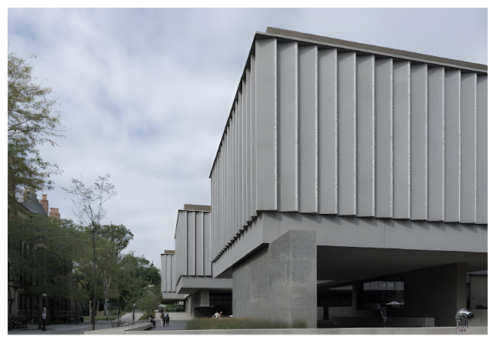
Alongside her built work, Cho has received international recognition for her architectural imagery. She was recently honored by the Architecture MasterPrize (AMP) and selected for exhibition at the Carlotta Gallery. These distinctions position her visual work within a professional and curatorial context, underscoring her ability to engage architecture not only as a constructed object, but as a visual and cultural medium. For Cho, capturing the built environment is not a separate pursuit but an extension of architectural thinking—an analytical tool for studying light, scale, and spatial rhythm.
This visual discipline informs her approach to design documentation and coordination. In her professional writing, including essays published with Medium’s Design Bootcamp, Cho has articulated what she calls the “Neuron Portfolio Strategy.” The concept frames architectural data—drawings, models, and project records—not as static archives, but as an interconnected knowledge system that can inform future work. The strategy emphasizes clarity, reusability, and continuity of information across projects, particularly in environments where teams, consultants, and regulatory requirements frequently change.
Cho’s interest in digital organization is rooted in practical experience. Having worked on projects across different geographic and regulatory contexts, she observed how fragmented information and inconsistent workflows often lead to confusion, inefficiency, and design dilution. Her methodology focuses on maintaining coherence between design intent and technical execution by using BIM and digital tools as shared reference points rather than isolated production instruments.
At J Frankl Architects, Cho applies this approach to residential and mixed-use developments throughout New York City. Projects such as 100 Fleet Place in Downtown Brooklyn and the 18–11 / 18–25 Cornaga Avenue developments in Far Rockaway require careful coordination between zoning constraints, consultant input, and client expectations. In these contexts, Cho contributes to massing studies, façade development, consultant coordination, and the production of construction documentation, with particular attention to clarity and consistency across project phases.
Her distinct visual sensibility plays a noticeable role in how design decisions are evaluated. Cho often considers how buildings are experienced from the street level, how daylight interacts with façades, and how spatial sequences affect daily use. These considerations, informed by her visual analysis, help ensure that regulatory and technical requirements do not overwhelm experiential quality—particularly in dense urban housing projects where efficiency and livability must coexist.
Looking forward, Cho frames her design philosophy through what she describes as “symbiotic intelligence,” a model in which human judgment and digital processes support one another. She has written about the evolving role of architects as “ethical algorithm guides,” emphasizing the responsibility to direct automated and data-driven systems toward outcomes that reflect human values rather than purely technical optimization. In this view, automation is not a replacement for design thinking, but a means of preserving time and attention for critical spatial and social questions.
Through a combination of built work, published writing, and visual research, Hyunsoo Cho is establishing a profile that reflects the changing demands of contemporary architecture. Her work illustrates how technical fluency, visual intelligence, and ethical awareness can operate together—offering a model for architects navigating an increasingly data-driven yet human-centered profession.