Americans Discover Panama Offers More Than Financial Returns
Luxury investment strategies are evolving beyond traditional markers of high-end watches, exotic cars, and domestic real estate portfolios. A growing cohort of affluent Americans is discovering that international lifestyle properties deliver experiences and opportunities that domestic investments simply cannot match. Panama has emerged as a compelling destination where investment returns intertwine with enhanced quality of life.
Ashley Luther, partner at Nashville-based CHORD Real Estate, represents this new breed of lifestyle-focused investor. Her perspective reveals how international real estate investment has shifted from purely financial calculation to holistic life design.
Beyond Numbers: The Lifestyle ROI
Traditional real estate investment analysis focuses on cap rates, appreciation projections, and rental yields. Lifestyle investors add additional considerations: daily living quality, cultural richness, climate preferences, and experiential value that balance sheets cannot capture.
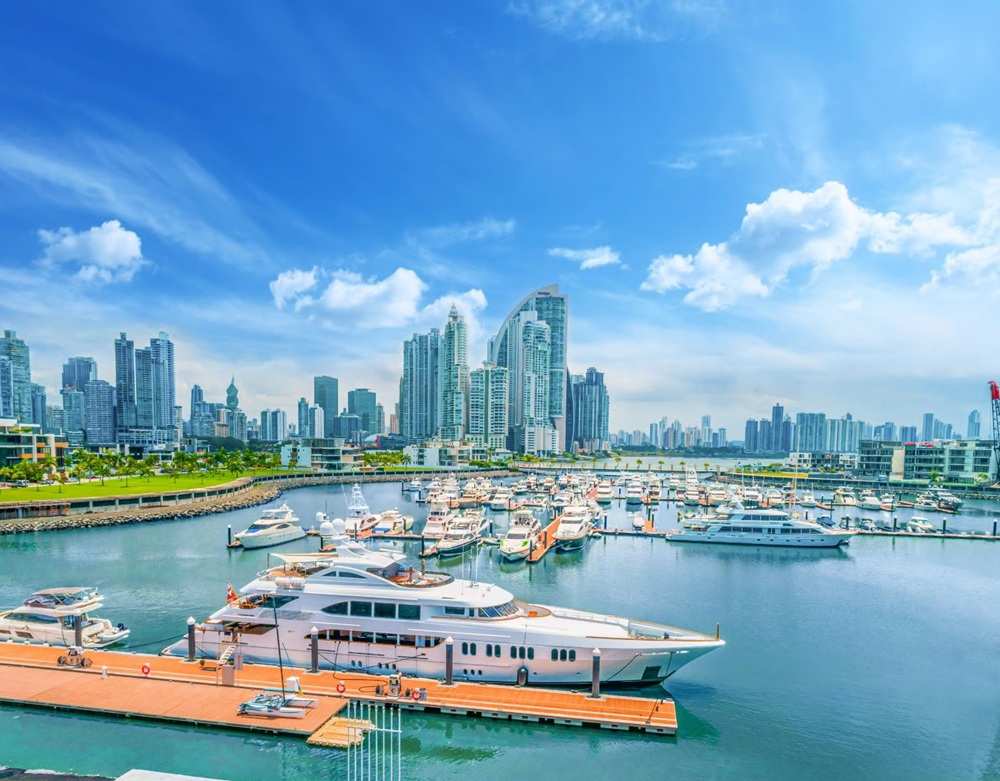
Luther’s first impression of Panama City exceeded expectations, revealing possibilities for cosmopolitan living that promotional materials had undersold. Yet Panama offers more than just one lifestyle option. Luther highlights the country’s remarkable diversity: “If you love the mountain region, if you love cooler temperatures and maybe coffee, you should explore the Boquete region. If you want white sands and crystal clear blue waters, let’s go explore the Caribbean coast.”
This geographic variety within a small, accessible country enables investors to match properties precisely to lifestyle preferences rather than compromising.
The Daily Realities That Matter
Luther emphasizes that successful international lifestyle investment requires understanding daily living rhythms, not just touring showcase properties. During her Panama visits, she systematically evaluated walkability to amenities, dining options, grocery stores, pharmacy access, and outdoor activities.
“We quickly found that everything was a short walking distance from wherever we were staying,” Luther explains. This walkability particularly appealed to health-conscious Americans accustomed to car-dependent suburban life. Luther adopted a routine of morning runs along Panama City‘s oceanfront, discovering that “people in Panama are very focused on their health and being outdoors and eating healthy, eating local.”
These lifestyle observations carry as much weight as financial projections for investors prioritizing how they’ll actually spend their days.
Cultural and Culinary Appeal
For affluent Americans, dining quality significantly impacts lifestyle satisfaction. Luther found Panama’s culinary scene exceeded Nashville’s despite the latter’s growing foodie reputation. “Panama has such a diverse wide array of dining options. I think it’s because it’s a multinational hub and there are so many people from all over the world there.”
She recounts a memorable multi-course French dinner in Panama City costing just $40 for two people, a price point that “doesn’t even get you a lunch at a barbecue restaurant” in Nashville.
Shopping similarly impressed Luther, particularly Panama City’s upscale malls featuring major international brands often absent from mid-tier American cities.
The Casco Viejo Factor
Luther reserves particular enthusiasm for Casco Viejo, Panama City’s restored historic district. “Casco has my heart, truly. I hope to, when we move there, live in Casco,” she shares.
The neighborhood combines Spanish colonial architecture, cobblestone streets, plaza-centered community life, and a mix of high-end restaurants, artisan shops, and cultural venues. This emotional connection to place represents a crucial element of lifestyle investment that purely financial calculations miss.
Redefining Retirement Timelines
Interestingly, Luther and her husband’s Panama investment doesn’t fit traditional retirement timelines. As active business owners, they’re designing a lifestyle that blends work and leisure in a more appealing setting rather than planning conventional retirement.
“We’re business owners, so we’ll probably never fully retire, but spend a lot of time there,” Luther explains. This reflects broader trends among affluent professionals who reject binary work/retirement models in favor of lifestyle design that begins earlier.
Investment Meets Experience
The financial case for Panama remains solid: dollar-based currency, accessible residency programs, strong healthcare infrastructure, and appreciation potential. But Luther’s enthusiasm stems as much from experiential factors.
“You could go golfing and shopping and hiking in a rainforest, hiking a mountain, get a spa treatment and have this wonderful dinner experience, all in a day,” she notes. This concentration of lifestyle amenities within compact geography enables variety that sprawling countries cannot easily match.
Luther’s approach represents evolving thinking among affluent Americans about wealth deployment. Rather than accumulating assets purely for accumulation’s sake, lifestyle investors ask how resources can enable richer daily experiences, cultural immersion, and life quality improvements alongside financial returns.
This holistic approach, where lifestyle considerations receive equal weight with financial projections, marks a fundamental shift in how sophisticated investors think about international real estate opportunities.
CHORD Real Estate hosts its Invest Panama Summit May 28-30, 2026, at Hotel La Compañía in Panama City. Information: chordrealestate.com/investpanamasummit.