
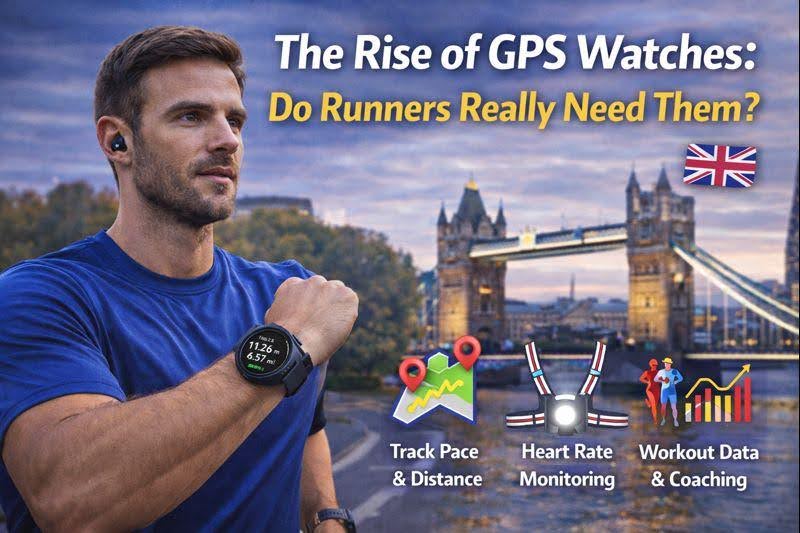
Running has evolved from being a simple physical activity into a data-driven science. Across the UK, from London’s Hyde Park to the trails of the Scottish Highlands, runners are strapping on GPS watches to track every mile, split, and heartbeat. But as wearable technology becomes more advanced, one question remains: Do runners really need GPS watches, or are they just another fitness fad?
The Evolution of Running Technology
Over the last decade, running technology has come a long way. What began with basic pedometers has transformed into sophisticated GPS-enabled smartwatches capable of analyzing running form, recovery, and even sleep quality.
Brands like Garmin, Polar, and Coros now offer devices that combine GPS tracking, heart rate monitoring, and smart connectivity, giving runners a deeper look into their performance. These watches have become an essential part of modern training but are they truly necessary for every runner?
How GPS Watches Work
At their core, GPS watches connect to satellites to pinpoint your location in real time. This allows the watch to calculate your pace, distance, and route with remarkable precision.
For UK runners, this feature is invaluable whether you’re pacing yourself through the streets of Manchester or tackling hilly terrain in Wales. GPS data provides immediate feedback on performance, helping runners make smarter training decisions and track their progress over time.
Some watches even use multi-band GPS technology, offering improved accuracy in dense areas like city centers or forests where signal interference is common.
The Benefits of GPS Watches for Runners
For runners focused on performance and improvement, GPS watches offer several undeniable advantages:
- Accurate tracking: Every step, split, and mile is recorded, helping you see exactly how far you’ve gone.
- Performance analysis: Metrics such as cadence, heart rate zones, and elevation help refine training plans.
- Goal setting and motivation: Achievements, milestones, and streaks keep runners engaged.
- Route planning: Apps like Strava and Garmin Connect allow users to map and explore new running routes.
For marathoners and triathletes, this data can be the difference between an average and a personal best performance. The feedback loop provided by GPS technology allows for more targeted, scientific training.
The Downsides: Are We Becoming Too Dependent on Data?
While the benefits are clear, there’s another side to the story. Some running purists argue that the constant reliance on data can take the joy out of running. Instead of listening to their bodies, runners may start chasing numbers, pace, heart rate, VO₂ max, which can lead to burnout.
Additionally, GPS watches can be expensive, with premium models costing hundreds of pounds. For beginners or casual joggers, these features might be unnecessary. Running, after all, is meant to be simple: lace up your shoes and head out the door.
The Role of Safety and Complementary Gear
As technology advances, safety has become an integral part of the running experience. Many modern GPS watches now feature incident detection and live tracking, allowing loved ones to monitor your run in real time a valuable feature, especially for those running alone.
Safety, however, goes beyond software. Visibility remains a major concern, particularly during the UK’s darker winter months. That’s where Running Lights for Runners come into play. Devices like Lumefit offer lightweight, rechargeable LED lights that attach to your clothing or gear, ensuring you’re visible to motorists and cyclists.
Combining GPS tracking with high-visibility lighting makes running both smarter and safer, especially for evening or early morning runs.
GPS Watches and the Rise of Smart Coaching
One of the most exciting developments in recent years is the integration of AI-driven coaching. GPS watches now provide personalized training suggestions based on your heart rate, pace history, and recovery data.
These features give runners insights once only available from personal trainers. For instance, your watch might recommend an easy run if your recovery metrics are low or push you toward interval training when your fitness improves.
This tailored approach has proven especially popular among time-conscious UK professionals, allowing them to train more effectively without overtraining.
Are There Alternatives to GPS Watches?
If a GPS watch feels like too much tech, some alternatives still provide valuable data. Smartphone apps, fitness bands, and smart earbuds can track similar metrics at a lower cost.
However, accuracy and battery life are two key differentiators. GPS watches are designed specifically for outdoor tracking, offering precision and durability that smartphones can’t always match. Additionally, running with a dedicated device means fewer distractions no notifications, calls, or app interruptions mid-run.
Still, it comes down to preference. Some runners love the simplicity of running “naked” (without tech), while others find motivation and insight through detailed analytics.
Conclusion
So, do runners really need GPS watches? The answer depends on your goals. For data enthusiasts and competitive athletes, they’re invaluable tools that transform training through accurate feedback and measurable results. For casual joggers, however, the investment might not be essential.
Regardless of where you stand, there’s no denying that GPS watches paired with safety gear like Lumefit Running Lights for Runners have made running smarter, safer, and more connected than ever before.
In the end, the best gadget is the one that enhances your experience without overshadowing the pure joy of running. Whether you’re chasing a new PB or simply enjoying the fresh air, remember: technology should support your journey, not define it.