
Ranza Vox Is Quietly Redefining the Role of Digital Models in a Noisy Online World
January 28, 2026Travel eSIM Market Expansion Creates Investment Opportunities as Traditional Carriers Face Revenue Pressure
January 28, 2026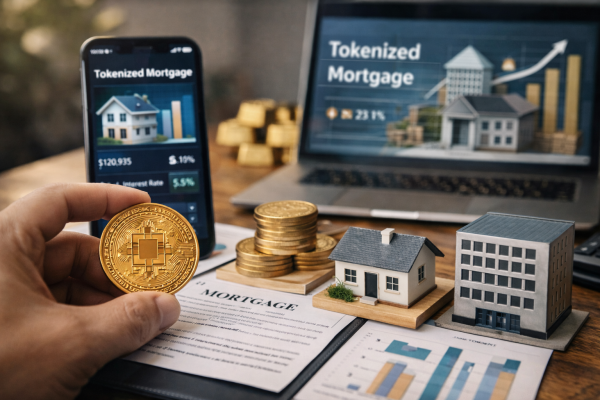
The crypto industry has evolved far beyond its early focus on speculative trading and digital-only assets. As the market matures, attention is increasingly shifting toward real-world utility, stability, and long-term value creation. One of the most significant developments driving this transition is the rise of Real World Assets, commonly referred to as RWA.
RWA represents a bridge between traditional finance and blockchain technology. Instead of relying solely on native crypto assets, RWA bring tangible, income-generating assets such as real estate, commodities, and loans onto the blockchain through tokenization. This shift is redefining how value is stored, transferred, and grown in decentralized ecosystems.
Among the many applications of RWA, tokenized mortgage loans stand out as one of the most promising use cases. They combine the stability of real estate-backed assets with the efficiency and transparency of blockchain technology, opening new opportunities for investors across the globe.
Understanding Real World Assets (RWA) in Crypto
Real World Assets refer to physical or traditional financial assets that exist outside the blockchain but are represented on-chain in tokenized form. These assets can include real estate, government bonds, private credit, invoices, commodities, and mortgages. Through tokenization, ownership rights or economic exposure to these assets are digitized and recorded on a blockchain.
The core idea behind RWA is simple but powerful. Instead of limiting blockchain applications to digital-native assets, RWA allow decentralized finance to tap into trillions of dollars in traditional markets. This integration enhances liquidity, accessibility, and efficiency while maintaining a link to real economic activity.
Tokenization plays a central role in this process. By converting real-world assets into digital tokens, it becomes possible to fractionalize ownership, automate compliance, and enable peer-to-peer transactions without traditional intermediaries. This transformation is particularly impactful in sectors that have historically been illiquid or restricted to institutional investors.
Why Tokenization Matters in Modern Financial Systems
Traditional financial markets are often burdened by inefficiencies such as slow settlement times, high transaction costs, and limited transparency. Tokenization addresses many of these issues by leveraging blockchain’s core strengths.
When assets are tokenized, transactions can settle almost instantly, ownership records become immutable, and smart contracts automate processes that previously required manual oversight. This not only reduces costs but also minimizes counterparty risk and operational friction.
For investors, tokenization democratizes access. Assets that once required significant capital commitments can now be accessed through fractional ownership. This lowers entry barriers and allows a broader range of participants to benefit from traditionally exclusive investment opportunities.
From a systemic perspective, tokenization enhances transparency. Asset performance, ownership history, and yield distribution can all be tracked on-chain, improving trust and accountability across financial ecosystems.
Tokenized Mortgage Loans as a Core RWA Use Case
Among various RWA categories, tokenized mortgage loans represent a particularly compelling application. Mortgages are already well-understood financial instruments backed by tangible collateral. By bringing them onto the blockchain, their inherent stability can be combined with the efficiency of decentralized infrastructure.
Tokenized mortgage loans involve converting mortgage-backed cash flows into blockchain-based tokens. These tokens can represent fractional exposure to the underlying loan, allowing investors to earn yield derived from real estate payments rather than speculative market movements.
This approach offers several advantages. First, it improves liquidity in mortgage markets, which are traditionally illiquid and slow-moving. Second, it allows global investors to participate in real estate-backed lending without directly owning or managing property. Third, it introduces greater transparency into loan performance and repayment structures.
Platforms such as CoinLander are contributing to this evolution by focusing on secure, compliant, and transparent approaches to RWA tokenization. By integrating real-world collateral with blockchain-based yield mechanisms, such platforms help bridge the gap between traditional finance and decentralized systems.
The Role of RWA in DeFi Yield Generation
One of the biggest challenges facing decentralized finance has been the sustainability of yields. Many DeFi protocols rely on token emissions or speculative trading activity, which can lead to volatile and short-lived returns. RWA offers a fundamentally different model.
When yield is derived from real economic activity, such as mortgage repayments or rental income, it becomes more predictable and resilient. This makes RWA-backed yield attractive not only to crypto-native users but also to institutional investors seeking stability and compliance.
RWA staking allows users to lock asset-backed tokens in exchange for yield generated from underlying real-world assets. Unlike purely algorithmic models, this approach is grounded in tangible value creation. As a result, it aligns more closely with traditional investment principles while maintaining the benefits of blockchain-based accessibility.
This shift is driving increased interest in tokenized real world assets as a foundation for the next generation of decentralized finance products.
How Tokenization Enhances Transparency and Trust
Trust has always been a central issue in financial markets. Blockchain technology introduces a new paradigm by making data verifiable, immutable, and accessible. When applied to RWA, these properties significantly enhance trust between issuers, platforms, and investors.
Tokenized assets can be linked to verifiable documentation, audits, and on-chain reporting mechanisms. Smart contracts ensure that yield distribution follows predefined rules, reducing reliance on centralized intermediaries.
In the context of tokenized mortgage loans, this transparency allows investors to track loan performance, payment schedules, and risk exposure in real time. Such visibility is difficult to achieve in traditional mortgage-backed securities, where information asymmetry is common.
By embedding trust directly into the infrastructure, tokenization reduces friction and encourages broader participation across financial markets.
Accessibility and Global Participation Through RWA
One of the most transformative aspects of RWA tokenization is its impact on accessibility. Traditional asset classes often impose geographic, regulatory, and financial barriers that limit participation. Blockchain-based tokenization removes many of these constraints.
Investors from different regions can gain exposure to high-quality assets without navigating complex cross-border processes. Fractional ownership allows participation at smaller investment sizes, making diversified portfolios more achievable.
This global accessibility also benefits asset originators. By tapping into a broader investor base, they can improve capital efficiency and reduce dependence on localized financial systems.
Platforms designed around RWA principles, such as CoinLander, illustrate how blockchain infrastructure can support secure access to real-world yield opportunities while maintaining compliance and transparency.
Risk Considerations in RWA Tokenization
While RWA offer significant advantages, they are not without risks. Asset quality, regulatory compliance, and operational integrity remain critical factors. Tokenization does not eliminate these risks but changes how they are managed and disclosed.
Investors must consider the legal structure underpinning tokenized assets, including how ownership rights are enforced and how disputes are resolved. Additionally, the reliability of asset verification and ongoing monitoring is essential.
Smart contract security is another key consideration. While automation reduces human error, vulnerabilities in code can introduce new risks. This underscores the importance of robust auditing and governance frameworks.
Understanding these factors is essential for making informed decisions in the evolving RWA landscape.
The Future of RWA and Tokenized Finance
The integration of real-world assets into blockchain ecosystems represents a major step toward the maturation of decentralized finance. As regulatory clarity improves and infrastructure continues to develop, RWAs are likely to play an increasingly central role in global financial systems.
Tokenized mortgage loans, in particular, demonstrate how traditional assets can be reimagined through blockchain technology. By combining stability, transparency, and accessibility, they offer a compelling alternative to both conventional finance and purely speculative crypto models.
As adoption grows, platforms that prioritize asset quality, compliance, and user trust will shape the future of RWA-driven finance. The convergence of real-world value and decentralized infrastructure is not just a trend but a structural shift with long-term implications.
For investors seeking sustainable yield and exposure to tangible economic activity, tokenized real-world assets are emerging as a cornerstone of the next phase of financial innovation.
Disclaimer:
This content is provided for informational and educational purposes only. It does not constitute financial, investment, legal, or tax advice. References to blockchain technology, real-world assets, tokenization, or decentralized finance are intended solely to explain industry concepts and developments. No guarantees or assurances of performance, yield, or outcomes are expressed or implied. Readers should conduct their own independent research and consult qualified professionals before engaging with any financial or digital asset–related activities.
