
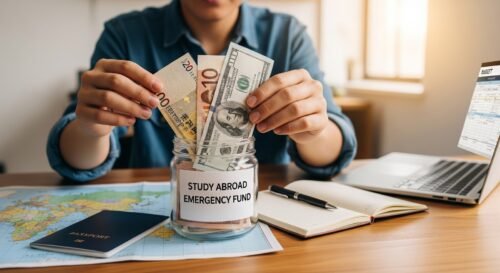
Stop reading blogs that tell you to skip the morning coffee.
That advice is lazy. It assumes your financial ruin comes from a four-dollar latte. It doesn’t. Your bank account drains because of three things: awful exchange rates, stupid housing decisions, and a total lack of liquidity when things go wrong.
I’ve watched smart students go broke in London, Tokyo, and Sydney. They all had budgets. They all tracked their spending. They still ended up calling their parents in a panic or maxing out credit cards with predatory interest rates.
You want to survive a semester abroad without eating instant noodles for four months straight? You need to attack the big expenses first.
How to Save on Student Housing
Housing will eat 40% to 60% of your budget. If you mess this up, no amount of coupon clipping will save you.
Universities love to sell you on “convenience.” They market sleek, modern dorms right on campus. They look great in the brochure. But convenience has a premium markup that borders on extortion.
I remember looking at the student apartments Brisbane had listed on a university portal a few years back. The sticker price looked high compared to a random room in the suburbs. But do the actual math.
Those apartments came fully furnished. The Wi-Fi worked on day one. The security was tight. The students who tried to “save money” by renting private flats? They got hit with hidden connection fees, shady landlords who stole their deposits, and huge commute costs.
I’ve seen students lose thousands trying to be cheap with housing. They rent a dive bar room, get bedbugs, and have to move out in a week. Don’t be a hero. Pay the premium for official student housing. You are paying for stability. It is the only way to guarantee you actually have a roof over your head so you can focus on why you are actually there.
Avoiding Foreign Transaction Fees
Your home bank is ripping you off.
Every time you swipe your debit card abroad, two things usually happen. First, you get hit with a “foreign transaction fee.” That’s usually around 3%. Second, the bank gives you a terrible exchange rate.
I did the math on a two-week trip once. The difference between a standard bank card and a specialized travel card was nearly $150. Over a full semester? You are basically setting a thousand dollars on fire.
Get a card that offers the interbank exchange rate. Wise, Revolut, or Charles Schwab. Open the account before you leave. If you wait until you land, you might get blocked by “proof of address” requirements.
And never, ever let the card machine do the conversion for you. If the waiter asks “pay in USD or Euros?”, always choose the local currency. Paying in your home currency lets the merchant set the exchange rate. It is always worse.
Building a Study Abroad Emergency Fund
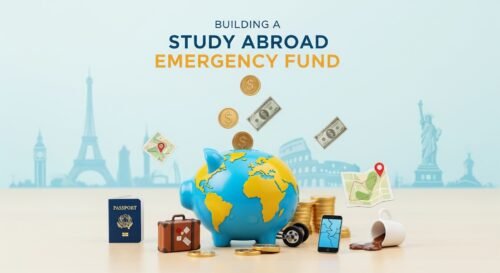
Nature is brutal. It ignores your syllabus.
You might think you are safe in a modern city, but I’ve seen students caught in typhoons in Japan and floods in Germany. The infrastructure fails. ATMs go down. Card readers stop working.
I knew a student who got stranded after a massive storm hit his region. He had no physical money. He ended up sleeping in a crowded community hall for four days, waiting for government disaster assistance to finally arrive with water and blankets. It was miserable.
The students who had cash? They hailed a cab to the next town over and checked into a hotel.
You need liquidity. Real, foldable cash. You aren’t a hedge fund manager. You don’t need to be worrying about buying bullion vault gold or tracking the S&P 500 while you’re trying to pass exams. You need boring, accessible money. Keep enough for a last-minute flight home and two weeks of survival expenses. Do not touch it for beer money.
Living Like a Local on a Budget
This is where the lifestyle advice actually matters.
When you first arrive, everything is new. You want to see the sights. You eat at the restaurants near the landmarks. You take Ubers because you haven’t figured out the bus system.
That is tourist behavior. Tourists hemorrhage money.
Locals don’t eat near the Eiffel Tower. They don’t take cabs everywhere. They have a transit pass and they buy groceries at the grandma’s shop.
My first week in Tokyo, I spent $50 a day on food. By month two, I was spending $15. I found the local bento shops. I figured out which supermarkets discounted their sushi after 8 PM.
Shift your mindset. You aren’t on a four-month vacation. You live there. Act like it.
Prioritizing Your Study Abroad Budget
You can’t have it all.
You cannot live in the nicest apartment, travel every weekend, eat out every night, and come home with savings. Pick one priority.
Maybe you care about travel. Great. Live in a shoebox apartment, eat rice and beans, and spend every cent on train tickets.
Maybe you care about food. fine. Don’t travel. Explore your city’s culinary scene and sleep in a cheap hostel if you travel.
The students who suffer the most are the ones who try to maintain their home lifestyle in a foreign economy. It doesn’t work. You have to sacrifice something.
Decide what you are willing to give up before you get on the plane. Once you’re there, the FOMO will hit you hard. If you don’t have a plan, you’ll say yes to everything. And then you’ll be the one calling home, asking for a bailout.
Don’t be that student.