
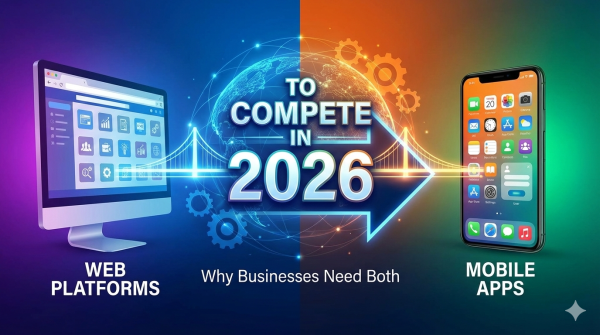
The digital landscape is evolving at breakneck speed, and businesses that fail to adapt risk being left behind. As we approach 2026, the question isn’t whether your company needs a digital presence it’s whether you’re maximizing that presence across all platforms. The modern web app business landscape demands a multi-platform approach to stay competitive, and the most successful companies are those that understand the power of combining web platforms with mobile applications. Professional custom mobile app development services have become essential investments for forward-thinking businesses looking to maintain their competitive edge.
Gone are the days when businesses could rely solely on a website or just a mobile app. Today’s consumers expect seamless experiences across all touchpoints, and companies that deliver on this expectation are the ones capturing market share. The traditional app vs website debate misses the point entirely in today’s market—successful businesses recognize that the real competitive advantage lies in leveraging both platforms strategically. Organizations seeking to build a future-proof digital presence increasingly turn to experienced custom software development services providers to implement sophisticated multi-platform strategies.
App vs Website: Understanding the Modern Digital Landscape
Rather than viewing it as app vs website, successful companies see it as app AND website. Each platform serves distinct purposes in the customer journey, and understanding these differences is crucial for business success. Web platforms excel at discoverability, content marketing, and providing detailed information that customers can easily find through search engines. They offer broad accessibility across devices and operating systems, making them perfect for reaching new audiences and establishing credibility.
Mobile apps, on the other hand, shine in areas where web platforms traditionally struggle. They provide personalized experiences, leverage device-specific features like cameras and GPS, and create direct communication channels through push notifications. The benefits of mobile apps extend far beyond simple convenience for users—they create opportunities for deeper engagement and stronger customer relationships.
When comparing web app vs mobile app features, the real winner is using both. Web platforms serve as the foundation for your digital presence, while mobile apps act as the engagement amplifier. This dual approach ensures you’re meeting customers wherever they are in their journey, whether they’re discovering your brand for the first time or looking to deepen their relationship with your company.
The importance of web platforms for businesses cannot be overstated in 2026, particularly when it comes to search engine optimization and content marketing. However, businesses that understand the benefits of a mobile app for business gain significant advantages in customer retention and engagement.
The Proven Benefits of Mobile Apps for Modern Businesses
Smart businesses are leveraging the benefits of mobile apps to drive customer engagement in ways that web platforms alone cannot achieve. Mobile applications offer unique advantages that directly impact the bottom line, starting with their ability to send push notifications. This direct communication channel allows businesses to re-engage customers at optimal times, driving repeat visits and purchases.
The personalization capabilities of mobile apps far exceed what’s possible on web platforms. Apps can track user behavior, preferences, and location data to deliver highly targeted experiences. This level of personalization leads to higher conversion rates and increased customer lifetime value. Companies that understand the benefits of a mobile app for business see average increases of 20-30% in customer engagement compared to web-only strategies.
Mobile apps also provide superior performance and user experience. They load faster, work offline, and integrate seamlessly with device features like cameras, microphones, and GPS. This enhanced functionality opens up new possibilities for customer interaction and service delivery that simply aren’t possible through web browsers alone.
The data collection capabilities of mobile apps are another significant advantage. Apps can gather detailed analytics about user behavior, preferences, and usage patterns. This information becomes invaluable for improving products, services, and marketing strategies. The insights gained from mobile app analytics often reveal opportunities that businesses never knew existed.
Why Web Platforms Remain Essential for Business Success
While mobile apps offer compelling advantages, web platforms continue to play a crucial role in business success. Recognizing the importance of web platforms for businesses drives strategic decisions that complement mobile app investments. Web platforms serve as the primary discovery mechanism for new customers, offering superior search engine optimization opportunities that mobile apps cannot match.
The cost-effectiveness of web platforms makes them accessible to businesses of all sizes. Unlike mobile apps, which require separate development for different operating systems, web platforms work across all devices and browsers with a single codebase. This universal accessibility ensures that no potential customer is excluded based on their device preferences or technical limitations.
Web platforms excel at content marketing and thought leadership. They provide the space and flexibility needed to share detailed information, case studies, and educational content that builds trust and authority. This content marketing capability is essential for B2B companies and any business that relies on demonstrating expertise to attract customers.
The integration capabilities of web platforms also make them ideal for connecting various business systems and third-party services. From payment processors to customer relationship management systems, web platforms can seamlessly integrate with the tools businesses need to operate efficiently.
The Synergy Effect: Why Both Platforms Are Essential
Every successful web app business in 2026 will need to embrace both web and mobile strategies because the synergy between these platforms creates competitive advantages that neither can achieve alone. The web app vs mobile app discussion should focus on complementary strengths rather than choosing one over the other.
Web platforms serve as the foundation for customer acquisition and education, while mobile apps excel at retention and engagement. This creates a natural customer journey where prospects discover your business through web search, learn about your offerings on your website, and then download your mobile app for ongoing engagement. Companies that master this integrated approach see significantly higher customer lifetime values.
The data sharing between web platforms and mobile apps creates opportunities for sophisticated marketing automation and personalization. Customer behavior on your website can inform mobile app experiences, while app usage data can improve web platform content and functionality. This cross-platform intelligence enables businesses to create truly personalized customer experiences.
Cross-platform marketing campaigns become more effective when businesses can leverage both web and mobile touchpoints. Email campaigns can drive traffic to web platforms for detailed information, while push notifications can bring users back to mobile apps for quick actions. This multi-channel approach increases message frequency and effectiveness without being intrusive.
Future of Mobile Apps in Business 2026: What’s Coming Next
The future of mobile apps in business 2026 looks incredibly promising for early adopters who are already building integrated digital strategies. Emerging technologies like artificial intelligence, augmented reality, and 5G connectivity are creating new possibilities for mobile app functionality that will further differentiate them from web platforms.
Predictions about the future of mobile apps in business 2026 point to increased integration with Internet of Things devices, voice assistants, and wearable technology. These connections will create new touchpoints for customer engagement and service delivery that extend far beyond traditional smartphone interactions.
The rise of progressive web apps is blurring the lines between web platforms and mobile apps, but rather than replacing native mobile apps, this technology is creating new hybrid opportunities. Businesses that understand how to leverage progressive web apps alongside traditional mobile apps and web platforms will have the most comprehensive digital strategies.
Planning for the future of mobile apps in business 2026 requires strategic thinking about how emerging technologies will impact customer expectations and behavior. Companies that start building these integrated digital experiences now will be best positioned to capitalize on future opportunities.
Taking Action: Building Your Integrated Digital Strategy
Understanding why businesses need mobile apps starts with examining customer expectations, but the real value comes from implementing a strategy that leverages both web platforms and mobile applications effectively. The most successful companies are those that view their digital presence as an integrated ecosystem rather than separate, competing platforms.
Building a thriving web app business requires understanding how platforms complement each other and investing in both web and mobile development capabilities. This integrated approach ensures that your business can meet customers wherever they are in their journey and provide the experiences they expect in 2026 and beyond.
The businesses that will dominate their markets in 2026 are those that recognize the unique strengths of both web platforms and mobile apps, and invest in creating seamless experiences across both. The question isn’t whether you can afford to invest in both platforms—it’s whether you can afford not to.