
Some people dress “tactical” without realizing it. Not because they’re trying to look tough, and definitely not because they’re role-playing a movie character on the way to a coffee shop. It happens in quieter ways—when you pick the jacket with the inside pocket because you’re tired of losing your phone, or when you reach for pants that don’t pinch when you sit in the car for 40 minutes, or when you start caring more about weatherproof shoes than whatever is trending on a feed.
If you step back and look at the last few years, it makes sense. Daily life got more unpredictable. Weather swings harder. Work and personal schedules overlap. People move around more—commutes, school drop-offs, errands, flights, weekend trips, side gigs. Even if you’re not doing anything extreme, you’re constantly switching contexts. And clothing that keeps up with those small transitions starts to feel like a life upgrade.
It’s not “tactical.” It’s practical.
“Tactical” used to be a clear category: duty gear, uniform pieces, specific use cases. Now the line is blurry because the features people want from their clothes are the same features that used to belong mostly to that world—durability, mobility, pockets that actually work, and fabrics that don’t fall apart after a few rough weeks.
Most people who lean into this style don’t talk about it in those terms. They say things like:
- “I just need something comfortable.”
- “I want pockets that close.”
- “I’m tired of replacing pants every season.”
- “I want something I can wear all day and not think about.”
That’s the whole shift. Clothes are becoming tools again. Not in a dramatic way—more like how a good backpack becomes “your” backpack because it solves a bunch of daily annoyances and never lets you down.
The pocket economy is real
The simplest explanation for the “quiet tactical” trend is also the most obvious: we carry more stuff.
Phones got bigger. Keys got bulkier. People carry earbuds, cards, hand sanitizer, a small charger, sometimes a power bank. If you commute, you might carry a transit pass. If you’re a parent, you’re carrying a random rotating museum of tiny items—snacks, wipes, hair ties, bandages, toy cars, you name it. Even if you hate carrying things, daily life pushes a small inventory into your orbit.
That makes pockets more than a detail. Pockets are logistics.
And not just pockets—secure pockets. Once you’ve had your phone almost slide out when you sit, or you’ve spent five minutes digging for keys in a dark parking lot, you stop treating pocket design as a fashion afterthought. Zippers matter. Depth matters. Where the pocket sits matters. People who travel even a little tend to learn this fast. In airports, crowded events, public transit—secure pockets are a kind of quiet peace.
Comfort is the new “looking put together”
There was a time when comfort got framed as laziness. That’s changing, and not because people stopped caring. It’s because comfort now signals something else: control. When you’re comfortable, you move better. You make decisions faster. You’re less irritated. You’re more willing to walk an extra mile, take stairs, carry groceries, handle delays.
The new version of “put together” isn’t stiff. It’s functional. Clothes that stretch when you move, don’t wrinkle the second you sit, and don’t trap heat are becoming the default for people who have busy days.
That’s why you see more people wearing “one outfit” that fits almost anywhere: a clean-looking jacket, a neutral midlayer, and pants that can go from a meeting to a long walk without making you miserable. It’s the modern uniform, and it’s built around living rather than posing.
The modern need to be ready (without being dramatic)
A lot of people don’t like the word “prepared,” because it sounds intense. But what’s happening isn’t disaster-prepping. It’s micro-preparedness. You’re preparing for inconvenience.
That’s a very normal thing.
You dress for:
- sudden rain when the forecast lied (again)
- a cold office with aggressive air conditioning
- a long day that turns into a longer evening
- an unexpected detour
- a flat tire, a quick hardware run, a late pickup, a delayed flight
The clothes that work for those scenarios aren’t necessarily “tactical.” They’re just reliable. They give you room to move and enough storage to stay hands-free. You don’t have to baby them. You don’t feel like you’re wearing a costume. You feel like you can get through your day without wardrobe friction.
That “friction” part is the key. When clothes create friction—pulling, pinching, slipping, overheating, wrinkling, ripping—you notice it constantly. When they remove friction, you stop thinking about them. And that’s the best compliment clothing can get.
Why “utility style” went mainstream
Another reason this trend feels so widespread: it’s no longer niche or tied to one group. It’s everywhere, and it shows up under different names.
- Workwear influence: tougher fabrics, structured cuts, heavy stitching
- Outdoor influence: layering systems, weather resistance, lightweight warmth
- Travel influence: pockets, quick-drying materials, pieces that look okay in photos but still function
- Streetwear influence: relaxed fits, cargo silhouettes, minimalist palettes
Social media definitely accelerated it, but not only through aesthetics. People started sharing real “day-in-the-life” routines: walking more, commuting, moving between indoor/outdoor spaces, traveling with carry-ons, doing DIY projects on weekends. When you watch that kind of content, you start noticing what’s practical, not just what looks nice.
Tactical vs “tacticool”: the difference is intent
Let’s say this clearly, because it matters if you’re writing a “true” blog post: there’s a big difference between functional clothing and performative clothing.
Functional clothing is quiet. It solves problems you actually have. It’s built around movement and comfort. It usually looks simple because it’s not trying to prove anything.
Performative gear often looks busy. Too many straps, too many patches, too many details that don’t make sense in real life. It’s designed to be noticed, not to be lived in.
A good way to keep your content honest is to frame the “tactical” idea as a spectrum. You can be practical without leaning into the look. Plenty of people choose pieces that have the benefits—durable fabric, reinforced seams, useful pockets—while still looking normal in a city, an office, or a café.
The quiet buying criteria people use (even if they don’t say it)
If you listen to how people shop now, the priorities are very consistent:
- Can I wear this all day?
- Can I move in it?
- Does it handle weather?
- Will it survive real use?
- Does it make my life easier?
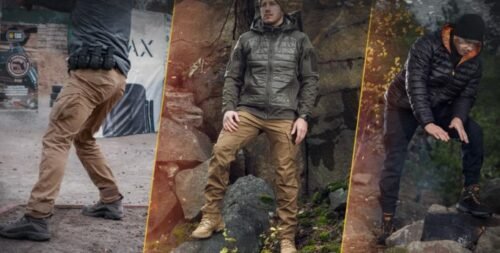
That’s why you’ll see people specifically search for tactical pants for men when what they really mean is “pants that won’t fail me in daily life.” They’re not always buying for a tactical scenario. They’re buying for durability, stretch, storage, and the feeling that the pants are built for movement instead of fashion.
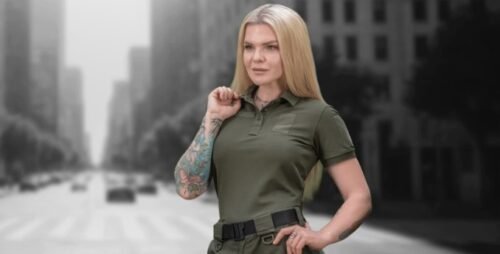
And on the other side of the market, you’ll notice more interest in army outfits for women, not just for the aesthetic, but because certain cuts and materials are associated with toughness, utility, and comfort—plus the look has been recycled into mainstream fashion for decades. Some people want the style. Others want the function. Often it’s both, and that’s okay. The point is: it’s no longer a costume category. It’s part of everyday wardrobes.
A realistic conclusion
If your closet is slowly shifting toward “tactical” features, you’re not alone—and you’re probably not doing it on purpose. You’re adapting to modern life the same way people always have. When a day involves more movement, more unpredictability, and more stuff to carry, your clothing changes.
The interesting part is that this trend isn’t loud. It isn’t a statement for most people. It’s a quiet decision repeated over time: choose the piece that works. Choose the thing that lasts. Choose the option that makes the day easier.
And once you experience that—once you have pants you can walk in for hours, a jacket that keeps your essentials safe, and layers that handle temperature swings—you stop wanting to go back. Not because you’re trying to dress a certain way, but because you’ve tasted what it feels like to move through your life with less friction.
That’s not a fashion trend. That’s a practical evolution.