
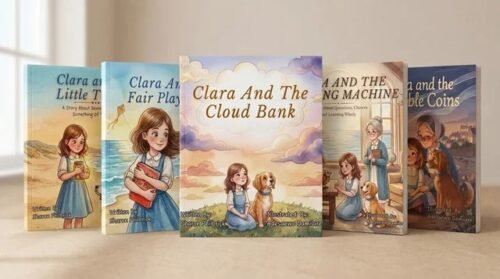
In an era characterized by rapid change and an overwhelming flow of information, children’s media often feels fast, loud and overwhelming. Yet, the heart of Clara Stories, penned by author Sharon Philbrick, is rooted in a different approach: helping children explore big ideas through gentle storytelling and curiosity. Set against a calm, coastal-inspired backdrop, complete with Clara’s loyal dog Max and the quiet wisdom of Grandma Ada, the series offers a thoughtful sanctuary where imagination meets emotional depth.
The guiding philosophy behind Clara Stories is the understanding that children need clarity and curiosity far more than complexity. The modern world is intricate and constantly evolving, but rather than bombarding young minds with heavy explanations, Philbrick uses gentle storytelling to translate this reality. Through Clara’s eyes, the complexities of the world are distilled into manageable, relatable adventures. The gentle pace of the stories gives children space to wonder, reflect, and make sense of their environment.
This commitment to clarity is evident in how the series tackles significant, real-world concepts without ever resorting to jargon. Titles like Clara and the Fair Play Rules and Clara and the Cloud Bank seamlessly introduce the mechanics of shared systems, trust, diversification, and balance. In Clara and the Invisible Coins and Clara and the Little Tin Jar, abstract concepts of saving, value, and working toward meaningful goals are grounded in warm, child-friendly narratives. The result is an educational experience that feels less like a lesson and more like a natural discovery.
The series’ unique thematic blend is deeply influenced by Philbrick’s own background in economics and nonprofit work. Her experience in economics provided an understanding of how systems, value, and resources interconnect, while her nonprofit background underscored the importance of empathy, community, and equitable rules. Together, these experiences shaped a narrative vision where big ideas about systems, fairness, and human connection naturally blend with social-emotional learning converge naturally in a child’s seaside discoveries.
Perhaps nowhere is this blend more timely than in Clara and the Thinking Machine. As the book introduces artificial intelligence through Airius, a mysterious brass mechanical bird, it reinforces a vital lesson for the future: while machines may process information with astonishing speed, humans must guide them wisely. In an increasingly AI-driven world, emotional intelligence and thoughtful questioning matter more than information alone. The story highlights that the human capacity for empathy, ethical reasoning, and asking the “why” behind the “how” is irreplaceable.
Clara Stories are deliberately designed for connection, crafted to resonate with both children and adults on different levels. Parents and teachers play an essential role in guiding conversations around modern challenges, be it technology, money, or complex decision-making, and these books serve as a perfect bridge. By creating a shared narrative experience, the stories invite bedtime conversations and classroom discussions, allowing adults to explore these big ideas alongside the children they guide. The layered storytelling ensures that while a child enjoys the adventure, an adult appreciates the deeper wisdom woven into the pages.
Ultimately, the vision driving Sharon Philbrick’s Clara Stories is one of empowerment. By breaking down the daunting elements of the modern world into stories of kindness, resilience, and fairness, the series replaces fear with understanding. The belief at the core of Clara’s journey is simple yet profound: the right stories can help children feel confident, equipped, and quietly courageous, helping them step into the future with curiosity instead of fear.
To learn more, visit: https://www.clarastories.com/