UxoTrade Q&A: What Modern Traders Don’t Fully Understand Yet
Modern traders have access to more markets, more data and more technology than any previous generation.
They also have more ways to misunderstand what they are doing.
A clean platform can make trading feel straightforward. A mobile app can make the markets feel permanently accessible. One account can place currencies, stocks, crypto, commodities, indices and metals within a few taps.
But easier access does not automatically produce better decisions.
That is where many traders get caught.
They understand how to open a position, but not always how much exposure they have taken. They understand that a platform offers multiple markets, but not how those markets interact. They understand that they can trade from a phone, but not how constant access can affect discipline.
UxoTrade enters this environment with a platform built around clarity, market variety and connected account access. Its website highlights six market categories, a mobile-compatible experience, account-management tools, educational resources and support from one unified environment.
The technology appears designed to reduce friction.
The questions below examine what traders still need to understand once that friction disappears.
What Is UxoTrade Really Offering?
At the most basic level, UxoTrade provides access to several global market categories through one trading account.
These include:
- Stocks
- Foreign exchange markets
- Cryptocurrencies
- Indices
- Commodities
- Precious metals
UxoTrade presents the platform as a connected trading environment built for users in Australia who want to follow multiple markets without constantly switching between separate services. Its public website also promotes clear account management, pricing visibility, mobile access and responsive support.
That is the visible offer.
The deeper offer is convenience.
UxoTrade is selling the idea that market access should feel organised rather than fragmented. The interface should help users reach the information they need without forcing them through a maze of outdated menus and disconnected systems.
That can improve the experience.
It does not make the underlying markets simpler.
Does a Better User Experience Make Someone a Better Trader?
No.
It can make someone a more organised trader.
That distinction matters.
A modern interface can reduce operational confusion. Users may be able to see their positions more clearly, move between markets more efficiently and manage account activity without navigating an unnecessarily complicated terminal.
UxoTrade explicitly describes its platform as structured, flexible and designed to keep trading clear. Its public materials refer to an easy-to-follow account environment, charts, market data and access across different screens.
These are meaningful advantages.
However, no interface can determine whether a trade is sensible.
It cannot decide whether a position is too large.
It cannot prevent someone from entering the market emotionally.
It cannot transform weak analysis into a strong strategy.
Good user experience removes avoidable technical difficulty. It does not remove market uncertainty.
Why Does Access to Six Markets Matter?
It matters because global markets rarely move in complete isolation.
Currencies can react to interest-rate decisions.
Stocks can respond to earnings and changes in economic expectations.
Gold may move alongside shifts in inflation, interest rates or broader uncertainty.
Oil can respond to supply disruptions, production decisions and geopolitical events.
Indices can reflect the combined movement of a wider group of companies.
Crypto can move according to its own market cycle while also responding to changes in general risk sentiment.
UxoTrade brings these categories together within one account environment. The platform promotes access to stocks, crypto, currencies, indices, commodities and metals through a consistent interface.
The advantage is not simply having more things to trade.
It is having more ways to observe how one market story may influence another.
The danger is assuming that more available markets automatically creates diversification.
It does not.
A trader could open positions across several categories and still be exposed to one underlying idea.
For example, a long stock-index position, a long technology-stock position and a long cryptocurrency position may all be vulnerable to the same sudden decline in risk appetite.
Different instruments do not always mean different risks.
What Do Traders Misunderstand About Margin?
Many traders understand margin as a way to open a larger position with less money.
That definition is technically correct and psychologically dangerous.
Margin does not only increase access.
It increases exposure.
Suppose a trader commits a relatively small amount of account capital to control a much larger market position. Even a modest price movement can then create a significant change in the account balance.
The trader may focus on the possible return from the larger position.
The market does not care what the trader focused on.
It applies the same enlarged exposure to losses.
UxoTrade’s website clearly states that access to leveraged products involves significant risk and uncertainty, that market prices can move rapidly and that losses are possible. It also states that the platform does not guarantee results or profitability.
That risk language is important because margin is frequently misunderstood in three ways.
Margin Is Not the Maximum Possible Loss
The margin required to open a position is not necessarily the amount the trader is risking.
The real risk depends on:
- The total position size
- The distance to the exit level
- Market volatility
- Available account equity
- Overnight costs
- Price gaps
- The platform’s position-closing rules
A Stop-Loss Is Not a Guaranteed Price
A stop-loss order can help control risk, but fast markets may move through the requested exit level.
The final execution price can differ from the price selected by the trader.
More Buying Power Is Not More Skill
Increasing exposure does not improve market analysis.
It magnifies the financial impact of whatever analysis already exists.
Margin should be treated as a risk tool, not an achievement unlocked by depositing money.
Is Mobile Trading Always an Advantage?
Mobile trading is an advantage when it helps users remain informed and manage an existing plan.
It becomes a disadvantage when it removes every natural pause between thought and action.
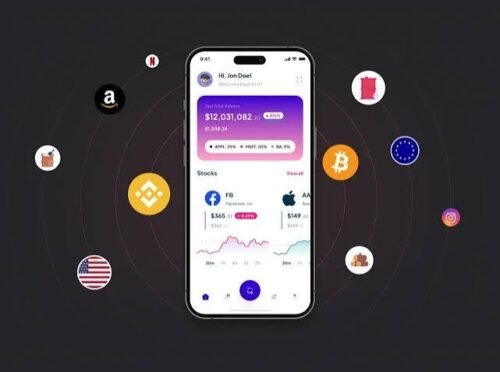
UxoTrade treats mobile access as a central part of its offering. The platform states that users can access real-time market information, manage their accounts and handle trading activity from mobile devices.
That fits how people operate in 2026.
Users expect to check their account during a commute, review a market away from the office and manage positions without sitting in front of a permanent desktop setup.
The problem is not the technology.
The problem is that constant access can create the illusion that every market movement requires a response.
It does not.
A trader who checks prices every few minutes may begin to:
- Exit positions too early
- Move stop-loss levels without a clear reason
- Enter trades because of boredom
- Chase sudden price moves
- Increase position sizes after a loss
- Treat notifications as trading signals
The best mobile experience is not the one that keeps a trader constantly active.
It is the one that makes essential actions clear when action is genuinely required.
Does One Account Mean One Risk?
No.
One account can contain several different types of risk at the same time.
A UxoTrade user might hold exposure to currencies, stocks, commodities and digital assets inside one environment. That makes account management more convenient, but convenience can hide how connected those positions actually are.
Traders should think beyond the number of open trades.
They should examine:
- Total market exposure
- Exposure by asset category
- Exposure to the same currency
- Long versus short positioning
- Sensitivity to interest rates
- Sensitivity to risk sentiment
- The combined effect of margin across all positions
Five positions are not necessarily safer than one position.
They may simply be five versions of the same assumption.
The platform can organise the positions.
The user still has to understand the combined risk.
What Does “Clear Pricing” Actually Mean?
UxoTrade states that it aims to provide clear and predictable pricing conditions so users can understand how trades are structured.
That is the right principle.
Modern traders should still understand that trading costs can appear in several forms.
The Spread
The spread is the difference between the buying price and selling price.
A position generally begins with a small disadvantage because it must move far enough to cover that difference before becoming positive.
Commission
Some instruments or account structures may include a separate commission.
Overnight Financing
A leveraged position kept open beyond a specified time may generate an overnight cost or adjustment.
For trades held over several days, this can become a meaningful part of the result.
Currency Conversion
If the account currency differs from the currency in which a product is priced, conversion costs may apply.
Deposit and Withdrawal Charges
Users should verify whether payment providers, currencies or withdrawal methods create additional costs.
Inactivity Conditions
Some platforms apply fees after an account remains inactive for a defined period.
The important question is not whether a platform claims to have low costs.
The important question is whether the user understands the complete cost of the specific position being opened.
A narrow spread does not automatically make a trade inexpensive if financing costs are high or the position remains open for an extended period.
What Does Platform Security Protect?
Platform security can protect account access, personal information and the communication between the user and the trading environment.
UxoTrade states that its client portal uses encrypted access and describes security and privacy as part of the platform’s core structure.
That is one layer of protection.
Modern traders need to understand the other layers.
The Platform Layer
This includes encrypted connections, account-access systems and internal security controls.
The User Layer
This includes password quality, email security, device protection and avoiding phishing attempts.
A secure platform cannot protect a user who voluntarily enters login information into an imitation website.
The Institutional Layer
This concerns the legal entity operating the service, the applicable jurisdiction, regulatory status, client-money arrangements and complaint procedures.
Technical encryption and institutional protection are not interchangeable.
A trader should review both.
The Behavioural Layer
Some of the largest trading losses have nothing to do with hackers.
They come from poor position sizing, uncontrolled leverage and emotional decisions.
Security protects the account from unauthorised access.
Risk management protects the account from its authorised user.
Why Is the Connected Email Account So Important?
Because the email connected to a trading account may become the route through which passwords are reset, security notices are received and account changes are confirmed.
A trader could create an extremely strong UxoTrade password and still remain vulnerable if the connected email account uses an old or reused password.
The email account should have:
- A unique password
- Additional login verification where available
- Updated recovery information
- Regular security checks
- No shared access
Traders often focus on protecting the trading platform while overlooking the account that controls access to it.
That is the digital equivalent of reinforcing the front door while leaving the side entrance open.
Does Customer Support Make Trading Safer?
Support can make platform use clearer.
It cannot make a market position safer.
UxoTrade promotes accessible support, a Help Centre and assistance with platform and account-related questions. Its public positioning also refers to responsive guidance and a personal trading assistant.
Support may help users with:
- Registration
- Account verification
- Platform navigation
- Login issues
- Deposits
- Withdrawals
- Locating account information
- Understanding how a feature works
Support should not be treated as a substitute for independent financial judgment.
A representative may explain where to find an order type.
That does not mean the representative should decide whether the trade should be opened.
The healthiest support relationship gives the user greater control over the platform without creating dependence on another person’s market opinion.
Why Do Withdrawals Matter More Than Deposits?
Deposits are designed to be easy.
Withdrawals reveal how the account system works when money is moving in the opposite direction.
Before funding any account, traders should understand:
- Which withdrawal methods are available
- Whether funds must return to the original payment method
- Which identification checks may be required
- Whether open positions affect the amount available
- Whether there is a minimum withdrawal
- Whether fees apply
- How processing times are calculated
- What happens when account details do not match
Users should review these conditions before depositing, not after deciding to withdraw.
A smooth deposit experience is useful.
A clearly documented withdrawal process is more important.
What Does Opening an Account Actually Involve?
UxoTrade presents account opening as a straightforward process involving account creation, funding and access to global markets. The website also depicts registration and identity verification as part of the journey.
Modern traders sometimes interpret easy registration as evidence that they are ready to trade.
These are two completely different things.
Opening an account may involve:
- Providing personal details
- Confirming contact information
- Completing identity verification
- Reviewing account terms
- Selecting a funding method
- Depositing money
- Accessing the trading environment
Being technically eligible to place a trade says nothing about whether the user understands margin, market risk or position sizing.
Account approval is an administrative milestone.
It is not a certificate of trading competence.
Why Is Identity Verification Necessary?
Identity verification helps establish who controls the account.
It may also form part of legal and operational requirements concerning financial services, fraud prevention and payment processing.
Users may be asked to submit documents confirming identity and residential information.
The process can feel intrusive, but it also helps reduce:
- Account impersonation
- Fraudulent funding
- Unauthorised withdrawals
- Use of false identities
- Payment disputes
Documents should only be uploaded through the official platform environment.
Users should avoid sending sensitive identification through unverified links, social-media messages or unofficial communication channels.
Does Education Reduce Trading Risk?
Education can reduce avoidable misunderstanding.
It cannot eliminate risk.
UxoTrade’s public website links to resources including a glossary, economic calendar, blog, Help Centre, FAQ section and calculation tools.
These resources can help users understand terminology, scheduled economic events and basic platform mechanics.
The problem is that many traders consume educational content without changing their behaviour.
They learn what a stop-loss is, but do not use one consistently.
They learn that margin increases risk, then choose the maximum available exposure.
They read about emotional trading, then immediately attempt to recover a loss with a larger position.
Information becomes useful only when it changes a decision.
The strongest trading education should lead users toward:
- Smaller initial positions
- Written risk limits
- Clear entry and exit criteria
- Awareness of economic events
- Regular performance review
- Greater acceptance of uncertainty
- Fewer impulsive trades
The purpose of education is not to make trading sound easy.
It is to make the trader less surprised when it is difficult.
What Is an Economic Calendar Actually For?
An economic calendar lists scheduled events that may influence market volatility.
These may include:
- Interest-rate announcements
- Inflation reports
- Employment data
- Economic-growth figures
- Central-bank speeches
- Consumer-confidence reports
- Manufacturing data
UxoTrade includes an economic calendar among its market-support resources.
A common misunderstanding is that the calendar tells traders what direction prices will move.
It does not.
It tells users when new information is expected.
A stronger-than-expected economic report might support a currency in one situation and weaken it in another if the market had already priced in an even stronger result.
The calendar helps identify timing.
Interpretation remains uncertain.
Is Real-Time Data the Same as Real Understanding?
No.
Real-time data tells a trader what is happening now.
Understanding requires context.
A rapidly rising price does not explain why it is rising.
A sudden decline does not reveal whether the movement is temporary, fundamental or purely driven by market positioning.
UxoTrade promotes real-time data as part of its mobile and platform experience.
That information can support faster observation and execution.
It can also encourage users to react before understanding the event.
Modern traders rarely suffer from a lack of numbers.
They suffer from a lack of filtering.
The skill is not seeing everything.
It is knowing which information matters.
Does Fast Execution Guarantee the Price a Trader Wants?
No.
Fast execution refers to how efficiently an order is processed.
It does not mean market prices remain still while that processing occurs.
During periods of high volatility, prices can change rapidly. The price available when the user presses a button may differ from the price available when the order reaches the market.
UxoTrade highlights speed and responsiveness as elements of its platform experience.
Traders should still understand:
- Market orders prioritise execution rather than a specific price
- Limit orders prioritise price but may not execute
- Stop orders can be affected by gaps
- Thin liquidity can increase price variation
- News events can create rapid movement
- Execution quality can vary by instrument and market conditions
Fast systems reduce avoidable delay.
They do not freeze the market.
What Do Traders Misunderstand About Control?
Trading platforms frequently use the language of control.
UxoTrade also emphasises clarity, account organisation and staying connected across markets and devices.
But traders do not control prices.
They control:
- Whether they enter
- How much they expose
- Where they plan to exit
- Whether they use margin
- How many positions they open
- Whether they trade during major events
- When they stop trading
- How they respond to a loss
This is the only form of control that matters.
The market controls the outcome.
The trader controls the process.
Confusing the two leads to overconfidence.
Is More Trading Experience Always Better?
Only when the trader learns from it.
Someone can repeat the same mistake for five years and call it five years of experience.
Useful experience involves reviewing:
- Why a trade was opened
- Whether the original plan was followed
- Whether the position size was appropriate
- What happened during the trade
- Whether the exit was planned or emotional
- How costs affected the result
- Whether the same setup remains valid
A modern platform can make activity easier to track.
The user must turn that activity into feedback.
Without review, trading history is only a record of what happened.
It is not evidence of improvement.
Is UxoTrade Only for Beginners?
UxoTrade’s clean design, educational resources and structured account experience may make the platform approachable for newer users.
However, simplicity is not only valuable to beginners.
Experienced traders may also prefer a platform that reduces unnecessary visual noise and places multiple markets within one consistent environment.
UxoTrade states that its goal is to combine access, clarity and control while avoiding unnecessary complexity.
The deciding factor for advanced users will be depth.
Experienced traders may want to verify:
- Available order types
- Technical indicators
- Charting capabilities
- Historical data
- Alert systems
- Execution policies
- Margin conditions
- Instrument-level pricing
- Platform integrations
A clean platform can serve advanced users.
It simply needs to provide depth without forcing that depth onto every screen.
What Should UxoTrade Make Clearer in 2026?
The platform’s public positioning is clear about its general direction.
It promotes multi-market access, mobile account management, support, security and understandable trading conditions.
The next stage should involve publishing greater detail.
A Full Pricing Centre
Users should be able to review spreads, commissions, financing conditions and other potential account costs before registering.
Clear Margin Tables
Instrument-level margin requirements would help users understand how exposure differs across markets.
Detailed Platform Specifications
Order types, charting functions, alerts, supported devices and execution procedures should be explained publicly.
Withdrawal Information
Processing procedures, available methods and verification requirements should be easy to locate.
Institutional Information
Legal-entity details, jurisdictional information, client-money arrangements and applicable protections should be placed prominently.
Measurable Support Standards
Support channels, service hours and expected response targets would make the support proposition easier to assess.
Transparency should not require users to search harder than they trade.
The Question Modern Traders Should Ask Before Every Position
The most useful question is not:
“How much can I make?”
It is:
“What happens if I am wrong?”
That question forces the trader to consider:
- Position size
- Margin
- Exit level
- Market volatility
- Trading costs
- Available account equity
- Correlated positions
- The possibility of price gaps
- The emotional effect of the loss
A trader who cannot clearly explain the downside does not fully understand the trade.
That remains true regardless of how modern the platform looks.
Final Thoughts: UxoTrade Makes Access Easier—Understanding Still Takes Work
UxoTrade reflects where online trading platforms are moving in 2026.
Markets are becoming more connected.
Users expect access across devices.
Multiple asset categories are increasingly brought together within one account.
Interfaces are becoming cleaner, faster and easier to navigate.
UxoTrade fits that direction with its six-market offering, mobile-focused access, structured client environment, support resources and emphasis on clarity.
Those strengths can reduce operational friction.
They cannot remove the need for judgment.
Modern traders still need to understand that margin increases losses as efficiently as it increases exposure. Different markets can carry the same underlying risk. Mobile access can encourage emotional decisions. Security depends partly on user behaviour. Real-time data is not the same as insight.
The platform can provide the tools.
The trader remains responsible for how those tools are used.
That may be the biggest thing modern traders do not fully understand yet.
Better technology does not make markets more forgiving.
It simply makes decisions happen faster.