
Authored by Dave Sarro founder and CEO of Promo Direct
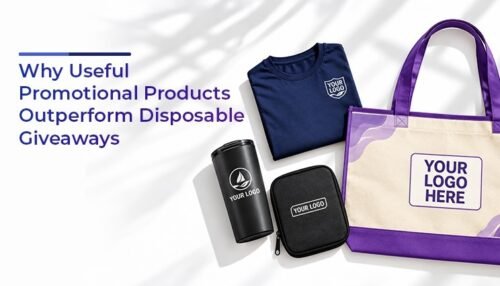
A promotional giveaway can make a good first impression, but what happens after the event is often more important. If an item ends up in a drawer or the trash a few days later, the opportunity to keep a brand visible goes with it. Consumers seem to recognize that difference. According to PPAI’s 2026 Product Power research, 65% of consumers are very likely to keep a branded item for six months or longer. For businesses, that’s a good reason to look beyond the quick giveaway and choose useful promotional products that have a place in someone’s everyday life.
Giveaways have a shelf life too
Not all promotional items have the same staying power. A novelty item might get a laugh at a trade show or company event, but its appeal can disappear almost as quickly as the event itself.
Think about the difference between receiving a custom stress toy and receiving a quality water bottle. Both might attract attention at first. But one may end up forgotten in a drawer while the other could be used every day.
That doesn’t mean every giveaway needs to be expensive or elaborate. It simply needs to offer something people can use.
Start with everyday usefulness
The easiest way to find a strong promotional product is to think about what people already use throughout the day. Some practical choices include:
- Drinkware such as tumblers, water bottles, and travel mugs
- Bags and totes for work, shopping, or travel
- Apparel that people would actually want to wear
- Office essentials such as notebooks, pens, and desk accessories
- Tech accessories that solve a small everyday problem
These items don’t have to be flashy. Their value comes from being useful in everyday life.
For promotional products for businesses, this can be especially valuable. A customer who uses a promotional tumbler every morning or carries a branded tote to the store sees the company’s name repeatedly without feeling like they’re being marketed to.
Useful doesn’t mean boring
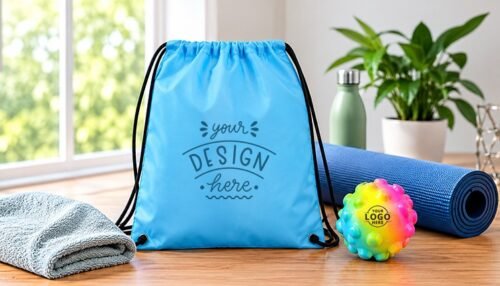
Practical products don’t have to look plain. A useful item can still have an interesting design, a clever message, a seasonal touch, or a finish that makes it feel a little more special.
A simple tote can stand out with a well-designed graphic. A standard tumbler can feel more distinctive with a modern finish and tasteful branding. Even an everyday notebook can feel more premium with quality paper and a thoughtful cover.
The product still has a job to do. It just doesn’t have to look like office supplies.
Think about tomorrow, not just the event
It’s easy to judge a giveaway by the moment it is handed out. Does it look good on the display table? Will people stop to pick it up? Does it fit the theme of the event?
Those questions matter, but there’s another one worth asking:
What will the recipient do with it tomorrow?
That simple question can lead to better product choices. Instead of focusing only on what looks impressive at the event, consider whether the item has a place in someone’s home, car, office, gym bag, or daily routine.
The longer an item remains useful, the more opportunities there are for the brand to be seen.
Quality makes a difference
A useful item doesn’t have to be expensive, but quality still matters. Nobody wants a water bottle that leaks, a pen that stops writing, or a bag that tears after two uses.
When choosing promotional products, consider:
- How often the item is likely to be used
- Whether it feels comfortable and durable
- Whether the design is something people would actually carry or wear
- Whether it fits the audience and the occasion
A product that works well can leave a better impression than a more elaborate giveaway that doesn’t.
Choose something that fits the audience
The best promotional item isn’t necessarily the most popular one. It’s the one that makes sense for the people receiving it.
A fitness business might find that gym towels or water bottles are a natural fit. A technology company could choose charging accessories or laptop-related products. A real estate company might consider home, travel, or organization-focused items. A school or nonprofit may prefer practical products families can use every day.
Choosing with the audience in mind also keeps a campaign from feeling generic. When recipients can immediately see how an item fits into their lives, they’re more likely to use it.
Fewer good items can beat more forgettable ones
There’s also a case for being selective.
Handing out hundreds of inexpensive items may create a busy trade show table, but that doesn’t necessarily mean the campaign made an impression. Sometimes a smaller number of well-chosen promotional items can have more value.
A business might give a useful item to customers who visit a booth, employees who participate in an event, or attendees who complete a particular activity. It becomes something people appreciate instead of just another freebie.
Make the product earn its place
The best promotional products don’t need to compete for attention forever. They simply need to earn a place in someone’s everyday life.
A bag that gets carried to work. A tumbler that stays on a desk. A sweatshirt that becomes a favorite. A notebook that lives beside a laptop.
Those ordinary moments are where a promotional product can quietly do its job. Instead of being remembered as another giveaway from an event, it becomes something the recipient reaches for because it is useful.
For businesses choosing their next promotional giveaways, there’s a simple test worth asking: Would someone still want this if the logo weren’t on it? If the answer is yes, you’re probably on the right track.

About Dave Sarro
Dave Sarro is the founder and CEO of Promo Direct, a Nevada-based promotional products company he founded in 1991. With a strong focus on innovation, technology, e-commerce, and customer experience, Dave has guided the company’s growth and evolution for more than three decades. His entrepreneurial leadership has earned him recognition as one of Nevada Business Magazine’s 20/20 Visionaries.