
Artificial intelligence is moving deeper into credit risk, regulatory analysis and financial decision-making, but banks face a constraint that is less visible than model accuracy: every consequential system must remain explainable, controlled and reviewable after deployment. In regulated financial services, a model that performs well but cannot be reconstructed months later can create as many governance problems as it solves.
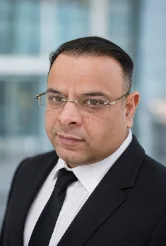
Saurabh Kakkar has spent more than 15 years working at that intersection of banking technology, data, risk and enterprise transformation. He currently leads the Basel Data Repository program at a major global bank as a Director / Program Manager, coordinating a 50-plus direct and indirect delivery organization across technology, data, risk, finance, governance and regulatory-delivery disciplines. His external body of work now includes two registered German utility models in credit-risk AI, a 2026 practitioner book, nine published scholarly papers, 23 completed independent peer-review and innovation-judging engagements, invited speaking and IEEE Senior Member status.
In this Executive Q&A, Kakkar discusses why explainability must be designed into banking AI, how his registered technical work approaches dynamic credit risk and IFRS 9 expected-credit-loss forecasting, and why evidence – not prediction alone – will determine whether advanced models can scale inside regulated institutions.
Q: Your career began well before the current AI cycle. How did more than 15 years in financial-services transformation lead you to this focus on governable AI?
Saurabh Kakkar: My path into AI was really a path through regulated systems. I worked across Ernst & Young, Citco Fund Services, PwC and Credit Suisse before moving into my current role at a major global bank. Across those environments, the recurring challenge was never just technology. It was how to change a complex system while preserving data quality, control, accountability and an audit trail. When AI and machine learning began moving into more consequential decisions, the same lesson became even more important. The question is not only whether a model can improve prediction. It is whether the institution can explain the inputs, identify the model version, show the approvals, document human challenge and reconstruct what happened later. That is why I describe the design target as AI engineered to operate inside governance, not AI instead of governance.
Q: What makes AI in banking fundamentally different from deploying AI in lower-risk enterprise settings?
Saurabh Kakkar: The cost of opacity is much higher. In credit risk, capital, provisioning or supervisory reporting, a result can influence financial statements, portfolio decisions, customer outcomes and regulatory conclusions. That means explainability cannot be treated as a presentation layer added after the model is built. Data lineage, feature provenance, validation, approvals, overrides, monitoring and evidence retention have to be part of the operating architecture. I often summarize it as: prediction creates value; evidence creates trust. Banks need both. A technically sophisticated model can still be difficult to use at scale if risk teams, validators, auditors or regulators cannot challenge it with confidence.
Q: You hold two registered German utility models related to credit-risk AI. What problems are they designed to address?
Saurabh Kakkar: The two utility models address different points in the same larger problem. German Utility Model No. 20 2025 106 354.9, registered on October 30, 2025 and currently in force, concerns AI-supported analysis of global banking transactions for dynamic credit-risk assessment under European regulatory requirements. I co-own that right with Armaan Kakkar. The second, German Utility Model No. 20 2026 100 348.4, was registered on February 20, 2026 and is currently in force. I am its sole owner. It focuses on machine-learning-based IFRS 9 expected-credit-loss forecasting using explainable analytics and supervisory audit trails. In both cases, the purpose is not to separate analytics from control. It is to bring richer predictive methods together with traceability and reviewable evidence.
Q: Your book, Implementing AI/ML Systems for Credit Risk Analytics in Regulated Banks, was published in August 2026. How does it extend the technical work?
Saurabh Kakkar: The book turns the ideas into an end-to-end practitioner operating model. “The 298-page guide is dedicated to the main principles of incorporating AI and machine learning into banking: data engineering, model production, explainability, model validation, MLOps, IFRS 9, Basel-related governance, fairness, and monitoring and audit readiness. My personal interest in the work was the challenge of transitioning from a successful pilot to a production-grade implementation and governance of AI-based models in banking. The issue is that the bank needs to make sure that its data, decisions, and models are trustworthy, accurate, and explainable, monitored, and audited. The guide suggests how financial institutions can operate their model production while fulfilling the regulatory requirements for transparency and accountability”.
Q: “Your profile also includes scholarly publishing, peer review, hackathon judging and invited speaking”. How does that external work influence your practice?
Saurabh Kakkar: It creates a useful feedback loop. I have nine published scholarly papers across applied AI, explainable AI, generative AI, credit risk and adjacent technology areas, and I have completed 23 independent evaluation engagements – 13 scholarly peer-review assignments and 10 hackathon or innovation-judging engagements. Reviewing other work forces you to be precise about methodology, evidence and whether a contribution is actually new or useful. Speaking at external forums has a similar effect because practitioners, researchers and technologists ask different questions. I was elevated to IEEE Senior Member in December 2025 and received a Best Paper Award at ICIDS 2025. Those recognitions matter to me mainly because they reflect a body of work that is being evaluated outside my day-to-day corporate responsibilities.
Q: Looking ahead, what will distinguish financial institutions that scale AI responsibly from those that remain stuck in pilots?
Saurabh Kakkar: The strongest institutions will treat governance as an enabling capability rather than a final checkpoint. They will ensure that data is traceable back to its source prior to training any model, that models are thoroughly verified and peer-reviewed before deployment, and that any critical decisions can be audited. They will also ensure that people are kept involved in the decision-making process in critical cases, and that systems are constantly monitored for any deviation from expected performance. Equally crucial is the need to document everything, as banks may be required to justify a decision made years earlier by an AI system. The effectiveness of AI systems in the banking sector will not be measured purely by the rate at which new models are deployed – their true value will be determined by how consistently they perform under different circumstances. The real-world impact of AI in institutions/banking will be defined by its ability to scale and deliver on promises of accountability and trust.
As institutions begin to adopt machine learning and generative AI systems more and more in their daily operations, decision-making processes, and risk analysis activities, the debate is moving away from whether they should invest in these areas and towards how best to manage such systems in practice. Kakkar’s work proposes viable options for enterprise-level adoption of machine learning and generative AI by combining hands-on experience with enterprise-level deployment, registered concepts, professional publishing, and external auditing. “The primary takeaway message from his work is that AI systems used for critical decision-making in banks need to be kept open for peer-review, inspection, and challenge even after deployment. For institutions that operate within heavily regulated environments, this approach would enable them to evolve from small-scale proofs of concept into full-scale production systems that can form the backbone of their critical operations. Banking AI systems of the future will need to go further – they should be able to provide clear evidence of every decision being made and how these decisions are being reviewed, analyzed, and ultimately acted upon”.
To learn more about Saurabh Kakkar’s published work and professional background, visit saurabhkakkar.com.